
What Happens When Every Choice Has a Moral Price?
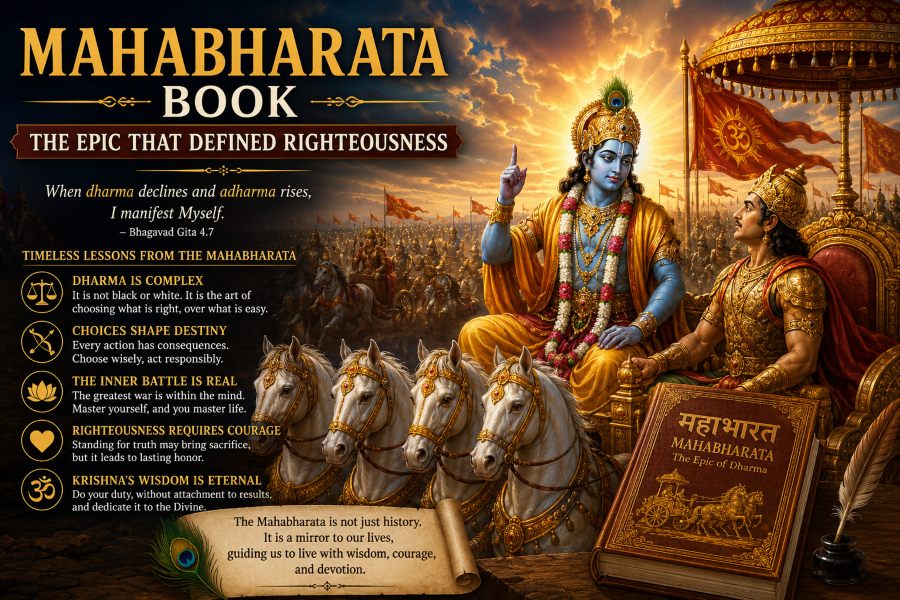
Imagine standing at a crossroads where every path demands sacrifice. One decision protects your family but compromises justice. Another upholds truth yet brings personal loss. This is the world of the Mahabharata Book, a timeless epic that continues to guide readers through life's most difficult questions. Rather than presenting simple heroes and villains, the Mahabharata reveals how righteousness is shaped by wisdom, intention, and responsibility. Its pages remind us that the hardest battles are rarely fought with weapons—they are fought within the human heart.
Righteousness Is More Than Following Rules
Many people think righteousness simply means obeying laws or traditions. The Mahabharata presents a much richer idea.
In the epic, righteousness—known as dharma—is not a fixed list of commands. It is the ability to make the right decision when circumstances are complicated. Life rarely offers situations where one option is completely right and another entirely wrong. Instead, people must balance duty, compassion, truth, and responsibility.
This perspective explains why the Mahabharata still feels relevant today. Modern life also demands thoughtful choices, whether in business, family relationships, or personal ethics.
Every Character Becomes a Teacher
One reason the Mahabharata has remained influential for centuries is its unforgettable characters. None of them are perfect, and that is exactly what makes them believable.
Yudhishthira: The Weight of Integrity
Yudhishthira is respected for his honesty and commitment to truth. Yet even he makes mistakes, reminding readers that good intentions alone do not guarantee perfect decisions.
His journey teaches that integrity requires constant self-reflection, not blind confidence.
Arjuna: Courage Begins With Questions
Before the Kurukshetra war begins, Arjuna experiences doubt and emotional conflict. Instead of hiding his uncertainty, he asks meaningful questions.
His conversation with Lord Krishna in the Bhagavad Gita demonstrates that wisdom often begins with humility rather than certainty.
Karna: Loyalty and Its Limits
Karna remains one of the most admired figures in the Mahabharata because of his generosity and determination. Yet his unwavering loyalty to Duryodhana raises an important lesson.
Loyalty is admirable only when it supports righteousness. Standing beside injustice, even with noble intentions, carries consequences.
Krishna's Wisdom Defines the Heart of the Epic
Although the Mahabharata contains legendary battles, Lord Krishna's greatest contribution is not military strength.
He becomes a guide.
Krishna teaches Arjuna to rise above fear, attachment, and confusion. His message is simple yet profound:
- Perform your duty with sincerity.
- Do not become controlled by the desire for rewards.
- Act with wisdom instead of emotion.
- Let devotion strengthen every decision.
These teachings continue inspiring people because they apply to everyday life, not only to ancient warriors.
The Real Battlefield Is Within
Kurukshetra represents more than a physical location.
It symbolizes the inner conflict every person experiences.
Every day we choose between:
- Truth or convenience
- Compassion or revenge
- Patience or anger
- Humility or pride
- Selflessness or selfish ambition
The Mahabharata reminds us that winning these internal battles matters far more than defeating external opponents.
True righteousness begins inside the mind and heart.
Why the Mahabharata Still Matters
Thousands of years have passed since the Mahabharata was composed, yet its message remains remarkably fresh.
People continue facing questions about ethical leadership, family conflict, justice, and personal responsibility. Technology has changed how we communicate, but it has not changed the nature of human emotions.
The Mahabharata encourages readers to pause before acting.
It asks:
- What is the right thing to do?
- Who will be affected by this decision?
- Am I acting from wisdom or ego?
- Will this choice create harmony or regret?
These questions never lose their value.
Lessons That Stay With You
The Mahabharata offers practical guidance that extends far beyond its story.
Some of its lasting lessons include:
- Character is more valuable than temporary success.
- Every action creates lasting consequences.
- Leadership means serving others with integrity.
- Silence in the face of injustice has a cost.
- True strength comes from self-control and wisdom.
- Righteousness often demands courage rather than comfort.
These insights explain why the epic continues to influence spiritual seekers, educators, leaders, and readers around the world.
Final Thoughts
The Mahabharata Book is far more than an ancient tale of kings and warfare. It is a profound exploration of righteousness, human nature, and the choices that define our lives. Every character reflects a different aspect of the human experience, encouraging readers to examine their own values instead of simply judging others.
Its enduring power lies in its honesty. It acknowledges that life is complex, that good people make mistakes, and that wisdom grows through thoughtful action rather than easy answers.
That is why the Mahabharata continues to inspire generation after generation. It does not merely tell us what righteousness looks like—it invites us to practice it, one choice at a time.



의견을 남겨주세요