
Let me tell you about a conversation I had with a client last year.
She ran a small online bakery. She had a gorgeous website, solid social media presence, and a growing customer base. But for two years, she had been hosting her site on a ₹59/month shared plan she found through a random Google search. It seemed fine — until a Saturday evening in December, her busiest month, when her site went completely dark for seven hours.
No checkout. No orders. No revenue.
The hosting provider's support? An automated email response and a chatbot that couldn't diagnose the issue. By the time her site came back online, she had lost dozens of holiday orders. The damage wasn't just financial — her bounce rate skyrocketed, her Google rankings slipped, and rebuilding trust with her audience took months.
The ₹59/month plan had cost her far more than she ever imagined.
This is not an isolated story. It happens to bloggers, freelancers, startups, and growing businesses every single day. And it all starts with the same decision: choosing a web host based on price alone.
What "Cheap Hosting" Actually Means
Before we go further, it's worth understanding what you're actually getting when you sign up for a $1–$2/month hosting plan.
Web hosting is fundamentally a resource problem. To serve your website to visitors, a server needs CPU power, RAM, storage I/O, and bandwidth. These resources cost money — real, physical money for hardware, data centres, cooling, and technical staff.
When a hosting company offers you unlimited bandwidth, unlimited storage, and a free domain for $1.99/month, one of two things is happening:
- They're heavily subsidising the cost to acquire you as a customer (and banking on upsells)
- They're overpacking hundreds or thousands of websites onto a single server — a practice called server overcrowding
In most budget hosting cases, it's both.
The result? A server that's perpetually struggling to allocate resources fairly across too many sites. When any one of those sites spikes in traffic — a viral post, a sale, a seasonal rush — every other website on that server slows down, becomes unstable, or crashes entirely.
Understanding how a web server works is the first step to recognising why resource allocation matters so deeply to your site's performance and reliability.
The Hidden Costs You're Actually Paying
Cheap hosting doesn't feel expensive until you add everything up. Here are the real costs that budget plans quietly introduce.
1. Downtime Costs You Rankings and Revenue
Uptime is the single most critical metric for any web host. Every minute your website is offline is a minute Google cannot crawl it, a visitor cannot reach it, and a customer cannot buy from you.
Budget hosts frequently promise 99.9% uptime in their marketing — but the fine print often includes scheduled maintenance windows, server reboots, and outages that are quietly excluded from that number. Real-world uptime for many budget providers sits closer to 99.3–99.5%, which sounds trivial until you do the maths.
99.5% uptime = approximately 43 hours of downtime per year.
For an ecommerce store generating $500/day, that's potentially $600+ in direct revenue loss — every single year. And that's before counting the SEO damage.
When Google's crawlers repeatedly encounter a site that's down, it signals poor reliability. This gradually erodes your crawl budget, delays indexing of new content, and can drag your rankings down across the board.
2. Slow Loading Speed Kills Conversions
Page speed is a confirmed Google ranking factor and a direct conversion driver. Google's own research shows that as page load time increases from 1 second to 3 seconds, the probability of a visitor bouncing increases by 32%. At 5 seconds, that number jumps to 90%.
Budget hosting providers typically use older Apache servers, spinning HDD storage instead of NVMe SSDs, and shared infrastructure with no performance isolation. The difference in Time to First Byte (TTFB) between a budget host and a quality provider can be staggering — often the difference between a 250ms TTFB and a 900ms+ TTFB on an identical WordPress install.
When evaluating any host, pay close attention to whether they offer LiteSpeed servers, NVMe storage, and built-in caching — features that premium and mid-tier hosts include as standard, but that cheap hosts often gate behind expensive add-ons.
3. Server Overcrowding: The Problem Nobody Talks About
On a typical budget shared hosting plan, your website shares server resources with anywhere from 500 to 3,000 other websites. This is the so-called "noisy neighbour" problem.
When a website next to yours on the same server receives a traffic surge — say, they get featured on a popular blog — your site's performance degrades immediately. You had nothing to do with it. You can't control it. You just suffer the consequences.
Quality hosting providers limit the number of accounts per server, isolate resources between accounts, and implement fair-use policies that prevent one site from monopolising shared resources.
4. The Renewal Price Trap
Perhaps the most cynical practice in the budget hosting industry is the introductory pricing model. You see $1.99/month splashed across a landing page. You sign up excitedly. Then, after your initial term ends — typically 12 to 36 months later — you discover the renewal rate is $8.99, $12.99, or even $16.99/month.
Your "cheap" hosting just tripled in price overnight.
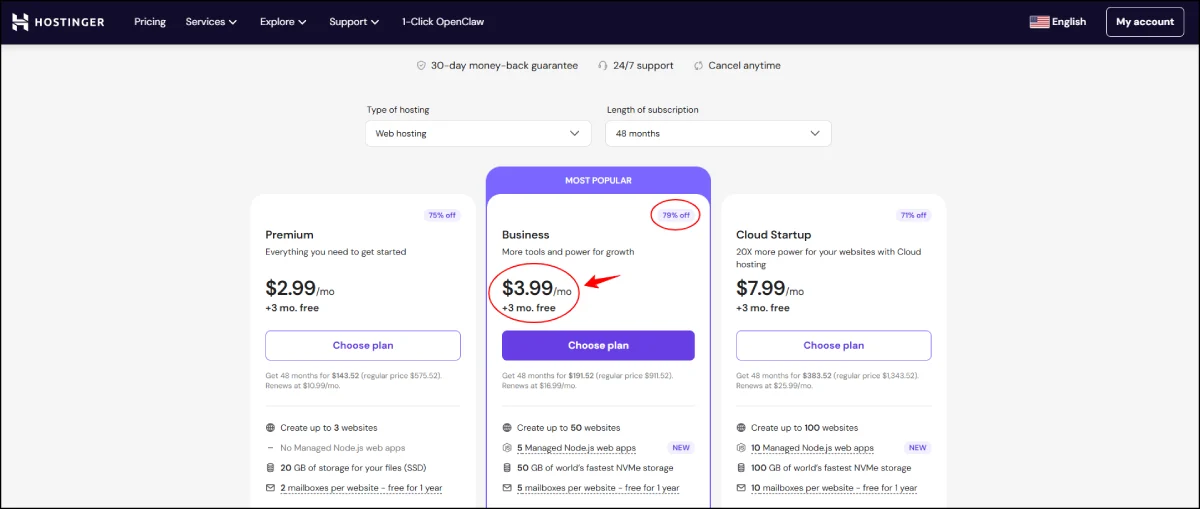
This bait-and-switch tactic is widespread. Always read the renewal pricing before you commit, and calculate the total cost of ownership over a realistic 2–3 year period. A host that charges $3.99/month with consistent renewal pricing can easily be cheaper than a host that starts at $1.99/month but renews at $10.99.
For this exact reason, comparing hosts like Hostinger vs GoDaddy or Hostinger vs Namecheap requires looking beyond headline prices and examining the full renewal economics.
5. Security Vulnerabilities and Shared Risk
On overcrowded shared servers, security isolation is often inadequate. If one website on your shared server gets hacked, infected with malware, or compromised through a vulnerable plugin, there is a non-trivial risk that the damage can spread to neighbouring accounts.
Budget hosts frequently skip proactive malware scanning, automated SSL renewal, web application firewalls (WAF), and DDoS protection — treating these as paid add-ons rather than essentials. The cheapest plans often don't even include free SSL certificates, which means your site runs on HTTP — a flag that Google actively uses to demote search rankings and warn visitors with "Not Secure" browser alerts.
6. Support That Disappears When You Need It Most
When your bakery website goes dark on Christmas Eve, you need a human being on the phone or live chat — not a ticket system with a 48-hour SLA.
Budget hosting support is consistently one of the most complained-about failure points in the industry. Thin support teams, outsourced agents with limited technical expertise, and response windows measured in days rather than minutes are the norm at the lower end of the market.
The real cost of that slow support isn't just frustration — it's extended downtime, lost revenue, and compounded SEO damage that could have been minimised with a faster response.
How Cheap Hosting Directly Hurts Your SEO
It's worth spending a dedicated moment here, because the SEO consequences of bad hosting are underestimated by most website owners.
Google's Core Web Vitals — Largest Contentful Paint (LCP), First Input Delay (FID), and Cumulative Layout Shift (CLS) — are directly influenced by your server's performance. A slow server produces a high LCP, which signals poor user experience and triggers ranking penalties.
Beyond Core Web Vitals, here's how cheap hosting damages your search visibility:
- Slow TTFB delays how quickly Google can render and assess your page content
- Frequent downtime reduces crawl frequency and delays indexing of new content
- Insecure HTTP connections generate "Not Secure" warnings that increase bounce rate
- Overcrowded IPs can share a server IP with spam, adult, or penalised sites — which creates guilt-by-association risk in certain contexts
- Poor server locations far from your audience increase latency and inflate Core Web Vitals scores
If you're investing time and money in content creation, on-page optimisation, and backlink building, then saving ₹100/month on a cheap hosting plan and letting it quietly sabotage your rankings is one of the worst tradeoffs you can make.
What to Actually Look for in a Web Hosting Provider
Switching your mindset from "what's the cheapest option?" to "what's the best value per rupee/dollar?" changes everything. Here's what genuinely matters.
Guaranteed Uptime with Transparent SLA
Look for a host that guarantees 99.9% or higher uptime in their official SLA, with defined compensation if they fail to deliver. Legitimate hosts back this up with credits to your account. Budget hosts rarely offer enforceable SLA terms.
Server Technology That Actually Performs
LiteSpeed servers with NVMe SSD storage are the current standard for performance-conscious hosts. LiteSpeed outperforms Apache on WordPress sites by a significant margin — especially combined with built-in LSCache, which eliminates the need for a separate caching plugin on most setups.
For high-traffic or resource-intensive sites, exploring best cloud hosting services gives you elasticity that shared plans simply cannot offer — resources scale up automatically during traffic surges instead of your site choking.
Transparent, Predictable Renewal Pricing
The best hosting providers are honest about what you'll pay after the initial term. Some — like Hostinger — keep their renewal pricing significantly lower than industry average, making them genuinely cost-effective over a 2–3 year ownership window.
Security That's Included, Not Upsold
Free SSL for all domains (auto-renewing), daily backups, malware scanning, and DDoS protection should come included — not as a premium add-on. If a host charges extra for SSL in 2026, that's a red flag.
Scalable Infrastructure
Your needs today are not your needs in two years. Choose a host with a clear upgrade path from shared → cloud → VPS → dedicated, so your hosting can grow with your business rather than forcing a disruptive migration at a critical moment.
If you're already at the stage where shared hosting isn't enough, our guide to best dedicated hosting servers walks through exactly what to look for when scaling up.
The Sweet Spot: Affordable Hosting That Actually Delivers
"Affordable" and "cheap" are not the same word, even if they're used interchangeably in most hosting ads.
Affordable hosting delivers solid performance, reliable uptime, and transparent pricing at a price point accessible to individuals and small businesses. Cheap hosting sacrifices performance and reliability to offer an unsustainably low price — and makes up the difference through upsells, hidden fees, and degraded service.
In the $1.99–$4.99/month tier, there's now a meaningful quality gap between providers. Hostinger, for instance, consistently outperforms similarly-priced alternatives with LiteSpeed servers, NVMe storage, a free domain on qualifying plans, and renewal rates that don't triple after your first term.
The comparison between Bluehost vs Hostinger is a useful exercise in this — two brands that look similar on a pricing page but diverge significantly on performance metrics, renewal economics, and server technology.
For anyone running or starting a business website, the best web hosting for small business isn't the cheapest per month — it's the one that costs the least when you account for downtime, lost revenue, slower SEO progress, and migration headaches.
How to Compare Hosting Plans Without Getting Tricked
Most hosting comparison tables lead with monthly price, storage, and bandwidth — the easiest numbers to manipulate. Here's a framework that cuts through the noise.
Step 1 — Calculate the real annual and 3-year cost. Take the advertised monthly price, multiply by the required term length, then find the renewal price and calculate the ongoing cost. Add up both periods for a true ownership cost.
Step 2 — Check independent uptime data. Sites like UptimeRobot reports, hosting review aggregators, and independent tests give you real uptime numbers rather than marketing claims. Look for sustained data over 6–12 months, not a single test window.
Step 3 — Test support before you buy. Open a pre-sales chat with a host you're evaluating. Ask a technical question — about TTFB, server stack, or their uptime SLA. The speed and quality of that response is a reliable signal of what support will be like when you actually need it.
Step 4 — Look for included security. Free SSL on all domains, daily automatic backups, and at minimum a basic firewall should be included on every plan. Count the cost of any security features that are extras.
Step 5 — Read the ToS on resource limits. Many "unlimited" shared hosting plans have CPU throttling clauses buried in the terms of service. When your site hits a traffic threshold, they throttle your resources. Understand what "unlimited" actually means before you commit.
Our full best web hosting guide applies exactly this kind of framework to the most popular hosts available today — so you can compare apples to apples rather than marketing copy to marketing copy.
Starting a Blog or Business Website? Get the Foundation Right
If you're at the beginning of your website journey — figuring out how to start a blog or launching a small business site — your hosting decision is one of the few foundational choices that's genuinely hard to fix later.
A bad hosting choice means a future migration: updating nameservers, moving files, reconfiguring databases, waiting for DNS propagation, and praying nothing breaks in the process. It's a multi-hour job at minimum. Get it right from the start and you can focus your energy on content, marketing, and growth instead.
And if you're in India specifically, choosing from the best domain registrar in India while bundling hosting and domain from the same provider — verified for India-specific pricing, INR billing, and local support availability — saves both money and administrative overhead.
For WordPress-powered sites specifically, the best WordPress hosting guide covers performance-tested providers with real TTFB and uptime data — so you can see actual numbers rather than benchmark claims.
The Bottom Line
The cheapest web hosting plan you can find is almost never the cheapest solution in practice.
The bakery owner who lost seven hours of December revenue on a ₹59/month plan would have been dramatically better off paying ₹150–₹200/month for a host with real uptime guarantees, faster servers, and 24/7 live support. The extra ₹100/month — the cost of two cups of coffee — would have paid for itself the first time she didn't lose a weekend's orders to an avoidable outage.
Web hosting is the infrastructure your entire online presence runs on. It affects your Google rankings through Core Web Vitals and crawl reliability. It affects your revenue through uptime and page speed. It affects your security, your credibility, and your long-term growth trajectory.
Cheap hosting doesn't save you money. It borrows against your future.
Before your next renewal email lands in your inbox, spend twenty minutes actually comparing what you're paying against what you're getting — and what better options exist at a similar or marginally higher price point. The difference between a bad host and a genuinely good one is often smaller than you think, and the gap in performance is far larger than the marketing makes it seem.
If you want to cut costs without cutting corners, look for a verified discount — our Hostinger coupon codes page is updated monthly with the highest available discounts, so you can get quality hosting at the lowest real price available right now.
Your website deserves a foundation that won't collapse under pressure. So does your business.
Published on Webseotrends.com | Category: Web Hosting | Author: Mani Pathak Word Count: ~2,200 | Last Updated: May 2026



의견을 남겨주세요