
Rath Yatra
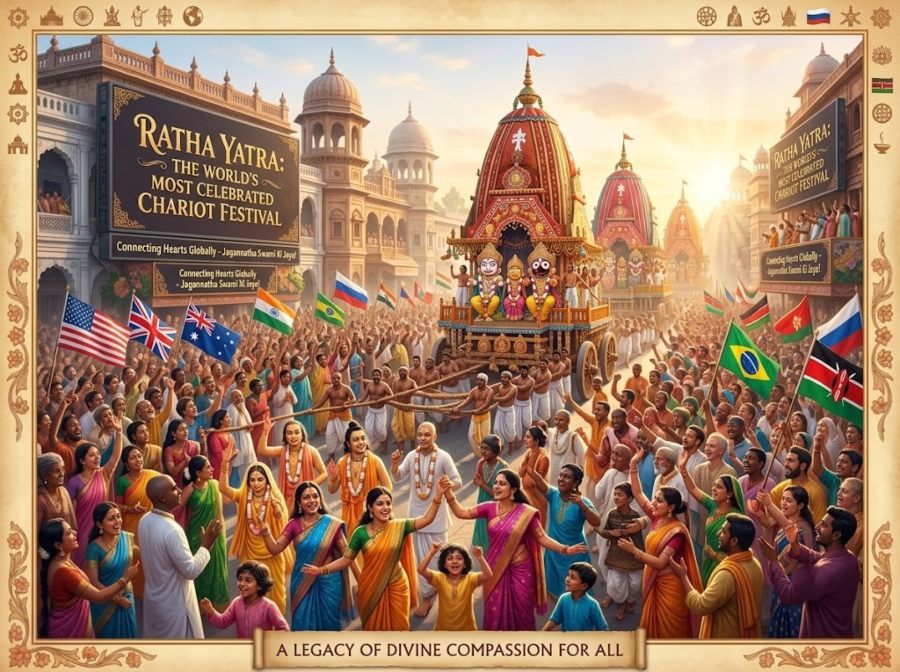
Imagine standing in a sea of thousands of people as enormous wooden chariots begin to roll through the streets. The air vibrates with the sound of cymbals, conch shells, and joyful chanting. Flowers shower from balconies, strangers smile at one another, and for a few unforgettable hours, social differences seem to disappear. This is the magic of Ratha Yatra, a festival that has crossed oceans and cultures while preserving its spiritual heart. Those eager to understand its deeper meaning or bring home authentic devotional items often explore mayapur.store, where the rich traditions of Vaishnavism are shared with devotees around the world.
Today, Ratha Yatra is celebrated in hundreds of cities across every inhabited continent. From the ancient streets of Puri to major capitals like London, New York, Melbourne, Johannesburg, and Tokyo, millions gather each year to honor Lord Jagannath. What began as a sacred procession in eastern India has become one of the world's best-known religious festivals, drawing people from diverse cultures, faiths, and backgrounds.
But how did this extraordinary celebration grow from a regional tradition into a global spiritual event?
The answer lies in a remarkable blend of history, devotion, philosophy, and the universal appeal of divine love.
More Than a Festival—A Journey of the Heart
Many religious celebrations commemorate a historical event.
Ratha Yatra is different.
It invites everyone to participate directly.
The Sanskrit words explain its meaning beautifully.
- Ratha
- Yatra
Yet the festival represents far more than moving beautifully decorated carts through city streets.
For devotees, the journey symbolizes the Lord coming out of His temple to bless every living being.
Unlike ordinary occasions where pilgrims travel to meet the Deity, Ratha Yatra reverses that relationship.
The Lord comes to the people.
This simple idea explains much of the festival's universal attraction.
No invitation is required.
No social status matters.
No special qualification is needed.
Anyone may join the procession, chant the holy names, pull the ropes of the chariot, or simply watch with appreciation.
That spirit of openness has remained unchanged for centuries.
The Ancient Roots of Ratha Yatra
The history of Ratha Yatra stretches back many centuries, with its most famous celebration taking place in Puri.
The festival centers on Lord Jagannath, accompanied by His elder brother Balabhadra and sister Subhadra.
Each year, the three Deities leave the magnificent Jagannath Temple and travel to the Gundicha Temple, where They remain for several days before returning.
Although historians debate the exact beginnings of the festival, sacred texts and local traditions agree on one point.
This procession has been celebrated for hundreds of years with uninterrupted devotion.
Generation after generation has carefully preserved its rituals, ensuring that the festival remains deeply connected to its spiritual origins.
Why Does Lord Jagannath Leave the Temple?
This question fascinates many first-time visitors.
Most temples invite devotees to come before the Deity.
During Ratha Yatra, the opposite happens.
Lord Jagannath personally comes out to meet everyone.
Gaudiya Vaishnava teachers explain that this pastime reflects Krishna's intense desire to reunite with His devotees.
The journey from the Jagannath Temple to Gundicha Temple is often understood as symbolizing Krishna's return to Vrindavan, the land of His childhood pastimes.
For devotees, this movement represents love rather than ceremony.
It reminds us that the Supreme Lord actively seeks a relationship with every soul.
Rather than waiting behind temple walls, He reaches out with compassion.
That message continues to resonate with people regardless of nationality or religious background.
The Beautiful Mystery Behind Lord Jagannath's Appearance
One of the first things people notice about Lord Jagannath is His unique form.
Large round eyes.
A broad smile.
Short arms.
A simple wooden body unlike any other Deity.
To someone unfamiliar with Vaishnava tradition, this appearance may seem unusual.
Yet every feature carries profound meaning.
Gaudiya acharyas explain that Lord Jagannath's form reflects overwhelming spiritual ecstasy.
According to devotional tradition, Krishna once became deeply absorbed in hearing about the love of the residents of Vrindavan.
His emotions became so intense that His bodily features transformed into the extraordinary form now worshipped as Lord Jagannath.
His wide eyes express wonder.
His joyful smile reflects limitless affection.
His form reminds devotees that divine love cannot always be contained within ordinary expressions.
The Chariots Are Masterpieces of Sacred Craftsmanship
Every year, entirely new chariots are constructed for the festival in Puri.
This tradition surprises many visitors.
Instead of reusing old structures, skilled artisans begin building fresh chariots months before the celebration.
The process follows strict traditional guidelines passed down through generations.
Each chariot possesses its own identity.
Lord Jagannath's Chariot – Nandighosa
- The largest of the three.
- Decorated with vibrant yellow and red cloth.
- Pulled by thousands of devotees.
Balabhadra's Chariot – Taladhwaja
- Slightly smaller.
- Distinguished by green and red decorations.
- Represents strength and protection.
Subhadra's Chariot – Darpadalana
- Positioned between Her brothers.
- Decorated with black and red coverings.
- Symbolizes compassion and harmony.
These magnificent wooden structures are not merely vehicles.
They become sacred spaces where devotion, artistry, engineering, and tradition come together.
Why Millions Long to Pull the Ropes
Perhaps no image captures the spirit of Ratha Yatra better than thousands of hands grasping the enormous ropes attached to the chariots.
People often wait for hours to receive even a brief opportunity.
Why?
The answer goes far beyond symbolism.
Pulling the Lord's chariot represents one's willingness to assist in His divine mission.
It becomes an act of humble service.
In Vaishnava understanding, devotional service is never measured by size.
A small act performed with sincerity carries immense spiritual value.
Whether someone helps pull the rope for five seconds or five minutes matters little.
The mood behind the action matters most.
Many devotees describe this moment as deeply emotional because it creates the feeling of personally serving Lord Jagannath.
A Festival Where Kings and Commoners Stand Together
One remarkable aspect of Ratha Yatra has remained consistent throughout history.
Social barriers become remarkably less significant.
Rich and poor.
Young and old.
Scholars and laborers.
Visitors and lifelong devotees.
Everyone participates together.
A famous tradition illustrates this beautifully.
Before the procession begins, the Gajapati King of Puri performs the Chhera Pahanra ceremony.
Using a golden broom, he ceremonially sweeps the area around the Lord's chariot.
This public act carries profound meaning.
Although he rules a kingdom, before Lord Jagannath he considers himself a servant.
The ceremony reminds everyone that worldly titles disappear in the presence of God.
True greatness is measured by humility.
The Festival That Captured Sri Chaitanya Mahaprabhu's Heart
No discussion of Ratha Yatra is complete without remembering Sri Chaitanya Mahaprabhu.
During His years in Puri, He participated in the festival with extraordinary devotion.
Historical accounts describe Him dancing before Lord Jagannath's chariot in deep spiritual ecstasy.
Thousands watched as His kirtana transformed the atmosphere.
For Sri Chaitanya Mahaprabhu, Ratha Yatra was not simply a public celebration.
It expressed the deepest emotions of divine love.
Gaudiya Vaishnava commentators explain that as Lord Jagannath traveled toward Gundicha Temple, Sri Chaitanya experienced the spiritual mood of Srimati Radharani, joyfully welcoming Krishna's symbolic return to Vrindavan.
This understanding added remarkable depth to the festival and continues to shape Gaudiya celebrations today.
Why Ratha Yatra Continues to Inspire People
Many festivals become smaller as societies change.
Ratha Yatra has followed the opposite path.
Its appeal continues to grow because it speaks to something universal.
People naturally long for connection.
They seek joy that goes beyond temporary entertainment.
They appreciate traditions that bring communities together instead of dividing them.
Ratha Yatra offers all of these.
It celebrates movement rather than isolation.
Participation rather than observation.
Service rather than status.
Most importantly, it reminds us that divine love is not hidden behind closed doors.
It comes out into the streets, inviting every person—regardless of background—to take one step closer to the Lord.
From the Streets of Puri to the Streets of the World
For centuries, the grand procession in Puri remained the heart of Ratha Yatra. Pilgrims traveled from distant regions to witness the festival, often considering the journey a once-in-a-lifetime blessing.
Then something remarkable happened.
The spirit of Ratha Yatra crossed borders.
What had once belonged to one sacred city gradually became a celebration embraced across the globe.
This transformation was not driven by tourism or commercial promotion.
It was carried by devotion.
As the teachings of Gaudiya Vaishnavism spread beyond India, devotees naturally wanted to recreate the experience of Lord Jagannath traveling among the people. The festival adapted to different countries while preserving its spiritual essence.
Today, beautifully decorated chariots roll through the streets of cities large and small.
Children dance beside them.
Families chant together.
Visitors often join out of curiosity and leave with a deeper appreciation for the festival's message of unity and compassion.
No matter the language spoken or the country where it takes place, the purpose remains unchanged.
The Lord comes to bless everyone.
How ISKCON Introduced Ratha Yatra to a Global Audience
One of the most significant chapters in the festival's modern history began with A. C. Bhaktivedanta Swami Prabhupada.
When he carried the teachings of Sri Chaitanya Mahaprabhu to the West in the 1960s, he also introduced many traditional Vaishnava festivals.
Among them, Ratha Yatra quickly became one of the most recognizable.
The first celebrations outside India attracted attention because they were unlike anything many people had seen before.
Large wooden chariots rolled through busy city streets.
Devotees sang the Hare Krishna maha-mantra with enthusiasm.
Free sanctified food, known as prasadam, was shared with thousands.
People from every background felt welcome.
Over time, annual Ratha Yatra festivals became established in cities across North America, Europe, South America, Africa, Australia, and Asia.
What began as a small effort grew into one of the world's largest recurring spiritual celebrations.
Why People Return Year After Year
Ask regular participants why they come back, and the answers rarely focus on the size of the crowd.
Instead, they speak about the atmosphere.
There is something refreshingly genuine about the festival.
People experience:
- Joy without intoxication.
- Celebration without competition.
- Community without social barriers.
- Spirituality without pressure.
- Service without expectation of reward.
Even those who know little about Lord Jagannath often describe feeling peaceful while walking beside the chariots or hearing the rhythmic chanting.
This emotional connection explains why Ratha Yatra continues to attract first-time visitors alongside lifelong devotees.
The Deep Symbolism Hidden Within the Journey
Every stage of Ratha Yatra carries spiritual meaning.
The chariot itself is often compared to the human body.
The ropes symbolize devotional service.
The movement toward the destination reflects the soul's journey back to Krishna.
The festival quietly reminds us that life itself is a journey.
People spend years chasing success, comfort, and recognition.
Yet lasting fulfillment comes from moving closer to the Supreme Lord.
Unlike many philosophical ideas that remain abstract, Ratha Yatra allows participants to physically experience this symbolism.
Walking beside the Lord.
Pulling the ropes.
Singing His names.
Serving others.
Each action reinforces the deeper message.
Music That Unites Thousands of Hearts
One of the defining features of Ratha Yatra is kirtana.
Drums set the rhythm.
Kartals add bright, joyful accents.
Voices rise together in the chanting of the Hare Krishna maha-mantra.
The result is far more than music.
Kirtana creates shared spiritual experience.
People who have never met naturally begin singing together.
Differences of language, nationality, profession, and age gradually fade into the background.
For many participants, this becomes the most memorable part of the festival.
Long after the procession ends, the sound of the holy names remains in their hearts.
Prasadam: Sharing Mercy Through Food
Every major Ratha Yatra celebration includes another cherished tradition.
The distribution of prasadam.
Food first offered to Krishna is lovingly shared with everyone.
This practice reflects one of the central values of Vaishnava culture.
Hospitality.
Nobody is excluded.
Whether someone arrives as a devoted practitioner or simply as a curious visitor, they are welcomed.
Meals become opportunities for kindness.
Simple conversations begin.
Friendships form.
In this way, prasadam nourishes both body and spirit.
Many people first discover Krishna consciousness through a plate of sanctified food offered during Ratha Yatra.
Ratha Yatra's Message Is More Relevant Than Ever
Modern life often moves at extraordinary speed.
People constantly chase deadlines, notifications, and responsibilities.
Amid that noise, Ratha Yatra offers something refreshingly different.
It invites people to slow down.
To sing.
To smile.
To serve.
To remember that happiness grows through connection rather than consumption.
Its message does not depend upon nationality or religious identity.
Anyone can appreciate humility.
Anyone can value compassion.
Anyone can recognize the beauty of people working together in harmony.
This universal appeal explains why the festival continues expanding into new communities every year.
Five Lessons We Can Carry Home
The greatness of Ratha Yatra is not limited to one annual celebration.
Its teachings remain relevant throughout the year.
1. Humility Creates Real Greatness
The King of Puri sweeping before Lord Jagannath's chariot reminds us that leadership begins with service.
2. Joy Multiplies When Shared
The festival encourages collective celebration rather than individual achievement.
Happiness grows stronger when experienced together.
3. Every Person Deserves Compassion
Lord Jagannath comes outside the temple to bless everyone.
His mercy is not restricted by social boundaries.
4. Spiritual Life Is Active
Devotion involves movement.
Walking.
Singing.
Serving.
Giving.
Growing.
The festival encourages participation rather than passive observation.
5. The Lord Always Comes Closer
Perhaps the most comforting lesson of all is this:
We are not searching alone.
Lord Jagannath also reaches toward us.
That beautiful exchange lies at the heart of Ratha Yatra.
Why the Festival Never Loses Its Beauty
Many celebrations depend upon novelty.
After several years, excitement fades.
Ratha Yatra remains different.
The external procession may look familiar.
The same chariots.
The same chanting.
The same sacred route.
Yet every year brings new experiences.
Children attend for the first time.
Families reunite.
Pilgrims fulfill lifelong dreams.
New friendships begin.
Devotees deepen their understanding.
The festival feels fresh because devotion itself continues to grow.
Every sincere participant experiences the journey a little differently.
Frequently Asked Questions
Why is Ratha Yatra celebrated?
Ratha Yatra commemorates Lord Jagannath's annual journey from the Jagannath Temple to the Gundicha Temple, symbolizing His loving desire to meet His devotees.
Where is the original Ratha Yatra held?
The most famous celebration takes place in Puri, where the festival has been observed for centuries.
Can non-Hindus participate?
Yes.
Public Ratha Yatra processions around the world warmly welcome everyone to watch, chant, help pull the chariot, and accept prasadam.
Why are new chariots built every year?
The annual construction reflects an ancient tradition that honors Lord Jagannath with freshly crafted chariots made according to sacred guidelines.
Final Thoughts
Ratha Yatra has earned its place as the world's most celebrated chariot festival because it offers far more than an impressive public procession. It brings together history, devotion, sacred craftsmanship, music, service, and profound spiritual symbolism in a way that welcomes every participant.
From the timeless streets of Puri to major cities across the globe, its message has remained remarkably consistent. Lord Jagannath does not wait behind temple doors for people to find Him. He comes forward with open-hearted compassion, inviting every soul to experience divine love through chanting, service, and joyful remembrance.
That enduring spirit explains why millions continue to gather each year with eager hearts and willing hands. As the great chariots begin to move and the sound of the holy names fills the air, participants are reminded that the journey is not only about the Lord traveling through the streets.
It is also about the soul moving one step closer to Him.
The wheels continue to turn.
The ropes continue to be pulled.
The chanting continues to echo around the world.
And with every Ratha Yatra, the timeless invitation of Lord Jagannath reaches yet another generation, proving that a festival rooted in devotion can unite humanity through faith, joy, humility, and the universal language of divine love.



의견을 남겨주세요