
Introduction
Circular displays are becoming more visible across modern embedded products. What was once mainly used in wearable devices is now appearing in control knobs, smart home panels, medical instruments, and industrial interfaces.
As product design moves toward more compact and visually refined interfaces, round TFT LCD modules are increasingly used where traditional rectangular screens feel out of place. In many cases, the goal is not only to display information, but also to improve how users interact with the device.
This article looks at round LCD displays from a practical perspective—what they are, how they differ from standard panels, and where they make sense in real embedded designs.
Why Circular Displays Are Becoming More Common
Rectangular screens have dominated embedded systems for years, mainly because they are easy to manufacture and integrate. However, not all devices naturally fit a rectangular interface.
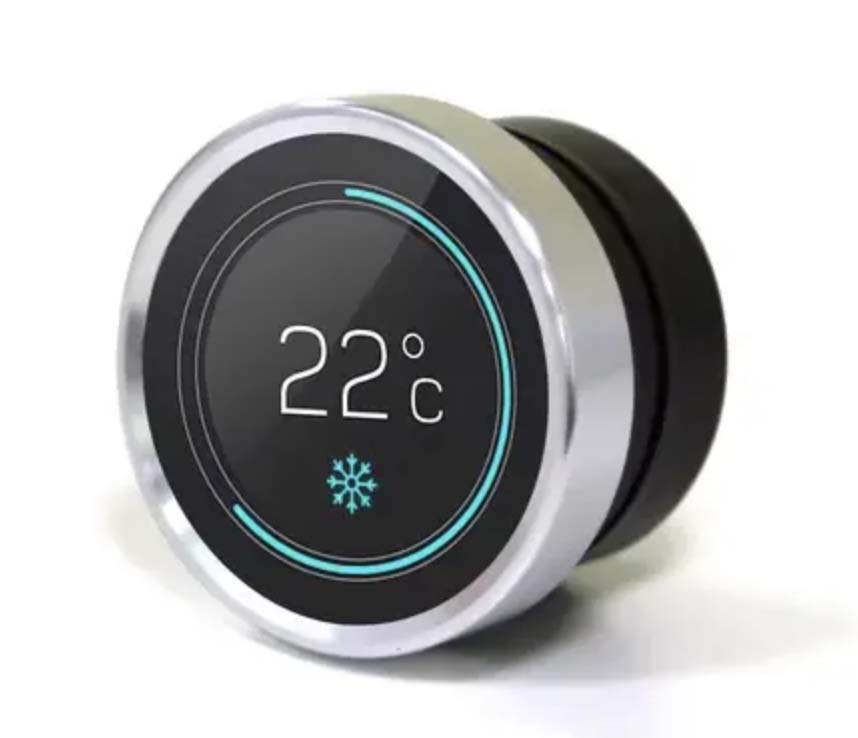
Circular displays introduce a different interaction model. In applications such as rotary controllers or smart thermostats, a round UI aligns better with how users expect to interact with the device.
Some of the reasons behind their growing adoption include:
A more natural fit for rotary controls and dial-based interaction
A cleaner and more modern product appearance
Better use of space in compact or symmetric designs
In many designs, the display is no longer just an output device—it becomes part of the physical interface.
What a Round LCD Display Actually Is
A common assumption is that circular displays are simply rectangular panels with unused corners. In reality, most round TFT LCD modules are designed with a circular active area.
This involves several design differences compared to standard displays:
The display area is defined as a true circular region
Backlight structures are adapted to ensure uniform brightness
Optical layers such as polarizers are shaped to match the round geometry
These changes are necessary to maintain image consistency across the entire screen. Without them, brightness and color uniformity would degrade toward the edges.
Another misconception is that round displays are limited in resolution or image quality. In practice, many modern modules support full-color rendering, high pixel density, and wide viewing angles, similar to rectangular IPS panels.
Advantages of Round Interfaces in Embedded Applications
When used appropriately, circular displays offer several design benefits.
Visual Differentiation
Products using round displays tend to stand out immediately. In markets where many devices look similar, this can be a simple way to create a distinct product identity.
Interaction Alignment
Round interfaces pair naturally with rotary encoders or knob-based inputs. Instead of forcing a linear UI onto a circular control, the layout can follow radial patterns that feel more intuitive.
Efficient Use of Space
Some devices—such as thermostats, meters, or control dials—are inherently circular. A round display fits better into these designs without wasting enclosure space.
Display Technologies Used in Round LCD Modules
Circular displays are typically based on TFT LCD technology, with several variations depending on application needs.
TFT LCD
Thin-film transistor displays are the most common option. They provide full-color output, fast response times, and stable performance for embedded applications.
IPS Panels
In-plane switching technology is widely used when viewing angle and color consistency are important. This is especially relevant for devices that are viewed from different positions, such as wall-mounted panels or control knobs.
IPS-based round displays typically offer wide viewing angles, stable color performance, and good contrast levels. When combined with high-brightness backlights, they can remain readable even in challenging lighting conditions.
Transflective Displays
For outdoor or high ambient light environments, transflective LCDs use ambient light to improve visibility. These are less common but useful in specific applications such as outdoor instruments.
OLED Considerations
OLED technology is sometimes used in small consumer devices, but it is less common in industrial applications. Issues such as lifespan and image retention make TFT-based solutions more suitable for long-term use.
Customization Options for Round Displays
Modern round LCD modules are rarely one-size-fits-all. Engineers can typically adjust several parameters based on the application.
Touch Integration
Capacitive touch panels are commonly added to enable interactive interfaces, supporting gestures, taps, and scrolling.
Optical Bonding
Bonding the display to the cover glass can reduce reflections and improve durability. Optical bonding is often used in outdoor or high-brightness environments.
Interface Selection
Different system architectures require different interfaces such as SPI for low-cost systems, RGB for higher refresh rates, and MIPI for compact high-resolution designs. The choice depends on both resolution and processing capability.
Common Use Cases for Round Displays
Circular LCD modules are used across a range of embedded applications.
Wearable Devices
Smartwatches and fitness devices frequently use round displays due to their compact size and visual appeal, often focusing on high pixel density and low power consumption.
Smart Home Interfaces
Devices such as thermostats, kitchen appliances, and air quality monitors benefit from circular layouts. The display can be combined with rotary input to simplify navigation.
Knob-Based Control Systems
Some designs integrate a display directly into a rotary knob, combining a circular panel with touch and encoder input to create a compact interface.
Industrial and Medical Equipment
In industrial tools and portable medical devices, round displays are used where space is limited but readability is critical. High brightness and robust construction are often required.
Choosing the Right Round Display
Selecting a round LCD module requires balancing several technical factors.
Resolution should match the complexity of the user interface. Higher resolutions allow more detailed graphics but require more processing power.
Interface compatibility must align with the main controller to avoid unnecessary complexity.
Size typically ranges from around 1 inch to over 3 inches, depending on enclosure design and content requirements.
Brightness should be chosen based on environment, with higher values needed for outdoor use.
Power requirements must match the system design, especially in low-power or battery-driven products.
Design Considerations for Integration
Mechanical constraints are important. Designers need to consider mounting structure, alignment with rotary components, and internal space for connectors and airflow.
Software design also changes. Standard UI frameworks are optimized for rectangular layouts, so circular interfaces may require custom rendering or adaptation.
Processing capability must be sufficient to handle display resolution and graphical requirements, especially for animated or interactive interfaces.
Conclusion
Round TFT LCD displays are gradually moving from niche use cases into broader embedded applications. Their combination of visual appeal and functional advantages makes them a practical option for products that require intuitive interaction and compact form factors.
They do not replace rectangular displays entirely, but they offer a better fit in scenarios where circular interaction makes sense. When integrated properly, they can improve both usability and product differentiation.
As embedded interfaces continue to evolve, circular displays are likely to remain an important tool for engineers designing modern human-machine interfaces.



의견을 남겨주세요