Welcome to our ThanksLetter!
We are pleased to share our latest update. The past few weeks have been a whirlwind of activity for ThanksCarbon, marked by significant field milestones, technical recognition, and strategic dialogues. From the rice paddies of Battambang to being named a national deep tech startup, we are accelerating our mission to turn climate data into climate action.
Battambang: Investors in the Field
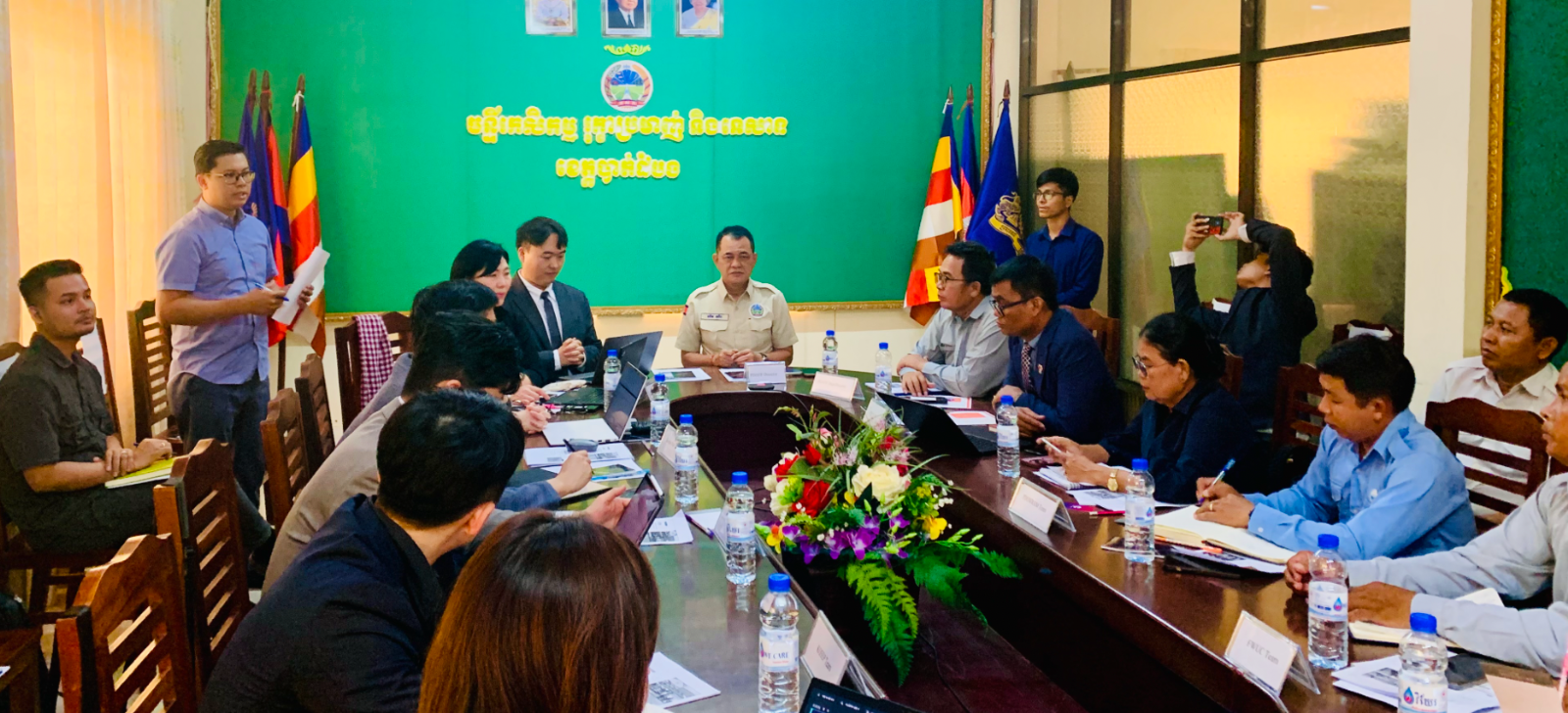
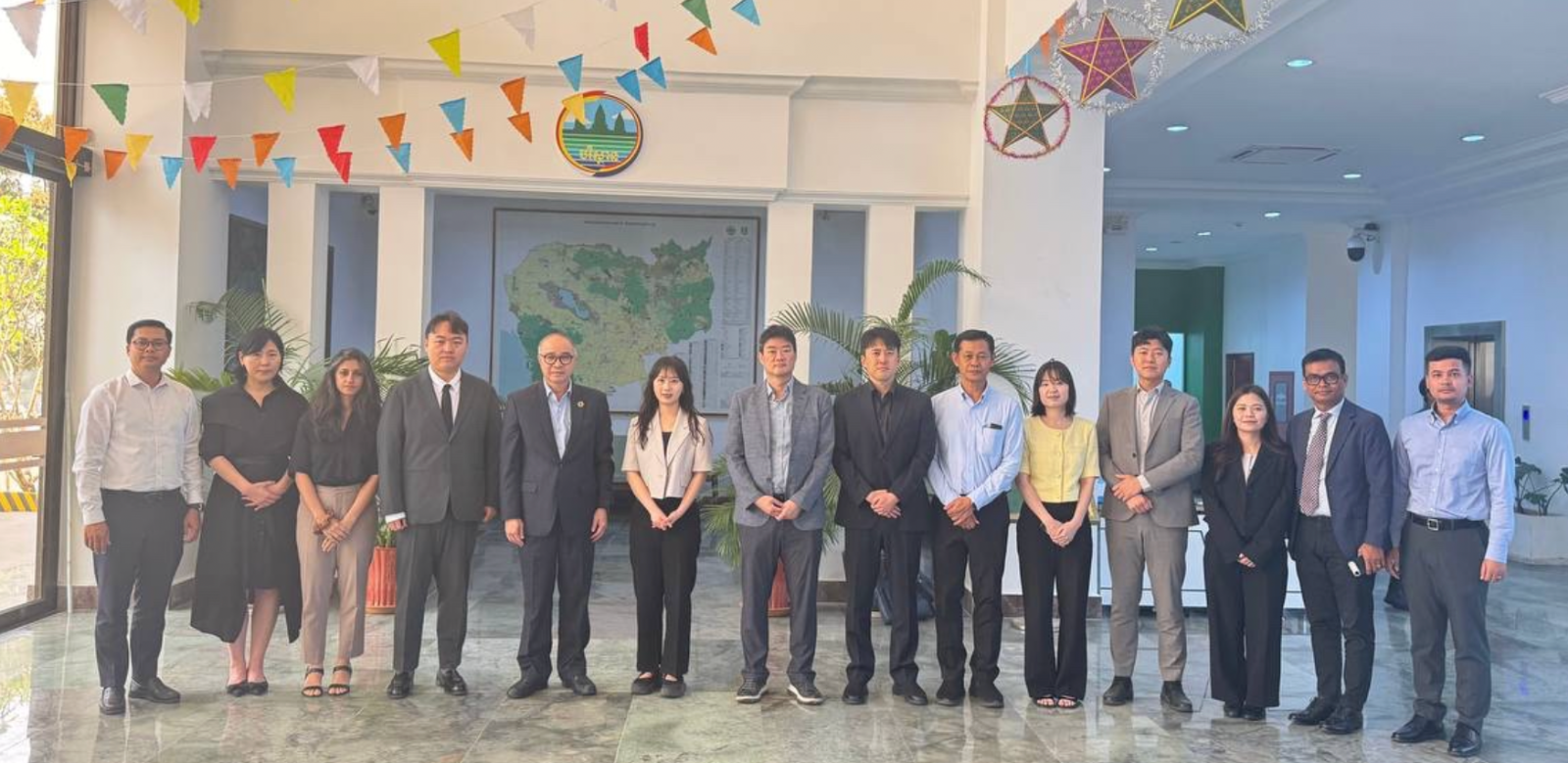
During the three-day visit from April 6th to 8th, a delegation including Korea South-East Power (KOEN) and other Korean investors conducted an on-site due diligence in Battambang, Cambodia. The visit went beyond the conference room slideshow, moving directly into a full-scale field inspection.
The visit began with formal meetings with Battambang's Provincial Department of Agriculture, Forestry and Fisheries (PDAFF), the Provincial Department of Water Resources and Meteorology (PDOWRAM), and the Farmer Water User Community (FWUC). From there, the group moved to the Kanghot Dam irrigation system and into the paddy fields themselves, where AWD practices are being implemented. On-site, Farmer Leaders demonstrated how they upload field photos through the Haimdall platform, and investors viewed live project data directly from the dashboard.
As we prepare for the first season of one of the first Article 6.2-based agricultural carbon projects in Asia, this visit confirmed our operational readiness and the strength of our institutional partnerships.
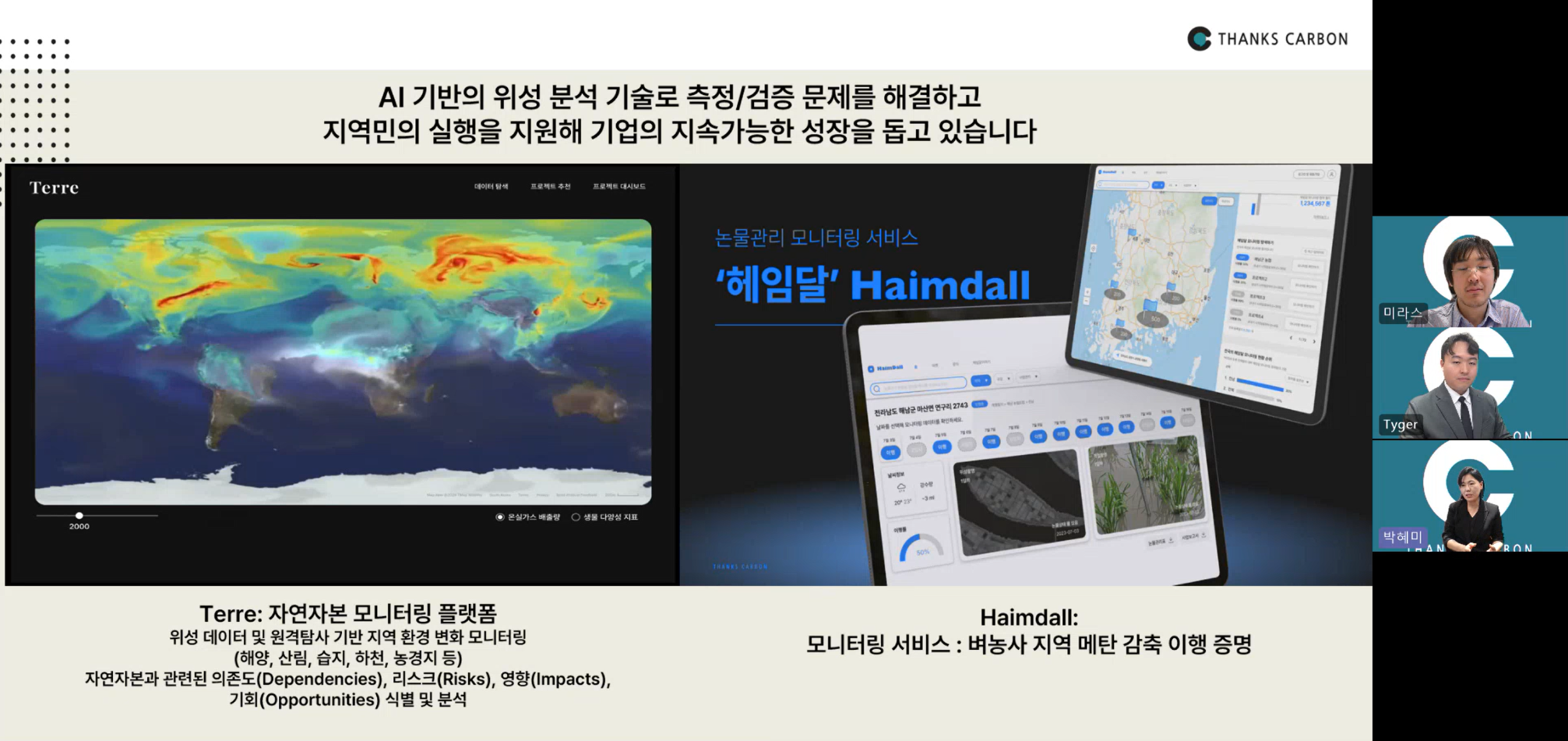
Biodiversity Webinar: Over 120 organizations registered
On March 26th, ThanksCarbon hosted a webinar on biodiversity disclosure. A wide range of participants joined from across the industry spectrum, including major manufacturers in automotive, battery, and petrochemical sectors, engineering firms, ESG consultancies, public institutions, international organizations, environmental NGOs, and universities.
Our pre-event survey revealed a critical "Implementation Gap": while 60% of participants are considering Satellite and AI technology, 61% admitted they are unsure which specific data points to collect for reporting. We addressed these challenges by showcasing our TNFD and GRI 101 alignment strategies, demonstrating how Haimdall uses satellite data to provide the verifiable metrics today’s disclosures demand.
Selected for Korea's Deep Tech Startup Program (DIPS)
We are proud to announce that ThanksCarbon has been selected for the "Super Gap Startup 1000+" (DIPS, Deep-tech Incubator Project for Startups) program by the Korean government. This prestigious initiative identifies and fosters high-potential companies in strategic sectors like AI and Energy.
Our selection is a testament to the potential of our Haimdall technology in the context of accelerating global mandates like EUDR, GRI 101, and TNFD. Being recognized in the AI and Greenhouse Gas Reduction category strengthens our position as a leader in high-integrity MRV.
📌 Related articles
Quick Summary
- Battambang Site Visit, Biodiversity Webinar Recap, DIPS Program Selection
- Why ThanksCarbon Projects Are Built to Follow Through
- Tyger Lee on LinkedIn : Why the carbon market's proof problem matters
- Seagrass Restoration with HSBC : Blue carbon, by hand, in Tongyeong
- Article 6.4's First Credits : A milestone, and what it signals
Project Highlights
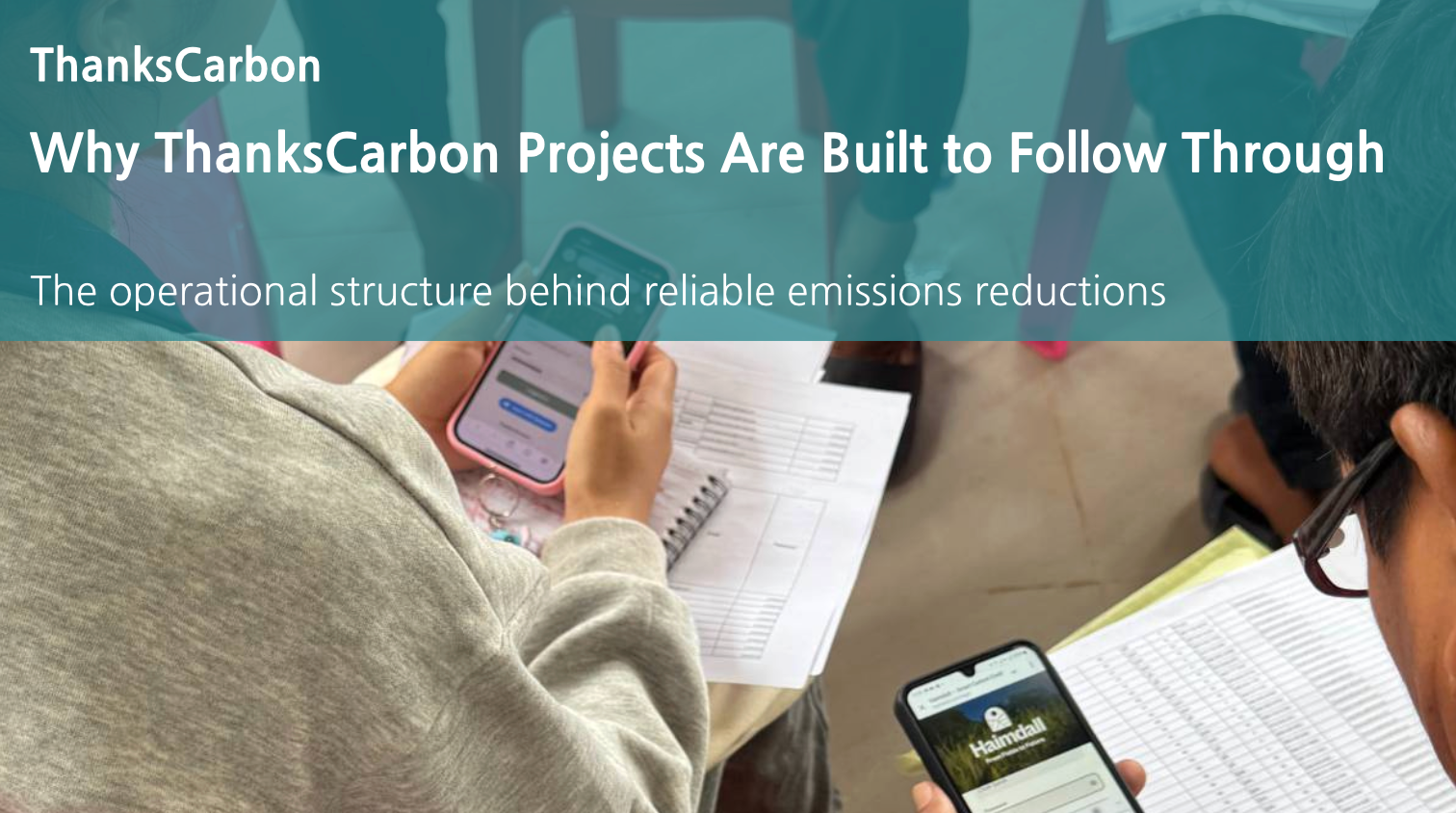
Why ThanksCarbon Projects Are Built to Follow Through
One of the most persistent questions in carbon markets is whether farmers actually change their behavior not just on paper, but in the field, season after season. At ThanksCarbon, this isn't a question we leave to trust. It's something we've engineered into the operational structure of every project.
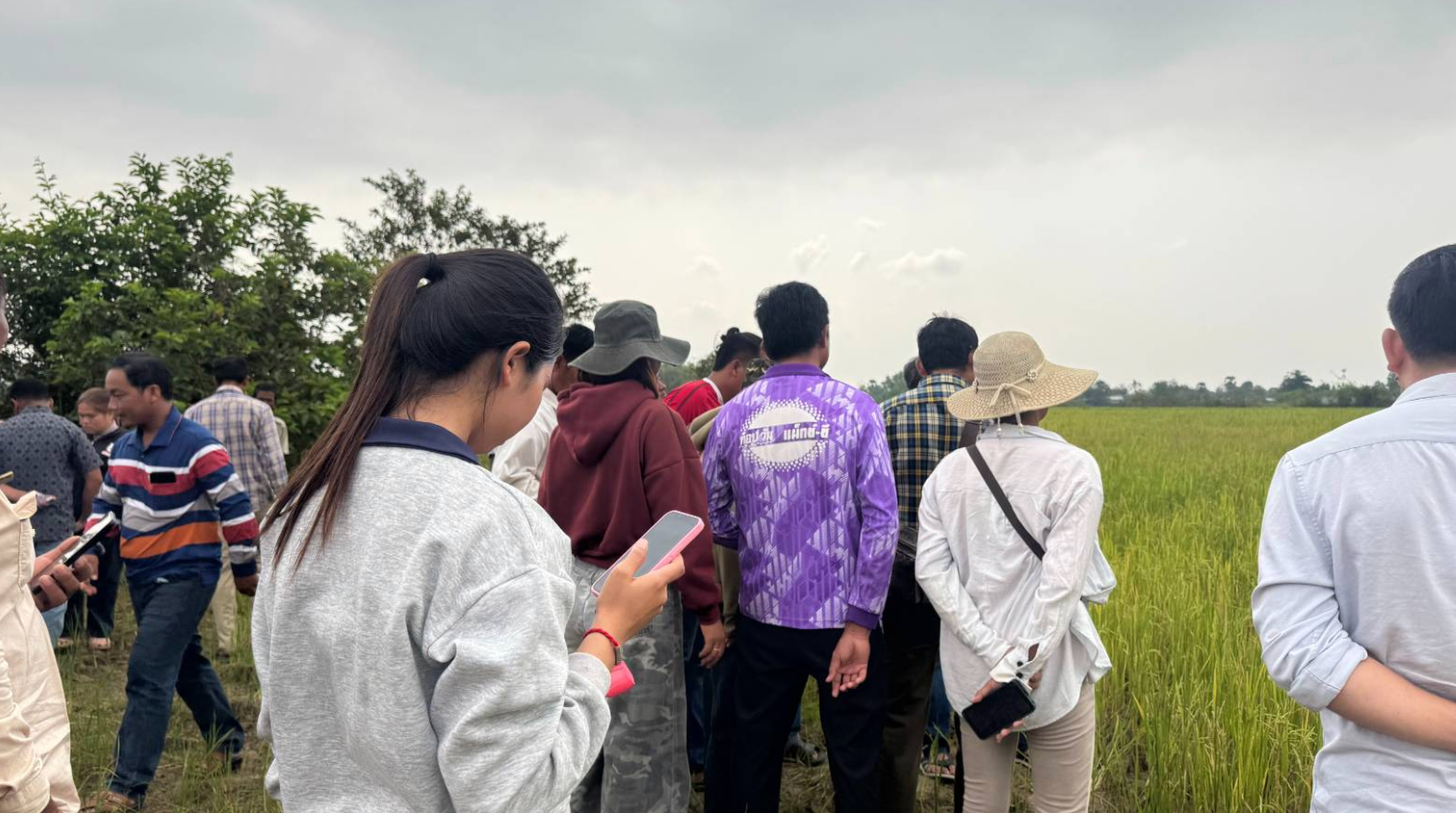
1. A Chain of Accountability
Our field operations follow a rigorous hierarchy: PM → Local Manager → Farmer Leader → Farmer. By design, we keep the farmer's task simple: focusing on water management. The complex data entry and GPS logging are handled by trained Farmer Leaders, ensuring high-quality data without overcomplicating the agricultural process.
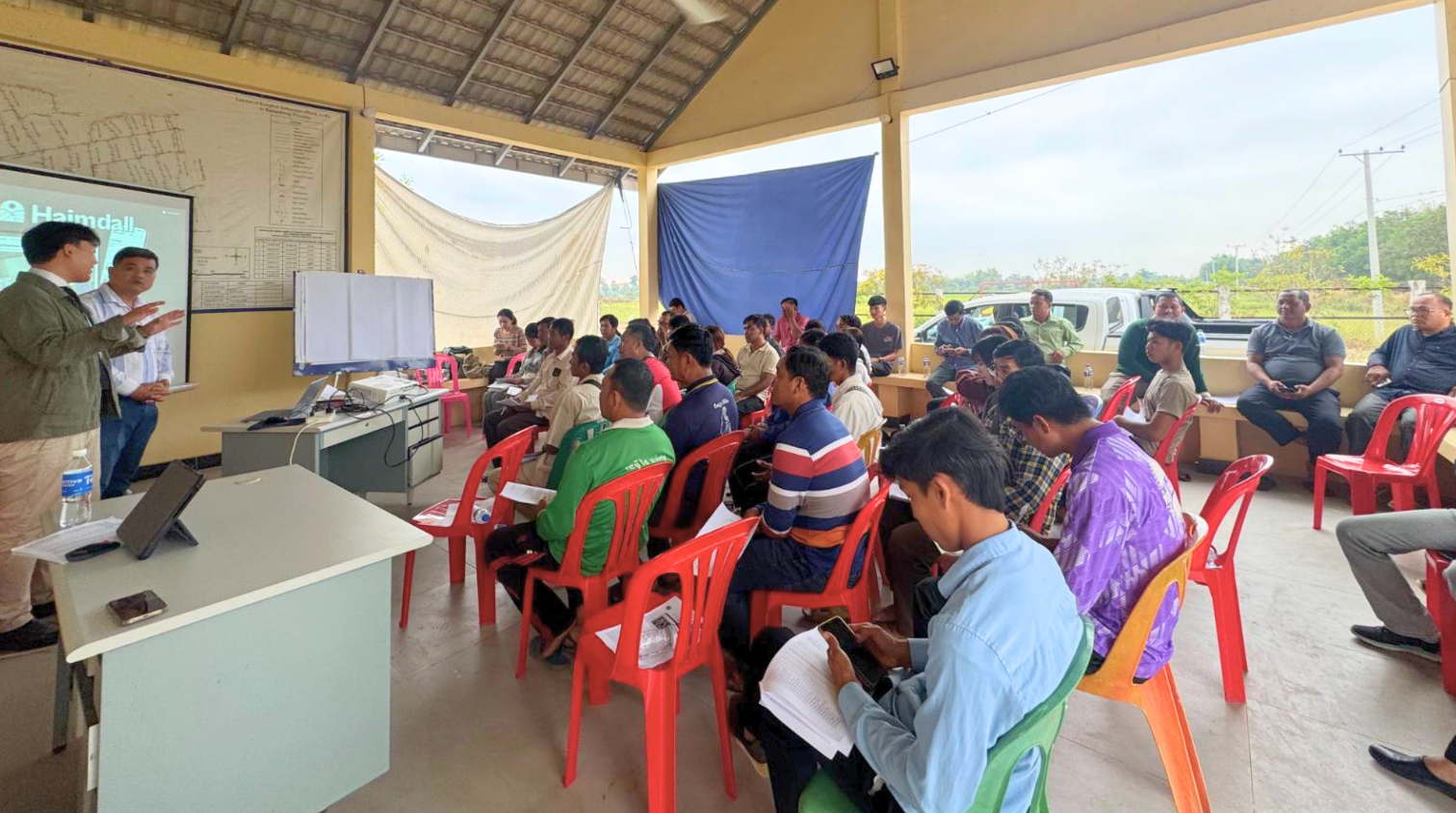
2. Rigorous Certification for Farmer Leaders
Being a Farmer Leader is an earned credential. After intensive training on the Haimdall platform, candidates must pass a certification exam. Those scoring below 70% must retake the test (limit 2 attempts), and those below 60% are disqualified. This ensures that only capable, tech-literate individuals handle our primary data collection.
3. Triple-Layered Verification
Data integrity is maintained through three checks:
- Primary: Real-time GPS and photo verification on the Haimdall app.
- Secondary: Review by Local Managers via the Admin Dashboard.
- Tertiary: Final cross-referencing by the ThanksCarbon HQ team against physical farmer contracts.
4. Real-World Flexibility
In a 10,000-hectare project, variables are inevitable. Because planting cycles vary, we don't force a "one-size-fits-all" schedule. Our protocol allows for staggered AWD based on actual rice growth, a flexibility born from our deep field experience.
5. From Paper to Digital
After processing over 2,000 physical stamps for a previous project, we built a proprietary digital contract service integrated with Haimdall in under a month. The Battambang project successfully launched its digital contracting phase on March 23, eliminating paperwork and streamlining the audit trail.
Taken together, these aren't just operational features. They're the reason emissions reductions in ThanksCarbon projects are a structural outcome, not an optimistic assumption.
➡️ If you're interested in climate and agriculture projects in the Mekong region,
Discuss your project ideas with us!
ThanksCarbon Updates
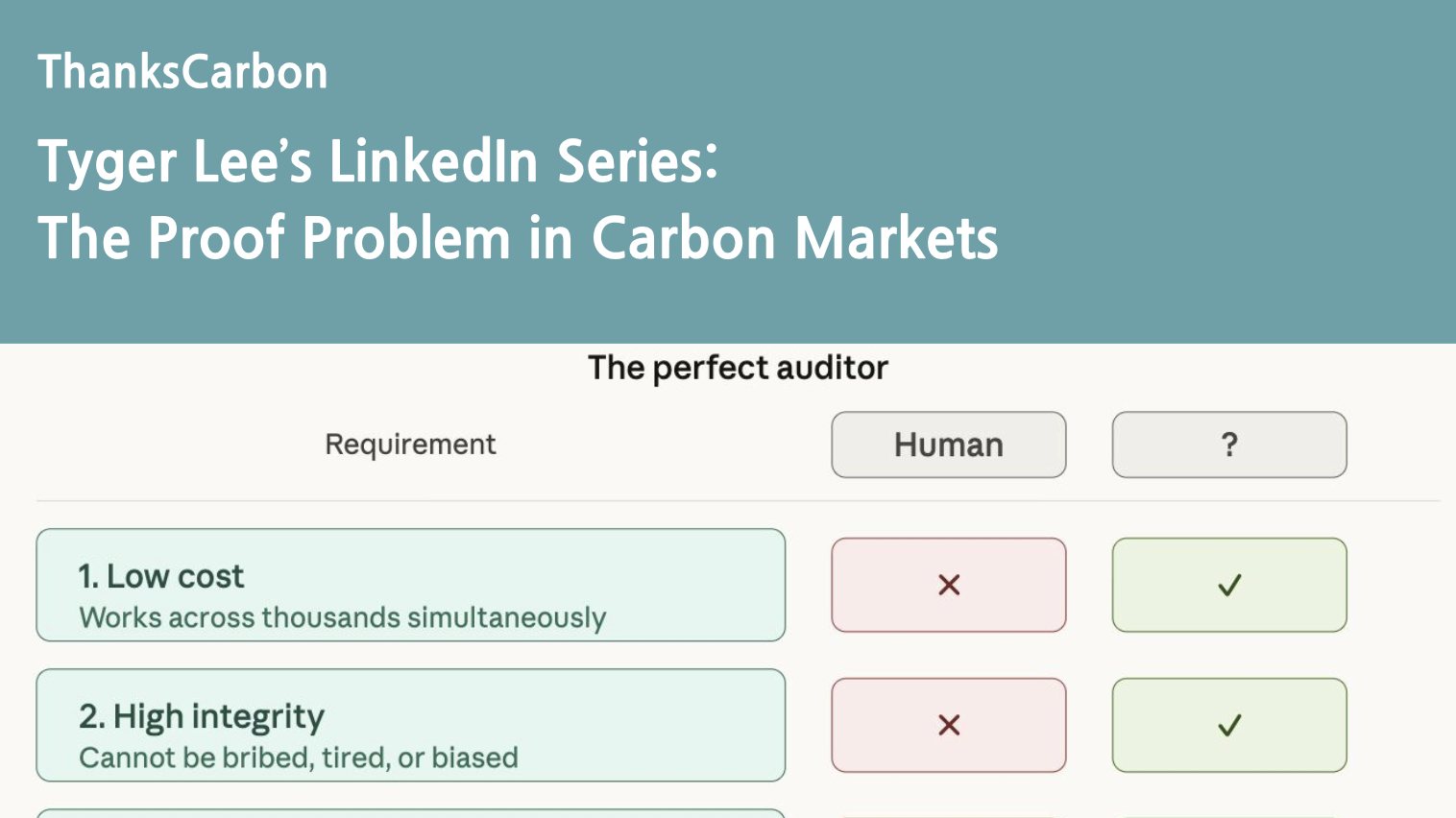
Tyger Lee's LinkedIn Series: The Proof Problem in Carbon Markets
Our Co-CEO/CTO Tyger Lee recently published a 7-part series on LinkedIn that's worth reading if you work anywhere near carbon markets or climate finance.
The central argument: carbon markets aren't broken, but the system for proving that reductions actually happened is. Expensive third-party audits kill project economics. Self-reported forms invite manipulation. In Cambodia's rice paddies, Tyger ran headfirst into this dilemma and started working backward from what a genuinely reliable, scalable verification system would need to look like.
The series defines four requirements for a "ideal verification system," traces why no human auditor meets all of them, and follows the logic toward something that might. The final installments introduce ASKER, ThanksCarbon's AI-based field verification tool, and the philosophy behind it. It's a ground-level account of a real problem and a concrete attempt to fix it. [Read the full series on LinkedIn.]
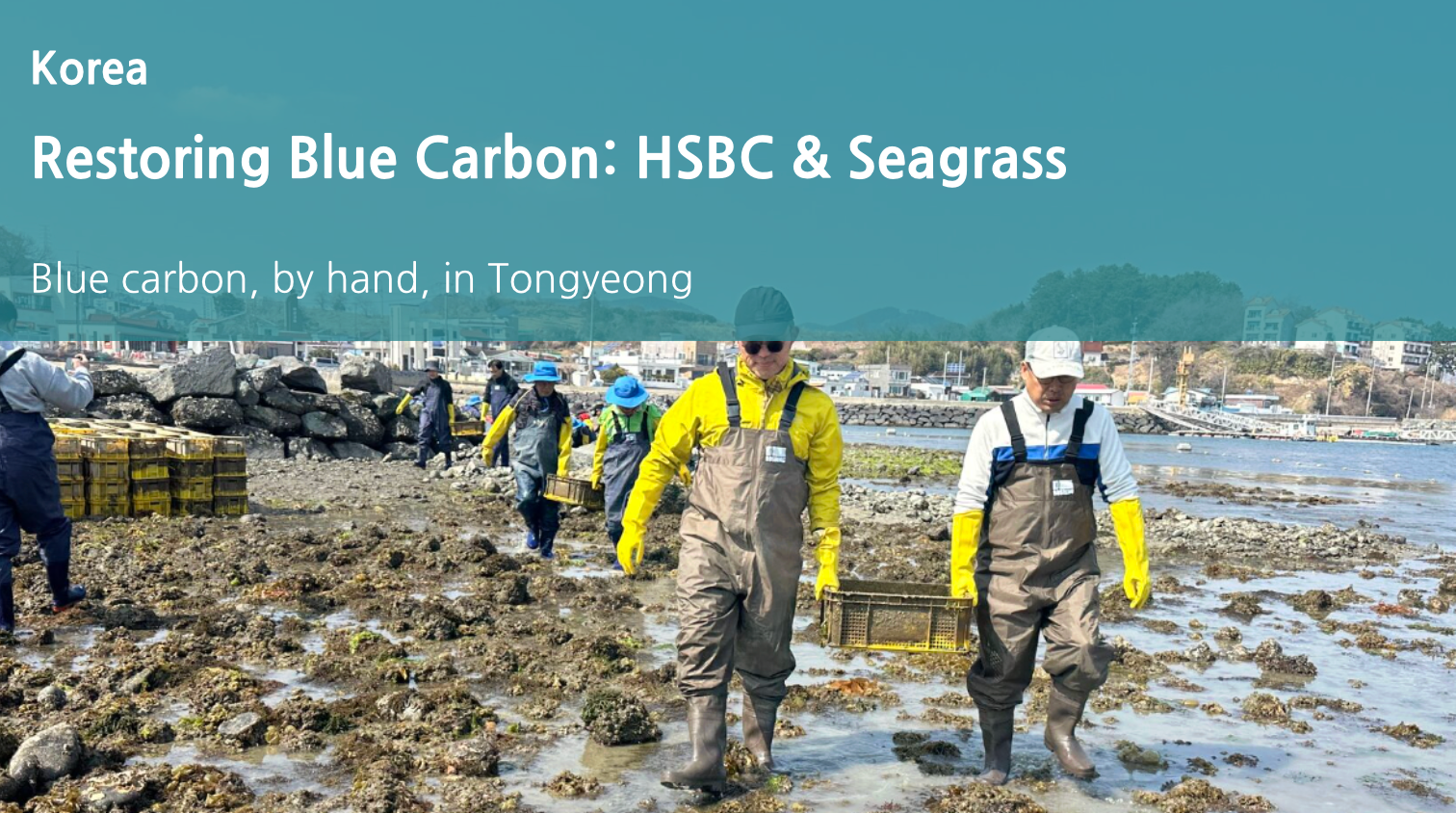
Restoring Blue Carbon: HSBC & Seagrass
On March 19th, employees from HSBC, the Cunaest Foundation, and ThanksCarbon waded into the coastal waters of Seonchon village in Tongyeong to plant and tend seagrass.
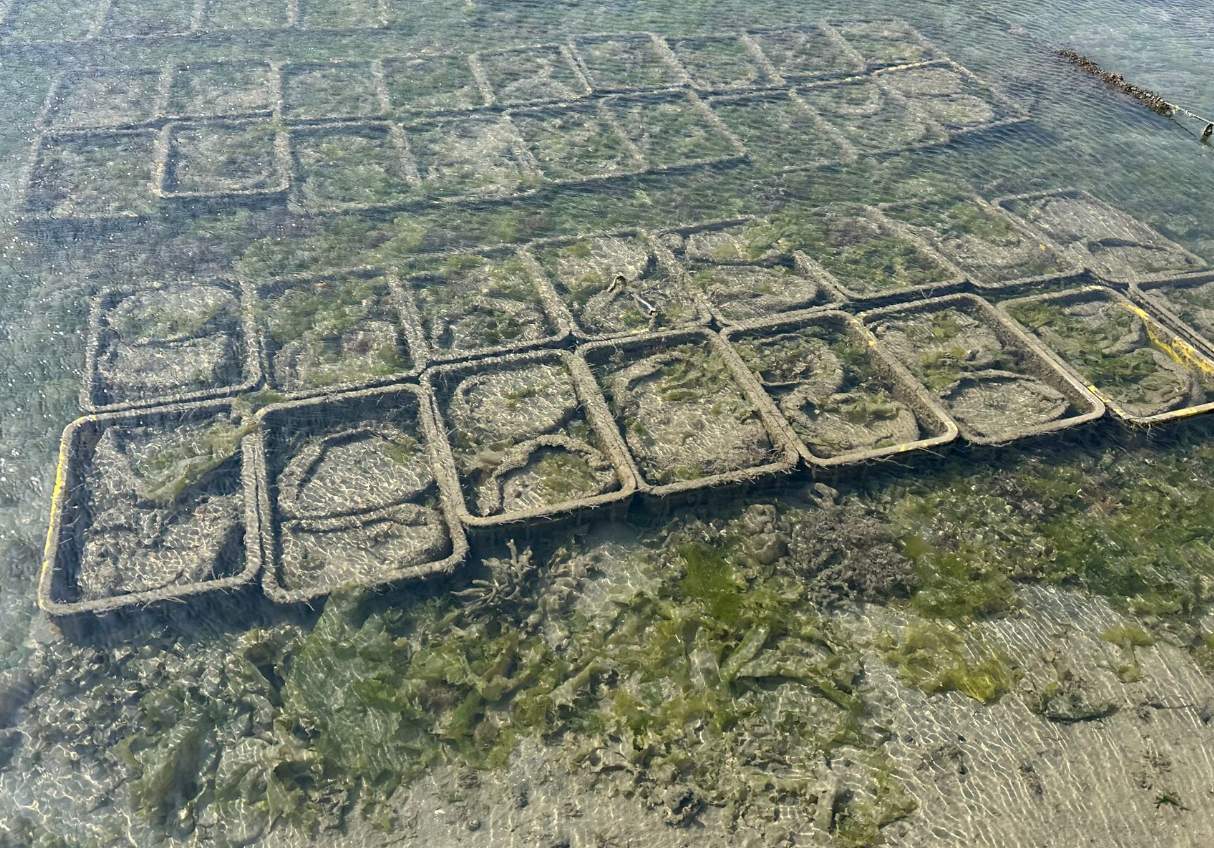
Seagrass once covered much of the world's shallow coastlines. Most of it is gone. What remains quietly does extraordinary work: absorbing carbon, stabilizing sediment, and supporting marine biodiversity. Restoring it is one of the most effective blue carbon interventions available.
ThanksCarbon first began seagrass restoration work in 2022 with LG Chem in Yeosu. This partnership with HSBC in Tongyeong represents the continuation of that effort, now in its fourth year. Standing in the water and planting by hand, it's a reminder that climate action ultimately comes down to physical work in real places.
For companies and institutions interested in blue carbon projects or biodiversity fieldwork as part of their ESG programs, we're glad to explore what's possible together.
The interest we're seeing isn't coincidental. Companies including LG Chem, SK Innovation, Kumho Petrochemical, and HSBC, as well as partners in the automotive sector, have already been working with ThanksCarbon to monitor and manage their natural capital and biodiversity impacts using satellite and AI technology. Since our March webinar, that list has continued to grow. More organizations are asking how their operations depend on and affect nature, and what steps they need to take. ThanksCarbon supports them in turning those questions into quantified data, disclosure-ready reports, and restoration action on the ground. Our work is where global mandates meet real-world implementation.
Global Climate Context
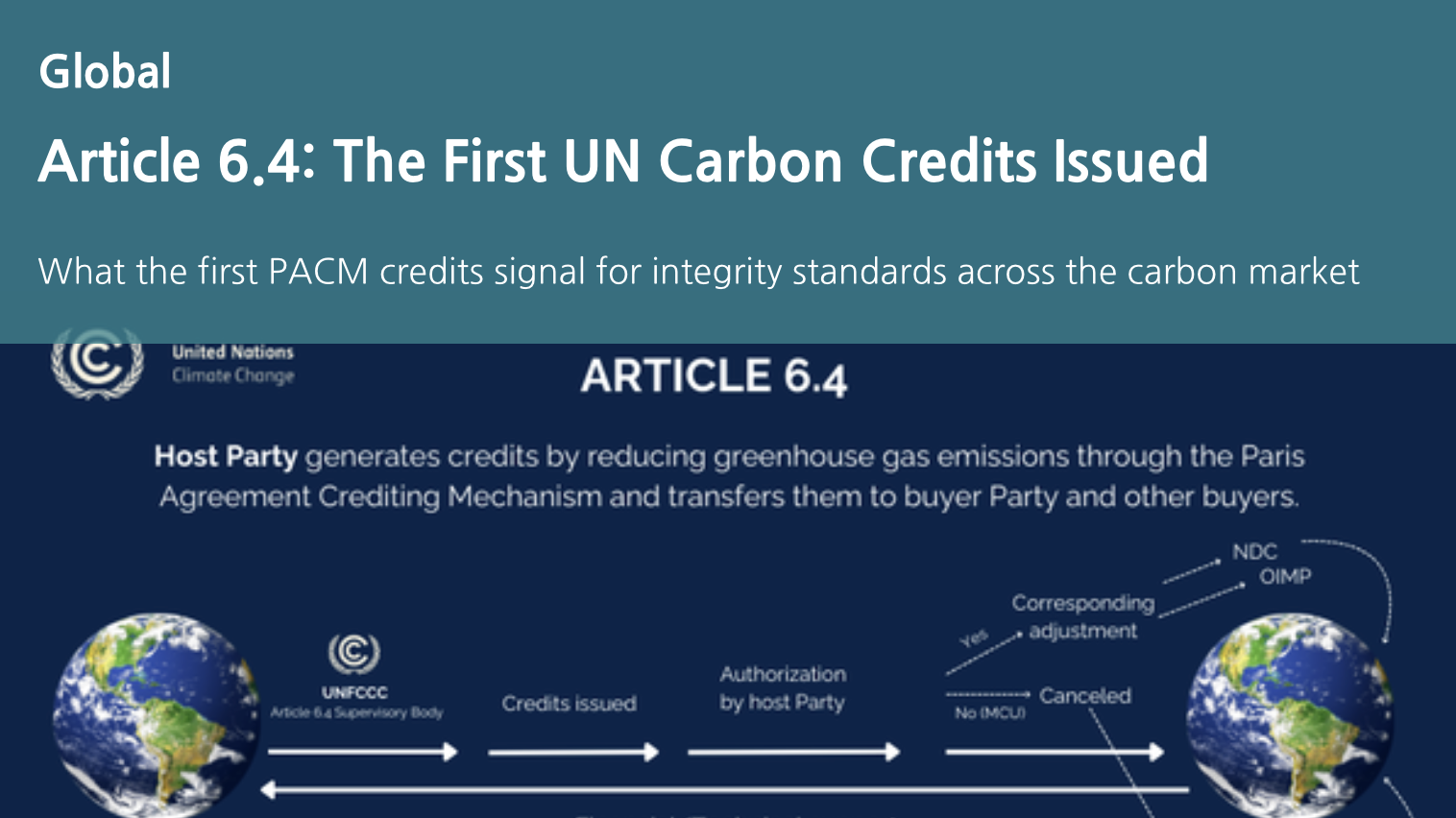
Article 6.4: The First UN Carbon Credits Issued
In February 2026, the Paris Agreement Credit Mechanism (PACM), the UN's centrally governed carbon market established under Article 6.4 of the Paris Agreement, issued its first batch of carbon credits. The project: a clean cookstove initiative in Myanmar, financed by South Korean companies, distributing more efficient stoves that reduce firewood consumption and ease pressure on forests.
More than a decade after the Paris Agreement first envisioned this mechanism, it is now operational.
What's worth paying attention to is how the credits were calculated. The methodology applied under PACM is significantly more conservative than what the predecessor Clean Development Mechanism (CDM) used, resulting in significantly fewer credits issued compared to CDM for the same project activity. The UN's framing is direct: each credit should represent one actual tonne reduced, nothing more.
That's a meaningful signal. The market is increasingly emphasizing integrity over volume. Credits that can be defended, traced, and trusted are the ones that will hold value.
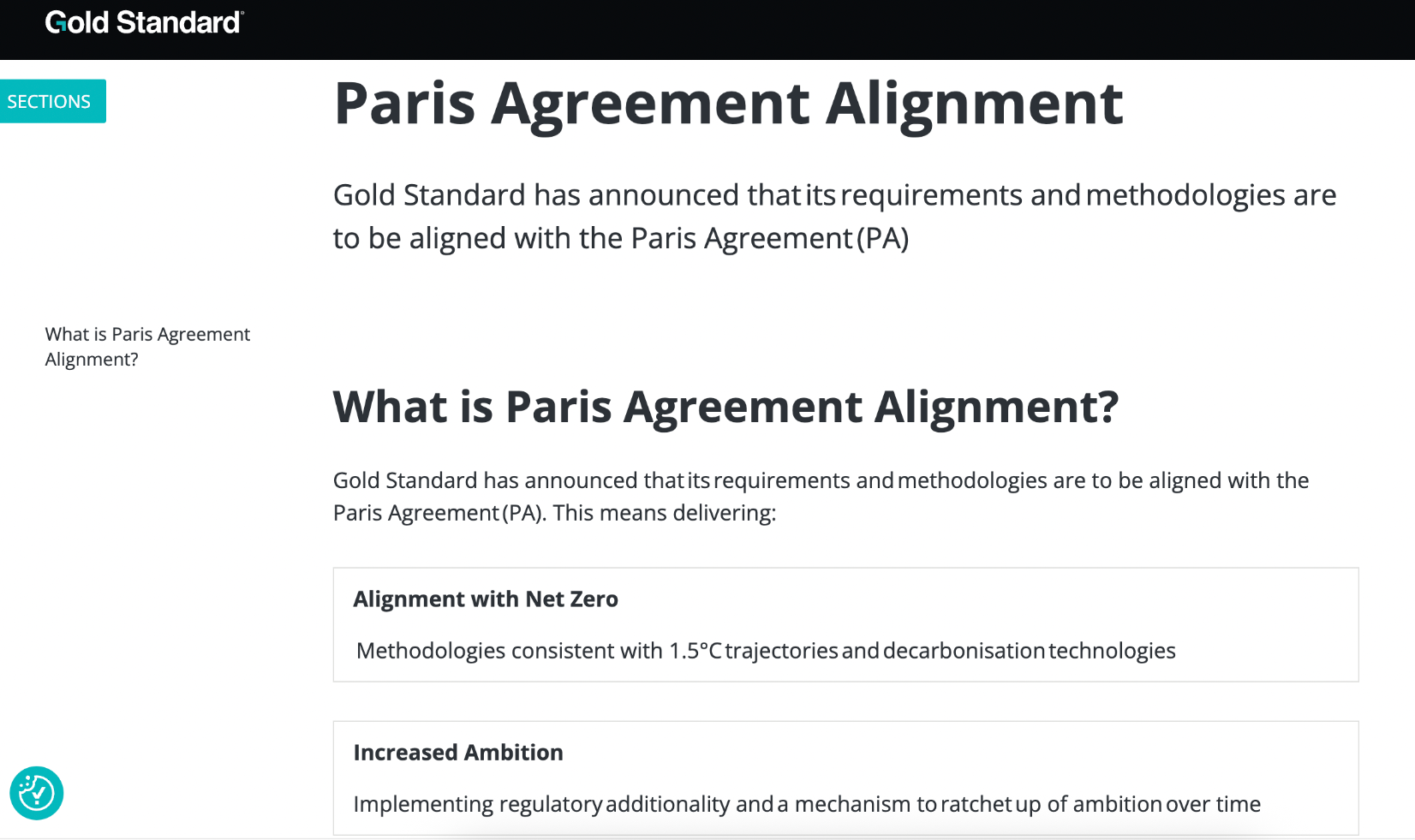
Private standards bodies like Gold Standard have raised a legitimate counterpoint: stricter data requirements can raise the barrier to entry for projects in developing countries, potentially slowing the pace of real-world climate action. The tension between technical rigor and field accessibility is one the market will be working through for years.
For ThanksCarbon, this context is directly relevant. As the market shifts toward verifiable, high-integrity credits, the infrastructure we've built, satellite monitoring, AI-based field verification, multi-layer data validation, is precisely what makes credits credible. We operate at the intersection of where the market is heading and where the work is hardest.
📌 Related articles
Stay Connected
Are you ready to drive sustainable change with ThanksCarbon? Whether you're looking to scale agricultural impact or meet new biodiversity standards, we're here to collaborate.
Stay connected through our website or social channels to receive more updates and collaboration news. See you in our next edition!




의견을 남겨주세요