
Welcome to our ThanksLetter!
How do you measure and reduce emissions across a supply chain? From conversations with global grain companies to our fieldwork in Cambodia and a carbon market climbing up, here is what we have been working on.
At the heart of all these updates sits one critical reality: Scope 3 is no longer about promises, but proof.
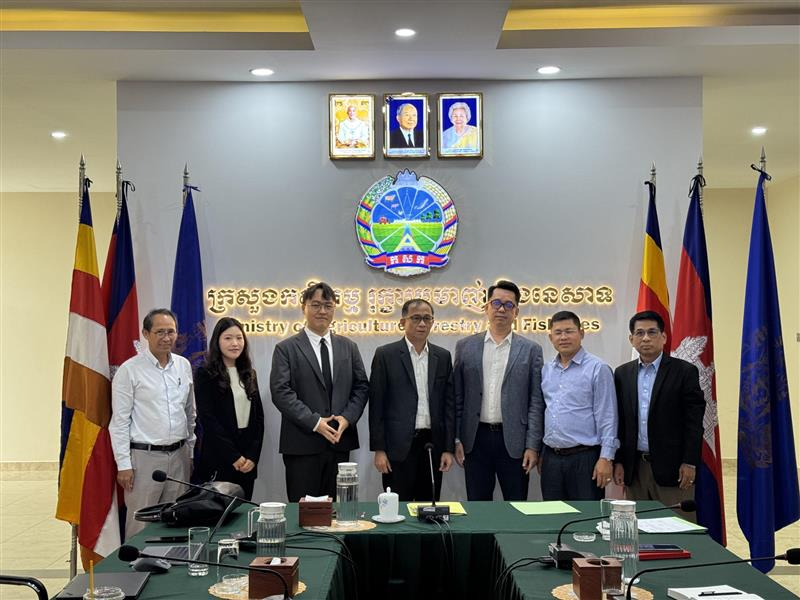
Scope 3: From Declaration to Delivery
The emphasis in climate goal-setting is shifting from declaration to delivery. One clear signal is the Corporate Net-Zero Standard 2.0 released by the Science Based Targets initiative (SBTi). Where setting a target used to be the ultimate goal, the standard now demands companies to show where and by how much they have actually cut emissions. With five-year reviews and continuous tracking of reduction performance built in, corporate climate action has become an ongoing process rather than a one-time announcement. Buying external credits to offset emissions is now treated as a supporting measure, with the reductions a company achieves within its own operations and supply chain placed at the center.
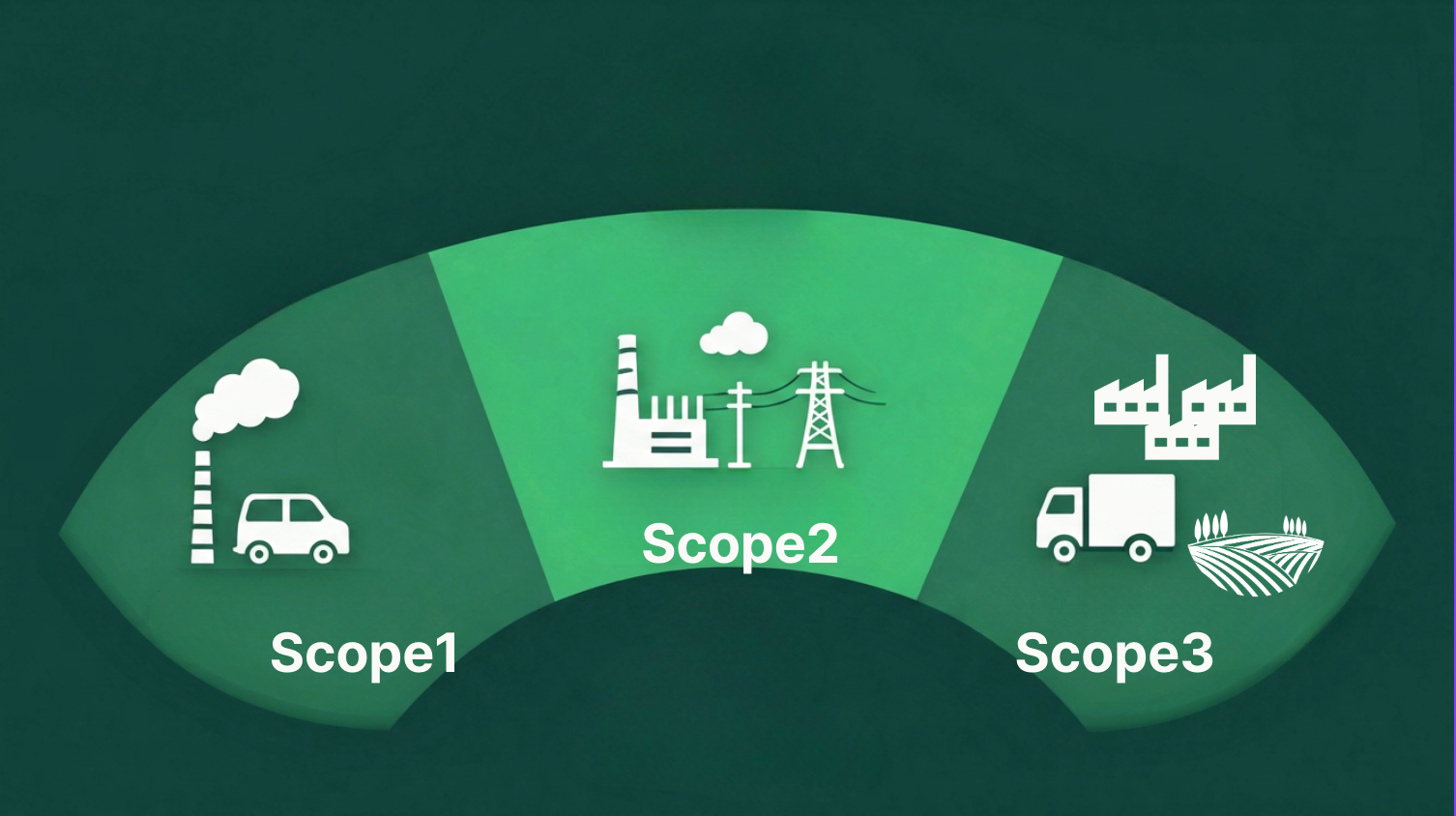
The area drawing the most attention in this shift is Scope 3. Scope 3 covers the indirect emissions that arise across the value chain, from raw material sourcing to logistics to product use, rather than a company's direct emissions. Much of it sits outside a company's direct control, which makes it hard to manage, yet it often accounts for the largest share of total emissions. So the new standard asks companies to stop treating Scope 3 as a single lump and instead identify where the largest emissions occur, then set reduction goals to match. Averaging the whole supply chain into one rough figure no longer holds up.
This shift is already underway in Korea as well. On July 8, the government finalized a plan to make sustainability disclosure a statutory requirement, starting in 2028, for KOSPI-listed companies with consolidated assets of 10 trillion won or more. Scope 3 emissions disclosure will follow on a separate timeline, phased in three years after each company's disclosure start date.
For companies, this requirement becomes a question of data and of supply chain management. What matters is no longer a statement that a company values sustainability, but the ability to show in numbers what changed, where, and by how much. And the further those emissions sit from headquarters, out among farms and growing regions, the harder they are to measure and verify with confidence. This is exactly the problem ThanksCarbon has been working on with satellite and AI-based digital MRV. This issue of ThanksLetter looks at where that technology is being put to work, through recent conversations and updates from the field.
Quick Summary
- Why grain companies are looking at Haimdall: Cutting water use and emissions at the source - the new Scope 3 challenge
- Finance is starting to trust climate data: IBK, KDB, and KODIT have each selected ThanksCarbon
- Asia's carbon market gathered in Hong Kong: ThanksCarbon at the Asia Climate Summit 2026
- Trust built in the field: Provincial support in Battambang, and an invitation to the IRRI workshop
- Reading the next current in climate finance: What Singapore's I4C and Further Summit revealed about where investment is heading
- K-ETS climbs, and Korea gets a second look: More than double in half a year, as Korea becomes a market for carbon solutions
Project Highlights
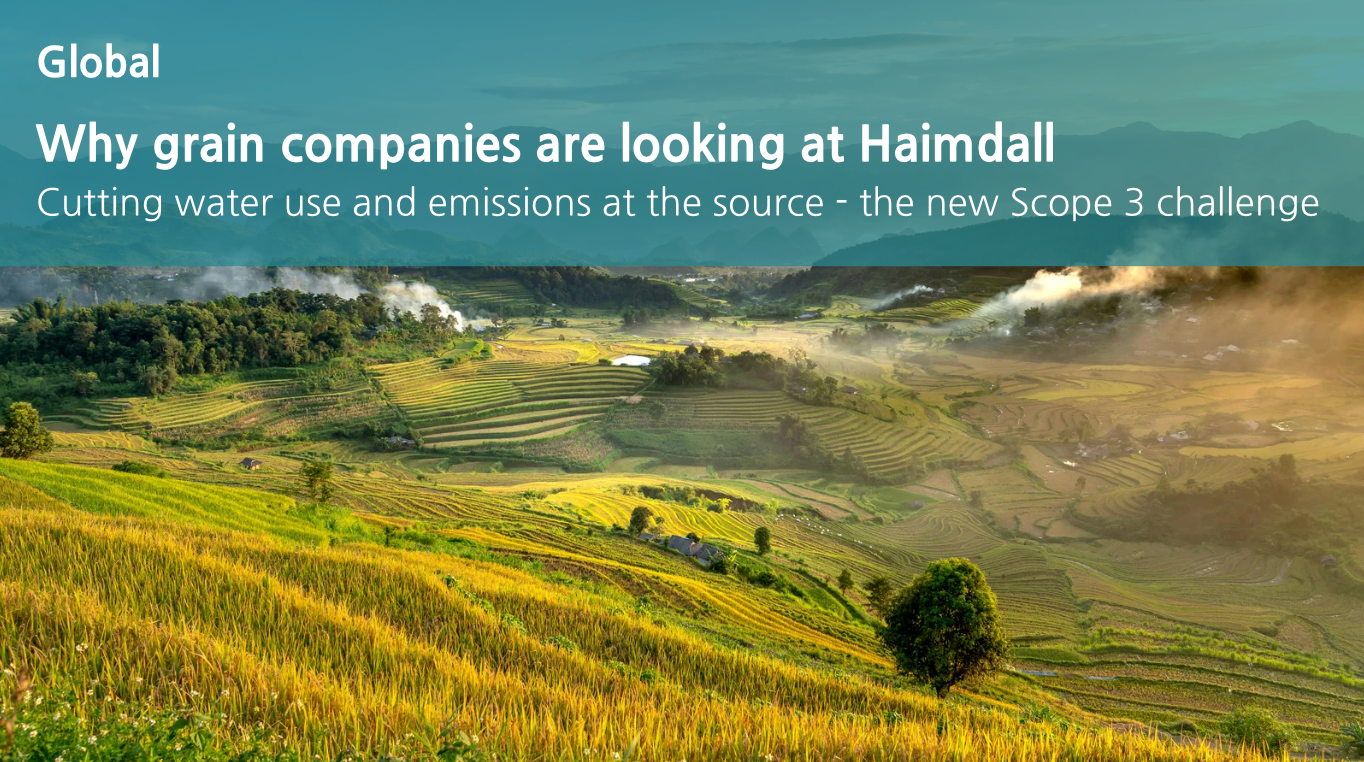
Why grain companies are looking at Haimdall
Cutting water use and emissions at the source - the new Scope 3 challenge
ThanksCarbon recently met with a global grain company headquartered in Singapore and with Cambodia's largest organic rice exporter. Both sit on the buying side of rice and grain, and with Scope 3 now part of how emissions get counted, they need to measure and reduce the emissions that come from rice farming in the regions they source from. Rice in particular carries high water use and methane emissions during cultivation, so being able to report, with data, that the rice they buy was grown with less water and lower emissions has become increasingly important to them.
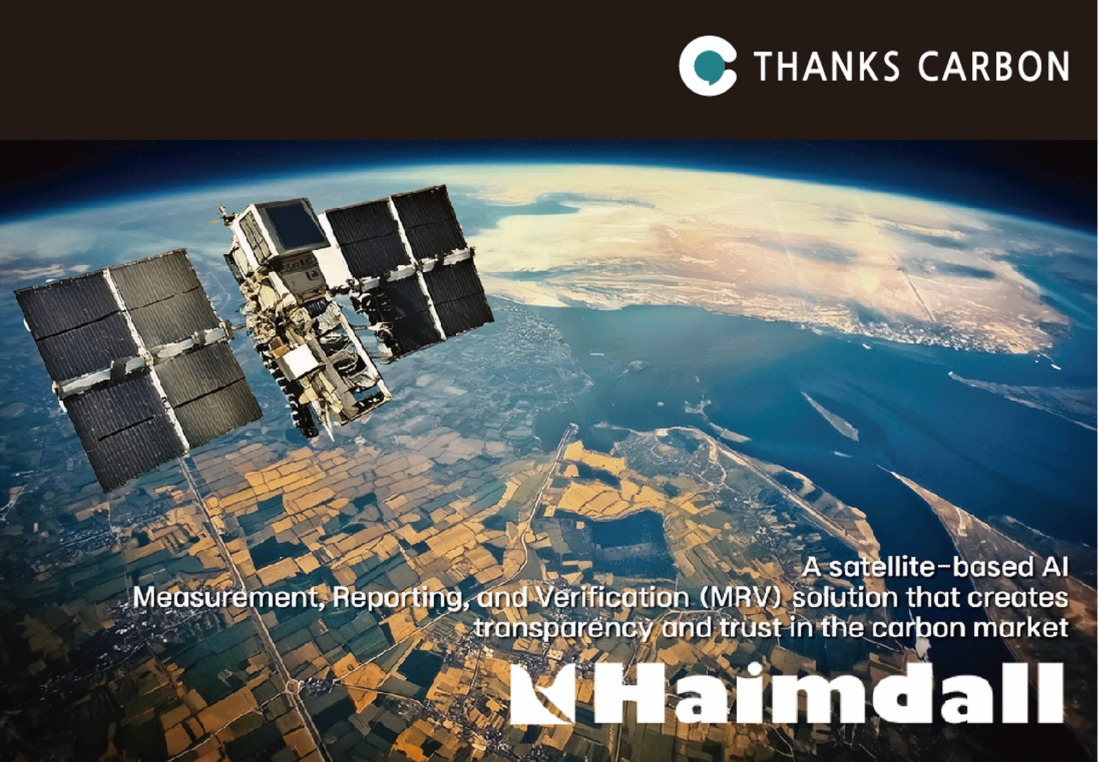
These companies also carry a second concern. If the effort to reduce emissions leaves farmers feeling burdened enough to give up farming, the steady supply of the raw crop itself is at risk. What they are looking for, then, is a partner who can help build a resilient structure that keeps farmers on the land, not simply a measurement tool. This is where ThanksCarbon's satellite and AI-based digital MRV platform, Haimdall, stands out. MRV refers to the process of Measurement, Reporting, and Verification of reduction activity, and Haimdall manages thousands of dispersed farms accurately and efficiently through satellite data, without a visit to each site. Both companies are now formalizing that collaboration with us.
What lets ThanksCarbon carry these conversations forward with confidence is a long track record in the field. Over the years, the company has grown its base of participating farmers across Southeast Asia and built cooperation agreements with a number of local governments. In An Giang and other provinces across Vietnam, ThanksCarbon has secured more than 90,000 hectares of project land, which means it can design the technology, the land access, and the farmer training together. This approach, which ties measurement, reduction, and the long-term livelihood of farmers into one, reaches well beyond grain companies. It can serve as a practical answer for any company that needs to prove what is happening with emissions across its supply chain.
ThanksCarbon Updates
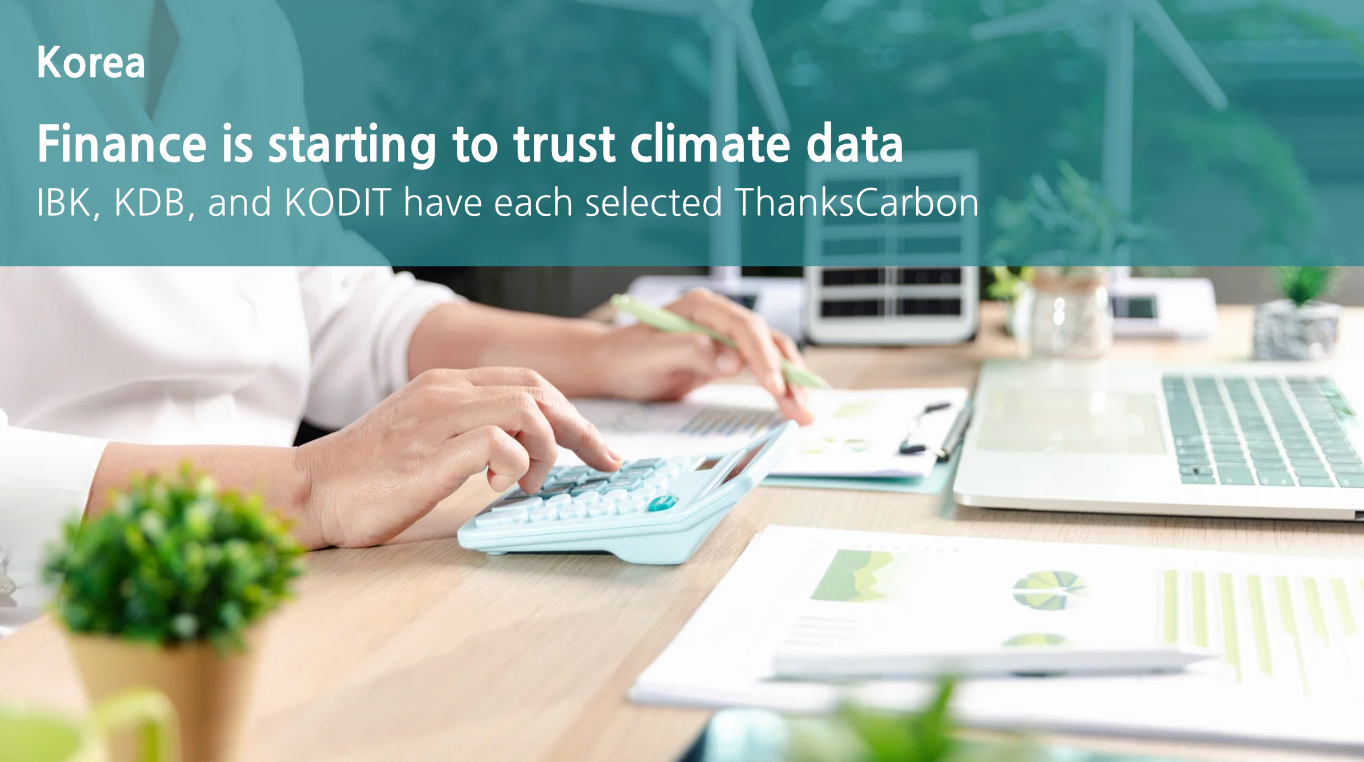
Finance is starting to trust climate data
IBK, KDB, and KODIT have each selected ThanksCarbon
At the opening of KDB NextONE Gwangju on July 7, ThanksCarbon was one of four regional innovation companies chosen to present to investors in an investor relations (IR) session. The event drew more than 150 attendees, including the Chairman of the Financial Services Commission. ThanksCarbon is receiving acceleration support through NextONE, the early-stage startup incubation program of the Korea Development Bank (KDB), and through Changgong, the equivalent program at the Industrial Bank of Korea (IBK). It was also named to the First Penguin program run by the Korea Credit Guarantee Fund (KODIT).
KDB and IBK are both state-backed banks established with government capital. Their interest in the carbon credit business, and their choice of ThanksCarbon as a partner, shows that credible, verifiable climate data is increasingly treated as something to invest in, in its own right and beyond its role in reporting. With a domestic carbon credit futures market expected to arrive around 2028 and financial-sector interest rising alongside it, a selection by state financial institutions stands on its own as a mark of trust.
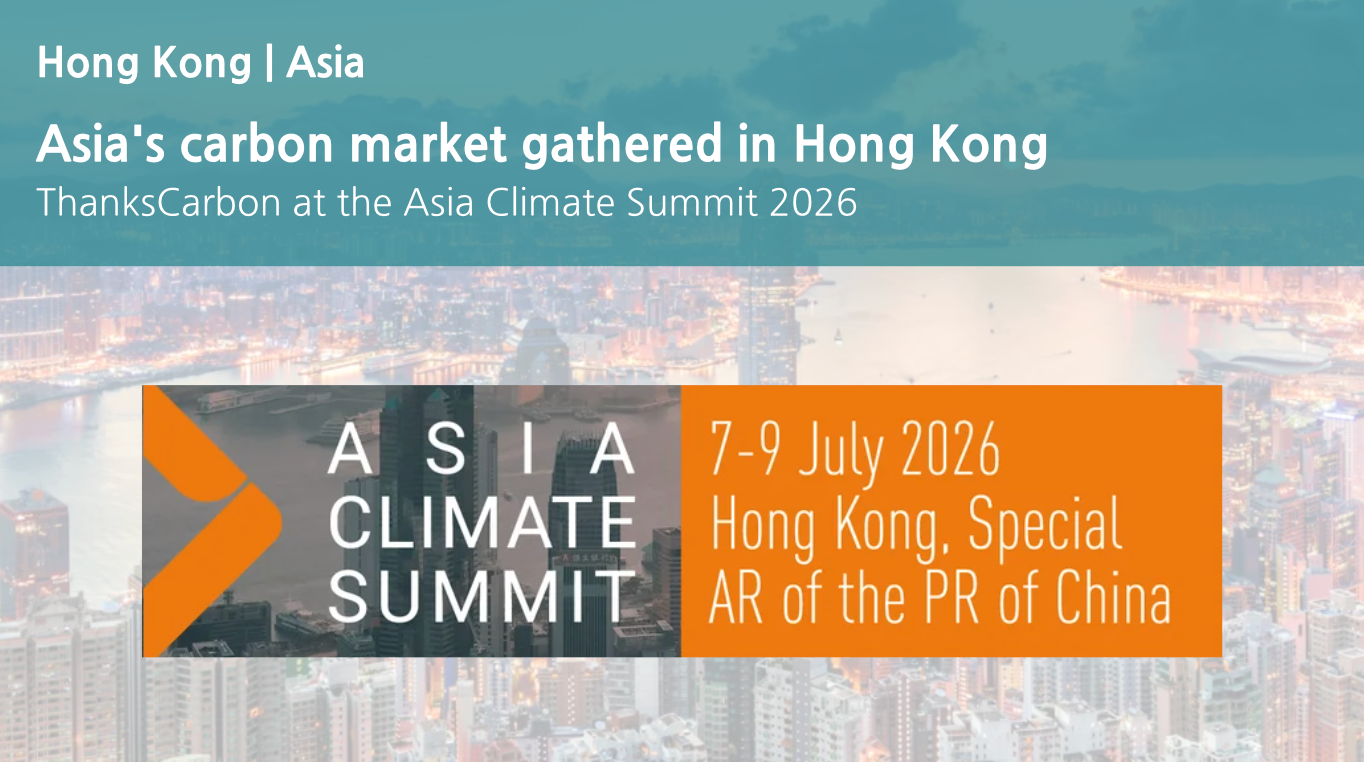
Asia's carbon market gathered in Hong Kong
ThanksCarbon at the Asia Climate Summit 2026
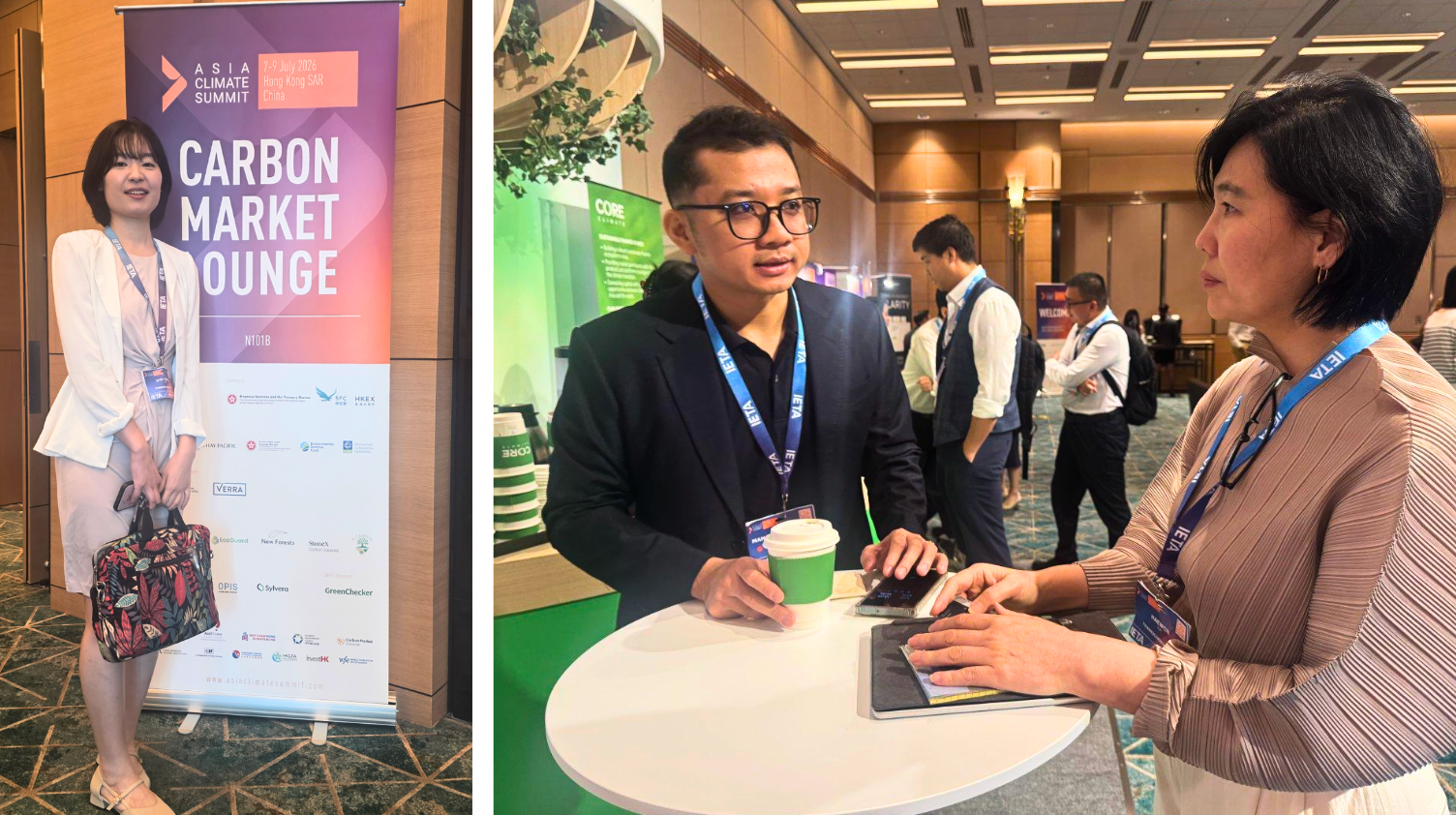
From July 7 to 9, ThanksCarbon took part in the Asia Climate Summit 2026 at the Hong Kong Convention and Exhibition Centre. Organized by the International Emissions Trading Association (IETA) and co-hosted by Hong Kong's financial authorities and its exchange, the summit brought together senior figures from business, government, finance, and civil society to shape the next phase of Asia's carbon markets. Sessions covered the latest on Article 6 and the UNFCCC's Paris Agreement Crediting Mechanism (PACM), digital MRV and registries, investment in nature-based solutions, the outlook for emissions trading and carbon pricing across Southeast Asia, high-integrity voluntary carbon markets, and corporate net-zero and Scope 3 strategy.
ThanksCarbon used the summit to introduce Haimdall, its AI-based digital MRV platform, and its international reduction projects to investors, project developers, verification bodies, and global companies. We held conversations with a number of companies, including major Japanese trading houses, and those conversations extended into concrete collaboration models such as project pre-financing and forward purchases of carbon credits. It was still early days, but three days that widened ThanksCarbon's footprint across Asia's carbon market community.
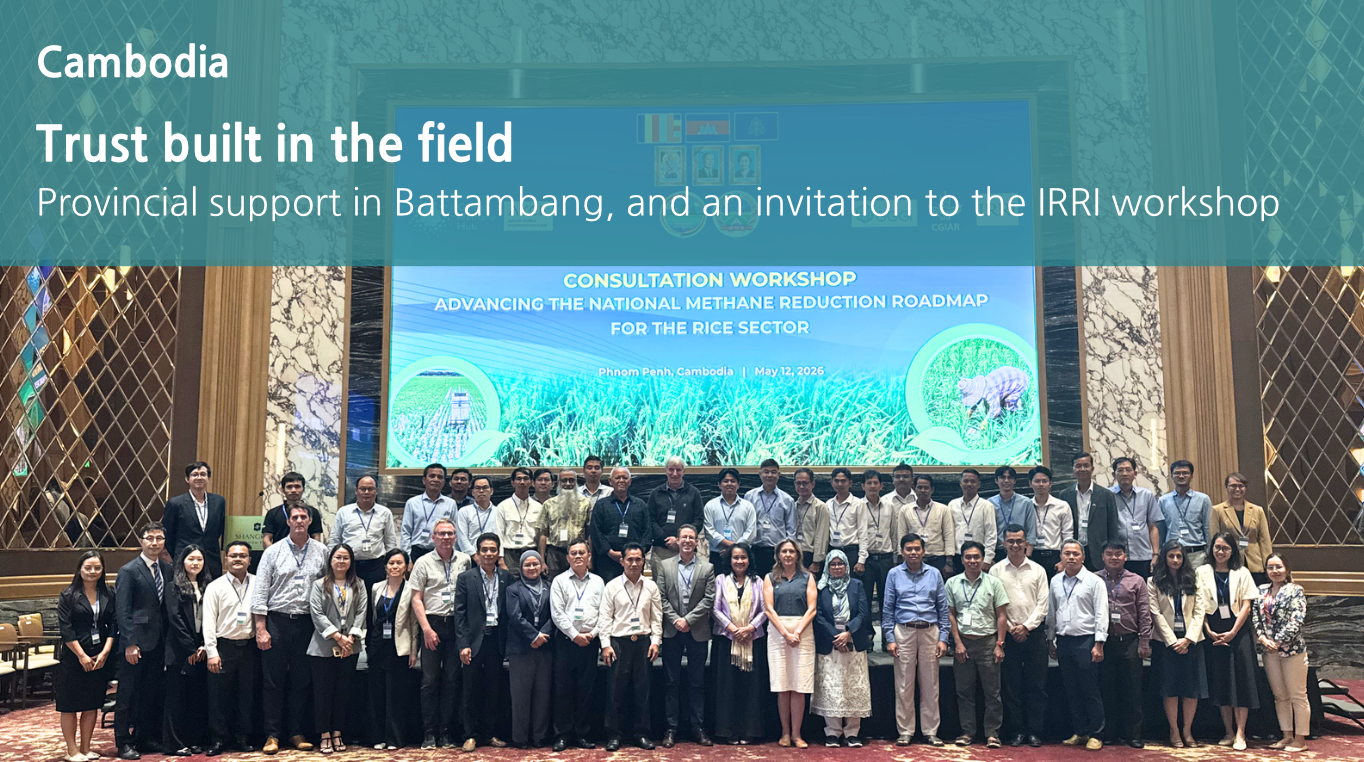
Trust built in the field
Provincial support in Battambang, and an invitation to the IRRI workshop
This past May, ThanksCarbon met with the Provincial Governor of Battambang, together with its partner NGO, CPDD, and confirmed the provincial government's support for the Battambang Agricultural Modernization and Climate-Resilient Rice Initiative (BCRRI). The Governor described it as a ten-year initiative that would bring real benefit to farmers in the region, and gave his full backing.
That same month, ThanksCarbon was invited to a consultation workshop in Phnom Penh hosted by the International Rice Research Institute (IRRI), the world's leading rice research institution. The workshop brought together Cambodian government ministries, research institutions, and agriculture and climate specialists from across South and Southeast Asia. The discussion centered on linking methane reduction in rice farming to national climate targets (NDCs), developing country-level roadmaps, scaling Alternate Wetting and Drying (AWD) water management, and the need for digital MRV. ThanksCarbon joined as a team working on digital MRV and Article 6 implementation in the field.
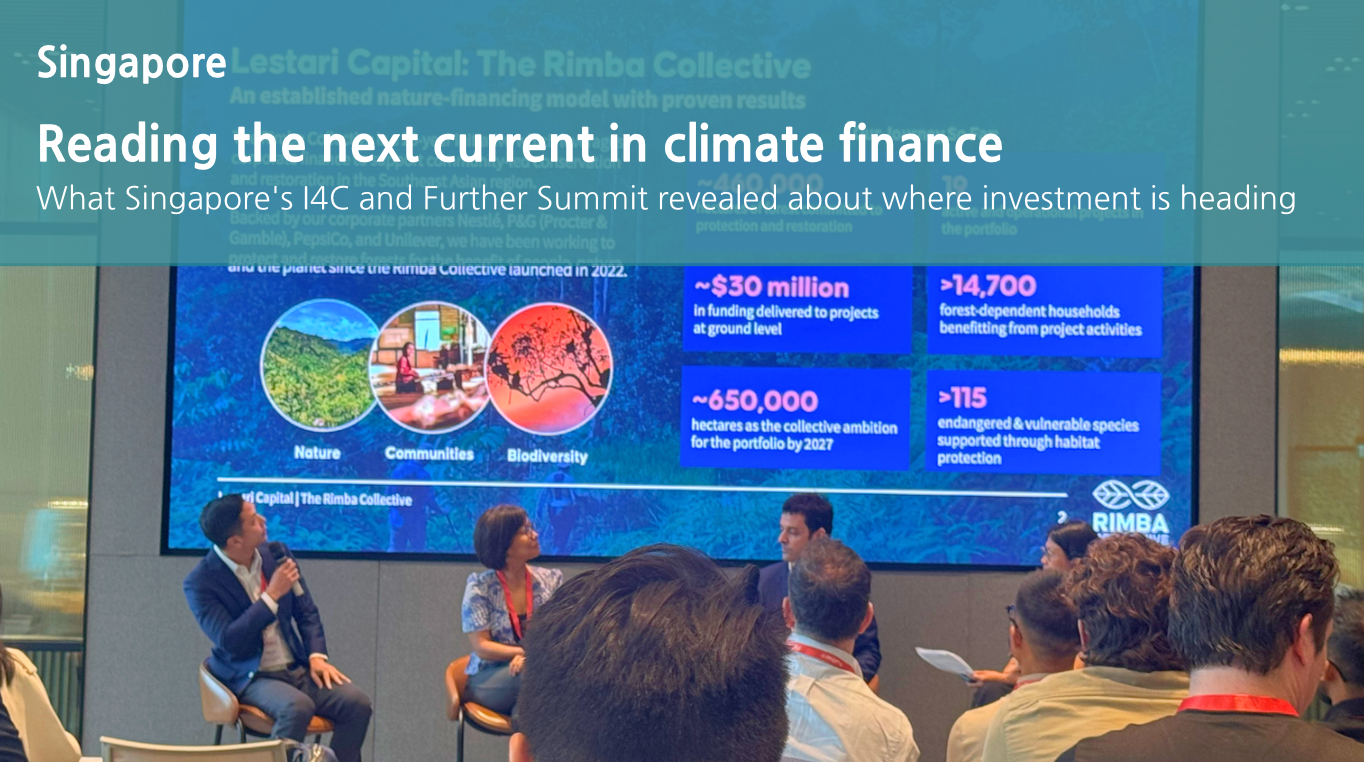
Reading the next current in climate finance
What Singapore's I4C and Further Summit revealed about where investment is heading
ThanksCarbon recently traveled to Singapore for two global events. At Innovate4Climate (I4C), a leading climate finance gathering led by the World Bank Group, the team discussed Article 6 of the Paris Agreement, digital MRV, and how climate projects can move from ambition to real work in the field, alongside experts from around the world.
ThanksCarbon also attended the Further Summit, which gathered global participants across agriculture, carbon, and finance. The conversations there confirmed a clear shift: agrifood investment is moving from a consumer-facing focus toward the upstream, AI and data-driven production stage, and carbon finance is growing into a form of transition finance that can support the shift to regenerative agriculture. One point stood out. Global consumer goods companies are increasing their investment in nature restoration and carbon projects, moving past corporate social responsibility and toward managing the cost of keeping their supply chains intact. That direction lines up closely with the low-carbon supply chain solutions ThanksCarbon is working toward.
Global Climate Context
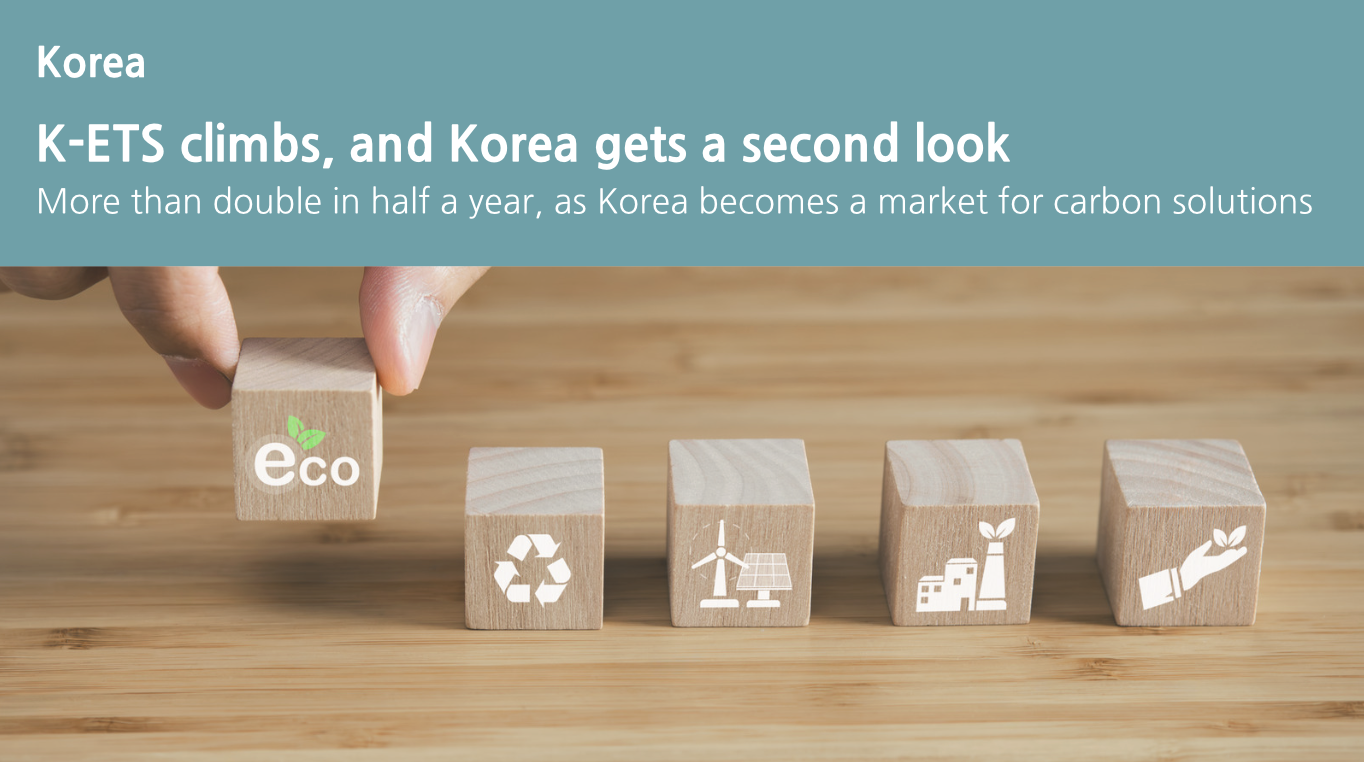
K-ETS climbs, and Korea gets a second look
More than double in half a year, as Korea becomes a market for carbon solutions
The price of Korea's emissions allowances (K-ETS, Korea Emissions Trading Scheme) has more than doubled in the first half of this year. According to the national emissions trading information platform, KAU25, the benchmark contract, traded at around $6 to $7 per tonne at the start of the year, approached $20 intraday in early June, and has since settled near the $20 mark after a correction.
This rise looks less like a passing, theme-driven jump and more like the result of a structural shift. The fourth planning period (2026 to 2030), which began in 2026, cut the total emissions cap by roughly 17% from the previous period and expanded the share of allowances sold at auction, while the government also strengthened its market stabilization measures. Allowances have gone from a resource in comfortable supply to a regulated asset that grows steadily scarcer.
For companies and investors abroad, this is more than domestic news. Korea runs one of the most established emissions trading markets in Asia, and it is now settling into a compliance market where price genuinely does its work. As the market tightens, demand grows for credible reduction projects, accurate MRV, and forward-looking procurement structures. Put simply, Korea is moving from a place to buy allowances cheaply toward a market for supplying and collaborating on carbon solutions.
In this phase, ThanksCarbon wants to work alongside companies as a partner that helps design their carbon risk. Drawing on its understanding of the Korean system, its verifiable reduction projects, its digital MRV, and its experience connecting international reduction with the voluntary market, ThanksCarbon helps companies secure the quality of reduction they need, at the moment they need it. As the market matures, the companies that prepare first are the ones that come out ahead.
Stay Connected
Are you ready to drive sustainable change with ThanksCarbon? Whether you're looking to scale agricultural impact or meet new biodiversity standards, we're here to collaborate.
Stay connected through our website or social channels to receive more updates and collaboration news. See you in our next edition!




의견을 남겨주세요