
Hello, ladies and gentlemen. I'm the "Environmental Bank" with all the worldwide environmental issues. Today, we’ll take a closer look at the topic "Can a Genetic Switch Stop Malaria?”
안녕하세요. 환경 관련 이슈들을 모두 보유하고 있는 "환경뱅크"입니다. 오늘은 "유전자 스위치로 말라리아를 막을 수 있을까?"에 대한 주제에 대해서 자세히 알아봅시다.
What is the issue? (문제 상황?)
Malaria infects ~263 million people and kills ~600,000 annually (80% children), which is transmitted by Anopheles female mosquitoes carrying the malaria parasite (Plasmodium). However, as mosquitoes have developed resistance to insecticides and malaria parasites have developed drug resistance, this worsened the situation of controlling the malaria population.
말라리아는 매년 약 2억 6,300만 명을 감염시키고 60만 명(그중 80%가 어린이)을 사망에 이르게 한다. 이 질병은 말라리아 원충(Plasmodium)을 보유한 Anopheles 속 암컷 모기에 의해 전파된다. 하지만 모기가 살충제에 내성을 갖게 되고, 말라리아 원충 또한 약물 내성을 획득하면서 말라리아 통제 상황이 더욱 악화되고 있다.
What is the new development? (새로운 연구 성과는?)
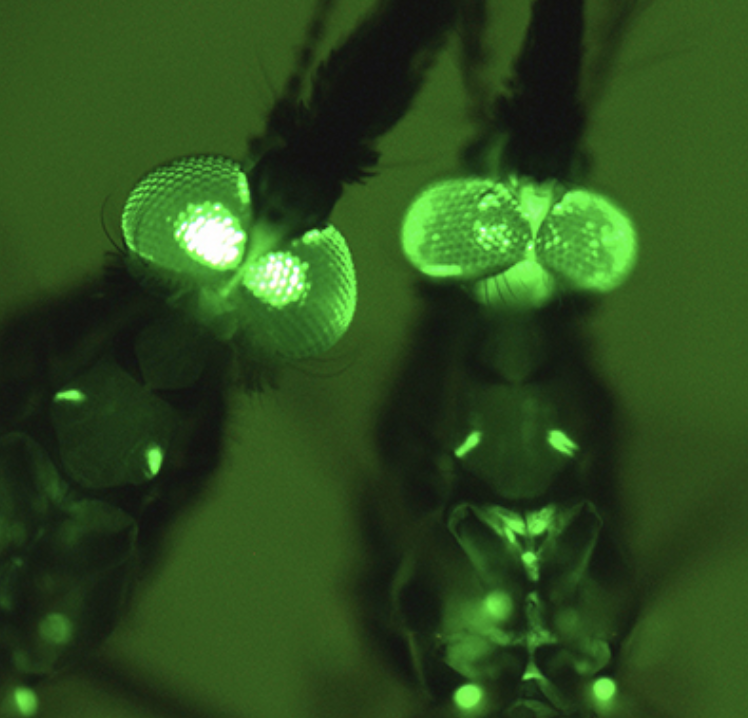
Researchers from UC San Diego, Johns Hopkins, UC Berkeley, and University of São Paulo created a CRISPR-based genetic system to block malaria transmission in mosquitoes. This system changes a single amino acid in a mosquito protein (FREP1) from L224 to Q224, which prevents the parasite from reaching the mosquito’s salivary glands, halting transmission to humans.
UC 샌디에이고, 존스홉킨스대, UC 버클리, 상파울루대 연구진이 CRISPR 기반 유전자 시스템을 개발해 모기의 말라리아 전파를 차단하는 데 성공했다. 이 시스템은 모기 단백질(FREP1)의 아미노산을 L224에서 Q224로 교체해 기생충이 모기의 침샘에 도달하지 못하도록 막아, 사람으로의 전파를 원천 차단한다.
How does the system work? (작동 원리는?)
- Target selection – Identify the FREP1 gene, which produces a protein (with amino acid L224) that malaria parasites use to reach the mosquito’s salivary glands.
- CRISPR cut – Use CRISPR-Cas9 “scissors” and guide RNA to cut the mosquito DNA exactly at the L224 coding site.
- Replacement – Introduce a DNA template carrying the Q224 variant so the cell repairs the cut by inserting Q224 instead of L224.
- Functional effect – Q224 changes the FREP1 protein structure so parasites can no longer use it to migrate to salivary glands.
- Allelic drive spread – The genetic system ensures the Q224 allele is inherited by most offspring, spreading it through the mosquito population.
- 표적 선정 – 말라리아 원충이 모기 침샘으로 이동할 때 이용하는 단백질 FREP1(L224 아미노산 보유) 유전자를 목표로 설정.
- CRISPR 절단 – CRISPR-Cas9 ‘가위’와 가이드 RNA를 이용해 L224 부위를 정확히 절단.
- 교체 – Q224 변이를 포함한 DNA 서식을 도입해 절단 부위가 L224 대신 Q224로 복구되도록 함.
- 기능적 효과 – Q224로 변형된 FREP1 단백질은 기생충이 침샘으로 이동하는 경로를 차단함.
- 대립유전자 구동 확산 – Q224 대립유전자가 대부분의 자손에게 유전되도록 설계해, 개체군 전체로 퍼지게 함.
What were the experimental findings? (실험 결과는?)
Effectiveness against parasites
- Switching FREP1’s amino acid from L224 to Q224 successfully blocked two different malaria parasite species (Plasmodium) in Anopheles stephensi mosquitoes.
Transmission interruption
- Modified mosquitoes could still become infected after biting malaria-positive humans, but the parasites could not reach their salivary glands, meaning they couldn’t infect new hosts.
No fitness cost to mosquitoes
- Q224-carrying mosquitoes showed similar survival rates, reproductive capacity, and development compared to unmodified (wild-type) mosquitoes.
Normal biological functions maintained
- The genetic modification did not interfere with the mosquito’s natural feeding behavior or growth patterns.
- 기생충 차단 효과 – L224를 Q224로 바꾸자 Anopheles stephensi 모기에서 두 종류의 말라리아 원충 전파가 모두 차단됨.
- 전파 중단 – 변형된 모기는 감염된 사람을 물어 원충에 감염될 수는 있지만, 침샘으로 원충이 도달하지 못해 다른 숙주로 전파되지 않음.
- 생존력 유지 – Q224 변이를 가진 모기는 비변형 모기와 생존율, 번식력, 발달 속도에서 큰 차이가 없음.
- 자연 기능 보존 – 유전자 변형이 모기의 정상적인 흡혈 행동이나 성장에 영향을 주지 않음.
Why is this significant? (의의는?)
- A minimal genetic tweak can stop malaria transmission across multiple mosquito species.
- Provides a sustainable alternative to insecticides and drugs.
- Reduces risk of resistance buildup since it uses a naturally occurring allele.
- Potential to be adapted to other vector-borne diseases.
- 단 한 번의 유전적 변형으로 여러 모기 종에서 말라리아 전파를 차단 가능.
- 살충제·약물에 의존하지 않는 지속 가능한 방역 대안 제공.
- 자연적으로 존재하는 변이를 이용해 내성 발생 위험을 낮춤.
- 다른 매개성 질병에도 응용 가능성 있음.
What is next? (앞으로의 과제는?)
- Investigate exactly why Q224 blocks parasite movement so effectively.
- Explore real-world deployment strategies and ecological safety.
- Adapt the allelic-drive approach to other pest or disease-vector control programs.
- Q224가 기생충 이동을 효과적으로 차단하는 구체적 원리를 규명.
- 실제 환경에서의 적용 방법과 생태학적 안전성 평가.
- 대립유전자 구동 방식을 다른 해충·질병 매개체 통제에도 응용.
Wrap up (마무리)
While publishing this newsletter, I was struck by how innovative it is to prevent mosquitoes from transmitting malaria through a single amino acid change. In a time when traditional control methods are limited by resistance and environmental concerns, I found it interesting that this approach uses a naturally occurring variation to block disease transmission while preserving the mosquito’s survival and ecological role. I was also intrigued by the fact that, through allelic drive, this trait could spread across entire mosquito populations, offering not only the potential to eliminate malaria but also to be applied to other infectious diseases.
이 뉴스레터를 발행하면서, 단 하나의 아미노산 변화를 통해 모기가 말라리아를 전파하지 못하게 만든다는 발상이 정말 혁신적이라고 느꼈다. 기존 방역 방법이 내성과 환경 문제로 한계를 보이는 상황에서, 자연적으로 존재하는 변이를 활용해 모기의 생존과 생태적 역할은 그대로 유지하면서 질병 전파만 차단한다는 점이 특히 흥미로웠다. 또한 이 기술이 대립유전자 구동 방식을 통해 모기 개체군 전체로 퍼질 수 있다는 점에서, 말라리아 근절뿐 아니라 다른 전염병에도 응용 가능성이 있다는 기대감이 들었다.



의견을 남겨주세요