Welcome to our ThanksLetter!
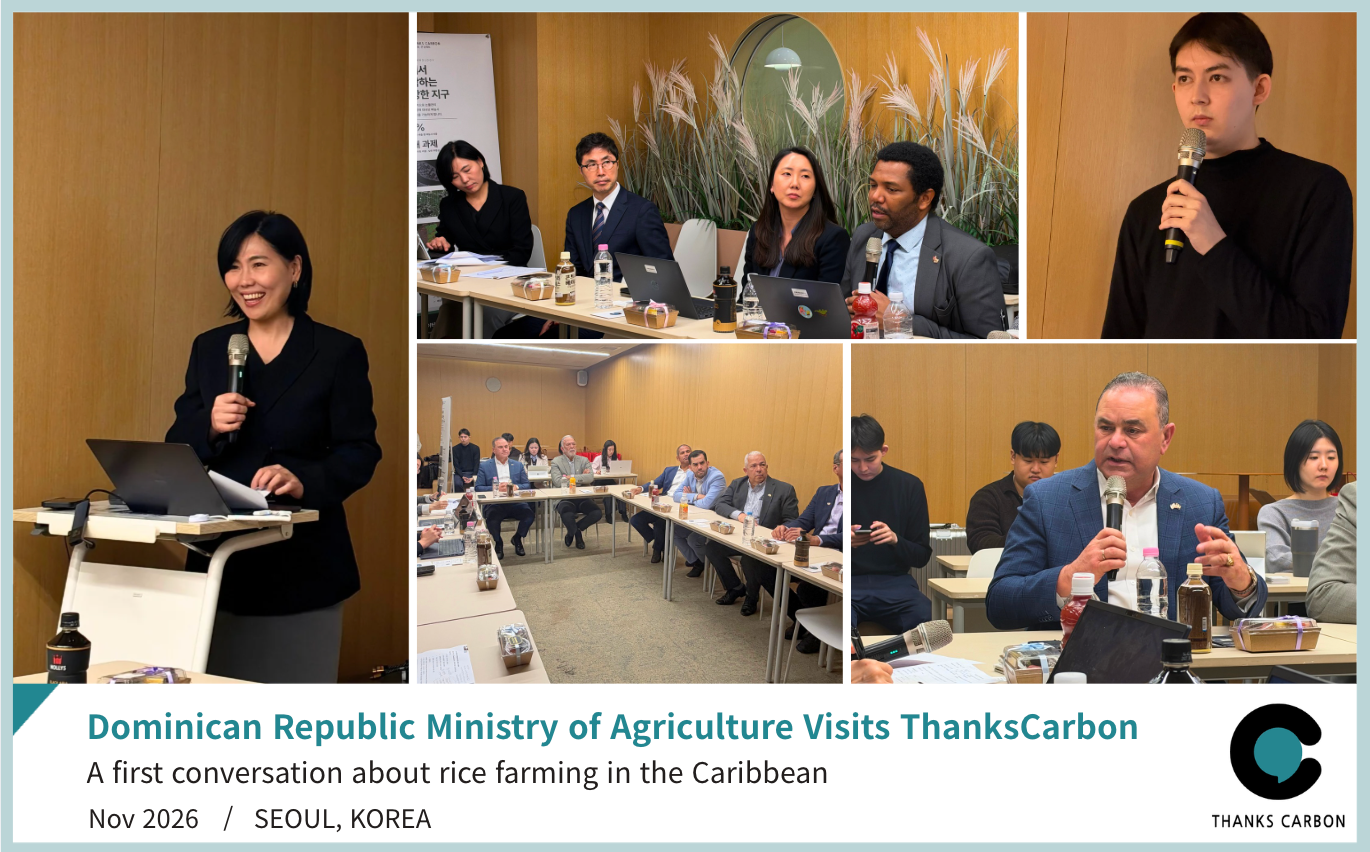
On November 2, a delegation from the Dominican Republic’s Ministry of Agriculture visited the ThanksCarbon office in Seoul. The delegation included the Minister and Vice Minister with other ministry officials, along with the World Bank’s agriculture team for the Dominican Republic. Over two hours, they reviewed our AI and satellite-based monitoring technology, AWD, a low-carbon paddy water management practice, and the field experience we have built so far. The World Bank organized the visit under the Korea Green Growth Trust Fund (KGGTF), and our entire team participated in the meeting.
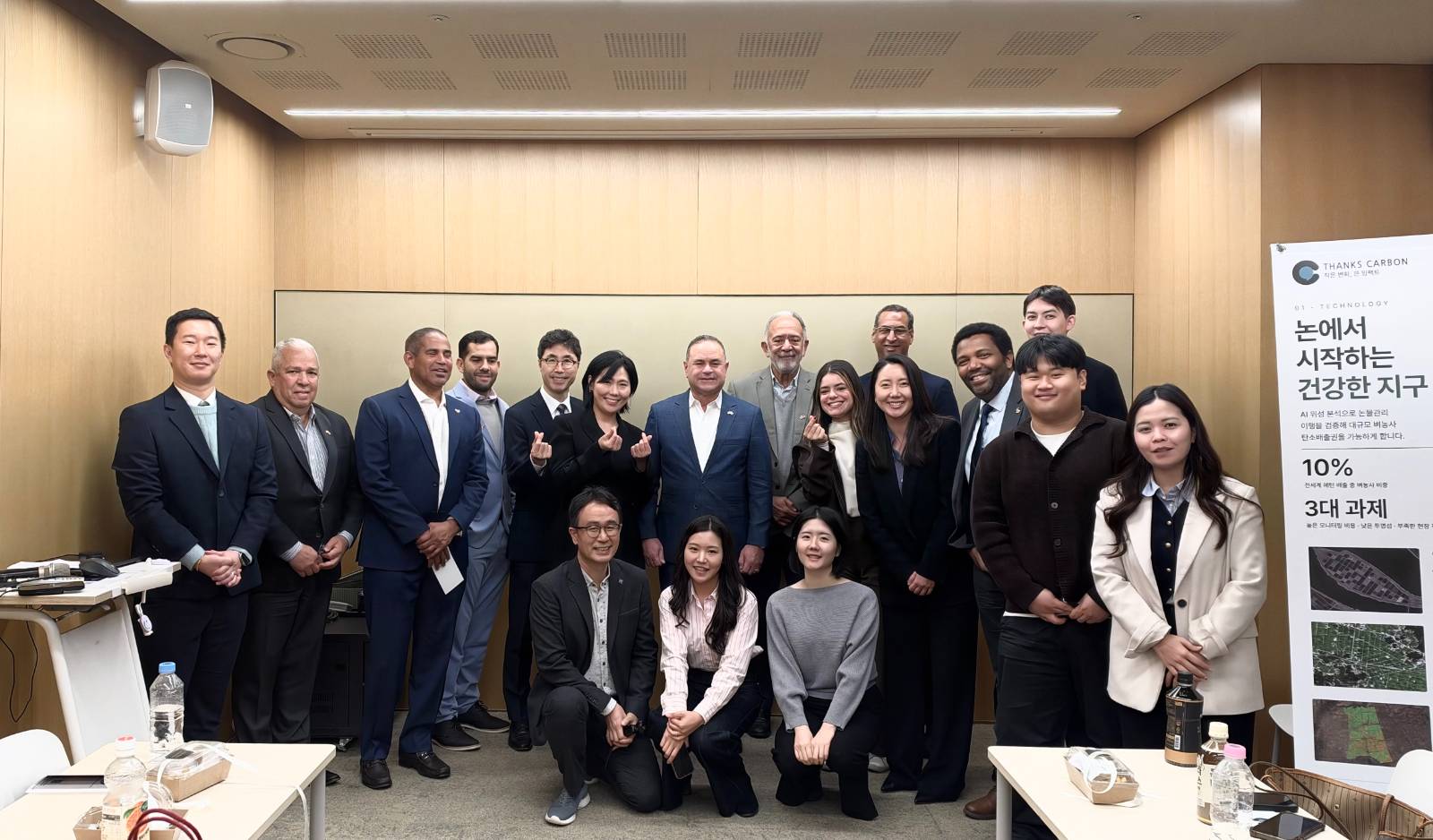
The Dominican Republic is the largest rice producer in the Caribbean. The Minister has about 36 years of rice farming experience and previously served as president of the national rice growers’ association. His interest in Korea’s smart farming and rice cultivation technologies led to this trip. Our Cambodia project also began at an event we took part in with the World Bank, so we were glad to welcome the delegation. The atmosphere in the room was very warm. It was a first chance to explore whether the AWD and digital MRV (measurement, reporting, and verification) experience we have gained in Asia can support rice fields in the Caribbean, and we will continue the conversation step by step.
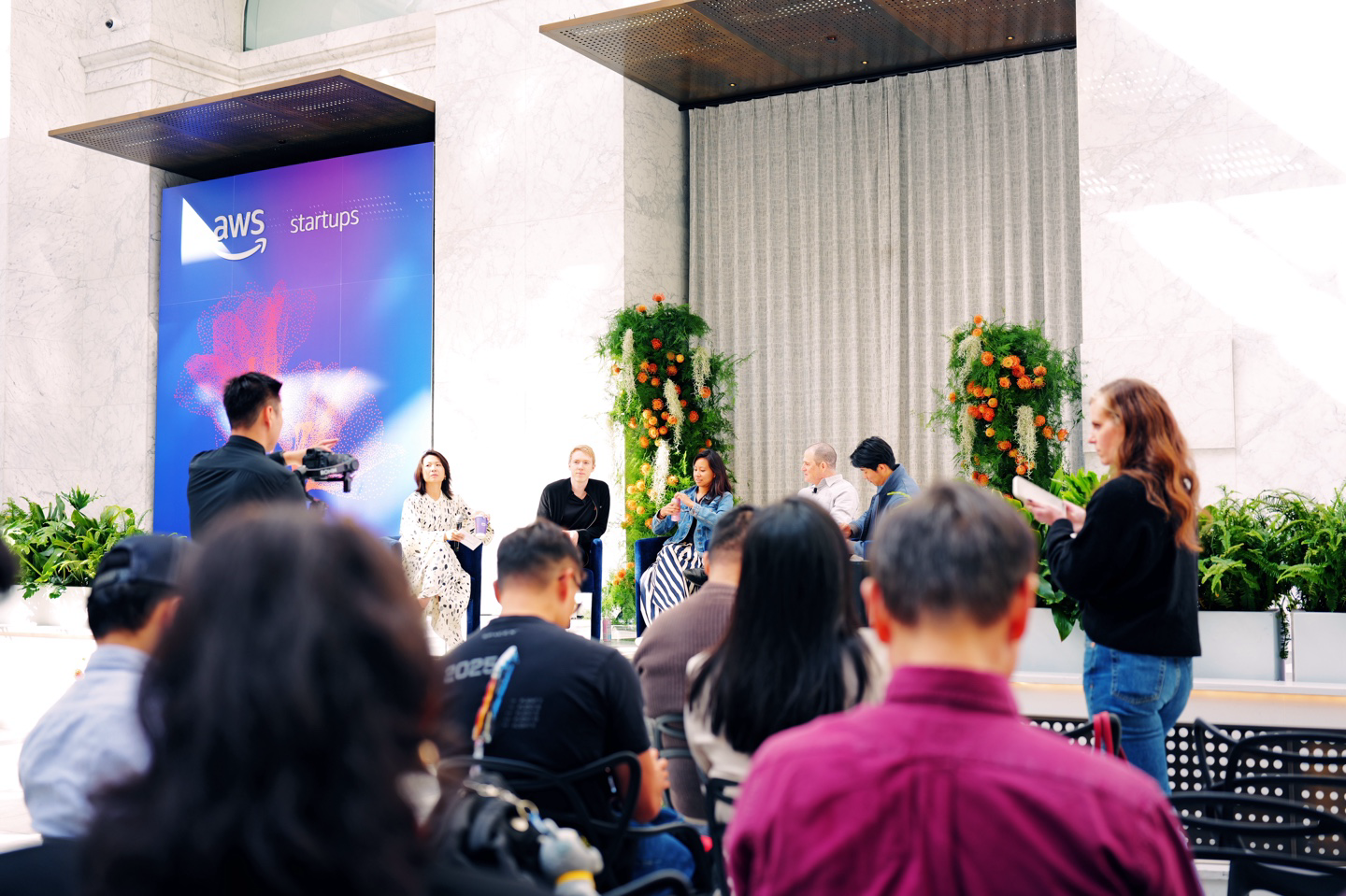
From October 5 to 8, Deputy CEO Tyger Lee attended SF Tech Week in San Francisco as part of the Jungle program, run by AWS Startups and the Gyeonggi Center for Creative Economy & Innovation. He held meetings with AWS, investors, and companies there.
He came back with three takeaways. Few players are building AI services for smallholder farmers in developing countries. The field data we collect from rice paddies can connect to new users such as insurers and financial institutions. And our greatest asset is a team that has solved hard problems together. He returned with greater confidence in building ASKER, our conversational AI agent, into an AI partner for smallholder farmers.
Quick Summary
<Opening notes>
- Dominican Republic Ministry of Agriculture Visits ThanksCarbon Two hours with the World Bank, and a first conversation about rice farming in the Caribbean
- What SF Tech Week Told Us About ASKER An AI partner for smallholders, and new users for paddy data
<Thankscarbon these days>
- Pursat and Kandal, Cambodia: Preparing for a New Season Each province targets about 5,000 hectares as the new planting season begins
- ASKER in the Hands of Bangladeshi Farmers Improving the service with feedback from the field
- Korea-ASEAN Methane Cooperation Begins in Cambodia A water management pilot in Kampong Thom with five partner institutions
<News in Brief>
- KDB Roadshow in Japan Introducing our rice methane projects to investors in Japan
- Goseong Otter Education Residents join a community session on otter habitat conservation
- ESG-ECO EXPO KOREA 2026 How rice fields can cut methane: conversations at COEX
Project Highlights
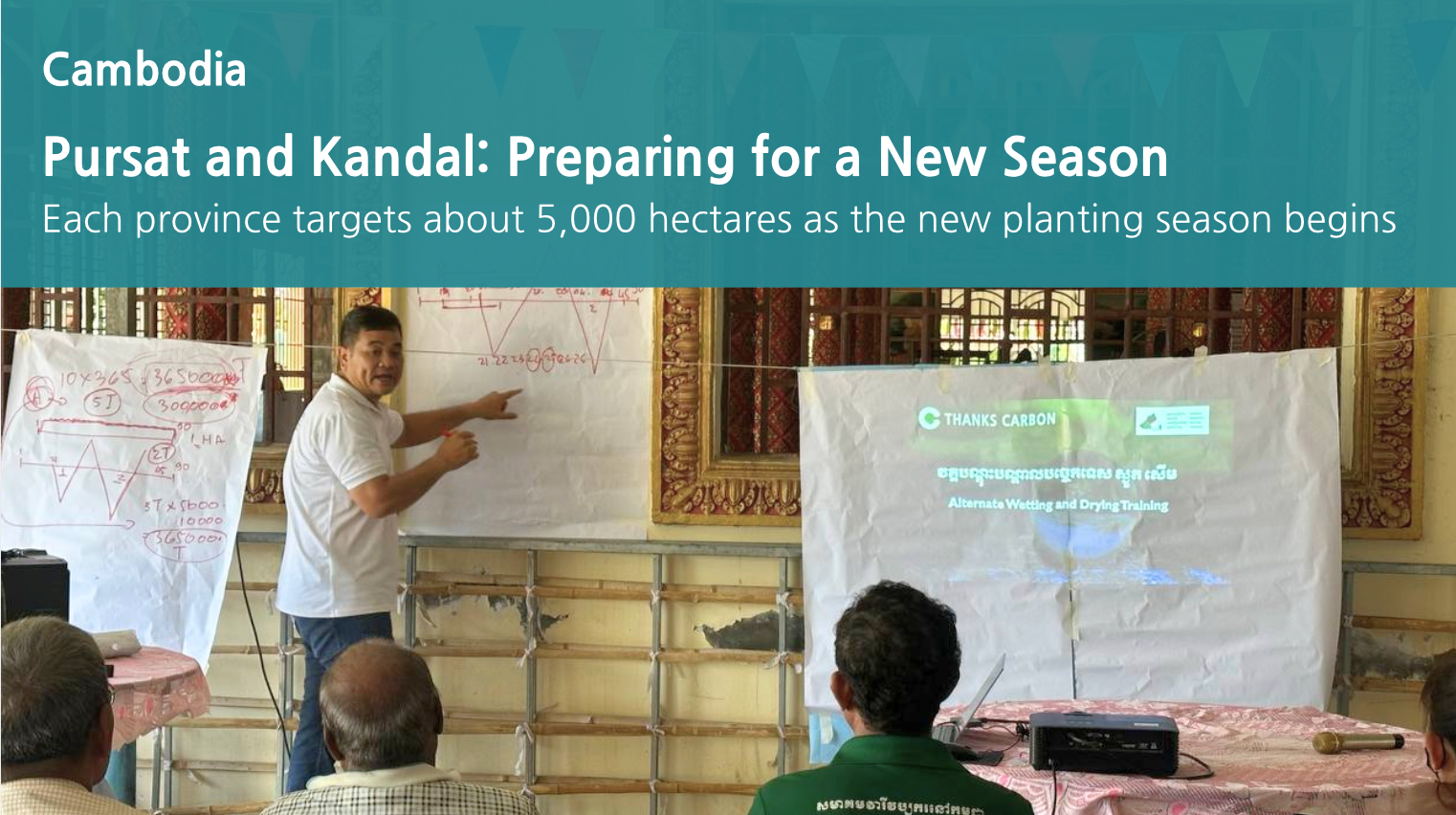
Pursat and Kandal, Cambodia: Preparing for a New Season
Each province targets about 5,000 hectares as the new planting season begins
October took the ThanksCarbon team to project sites in Cambodia and Bangladesh, to the United States and Japan, and to event halls across Korea. In Cambodia, we are expanding beyond Battambang and Takeo to a larger footprint that now includes Pursat and Kandal provinces, making strong headway in these new regions. With the dry season beginning in November and December, this is the busiest stretch of preparation.
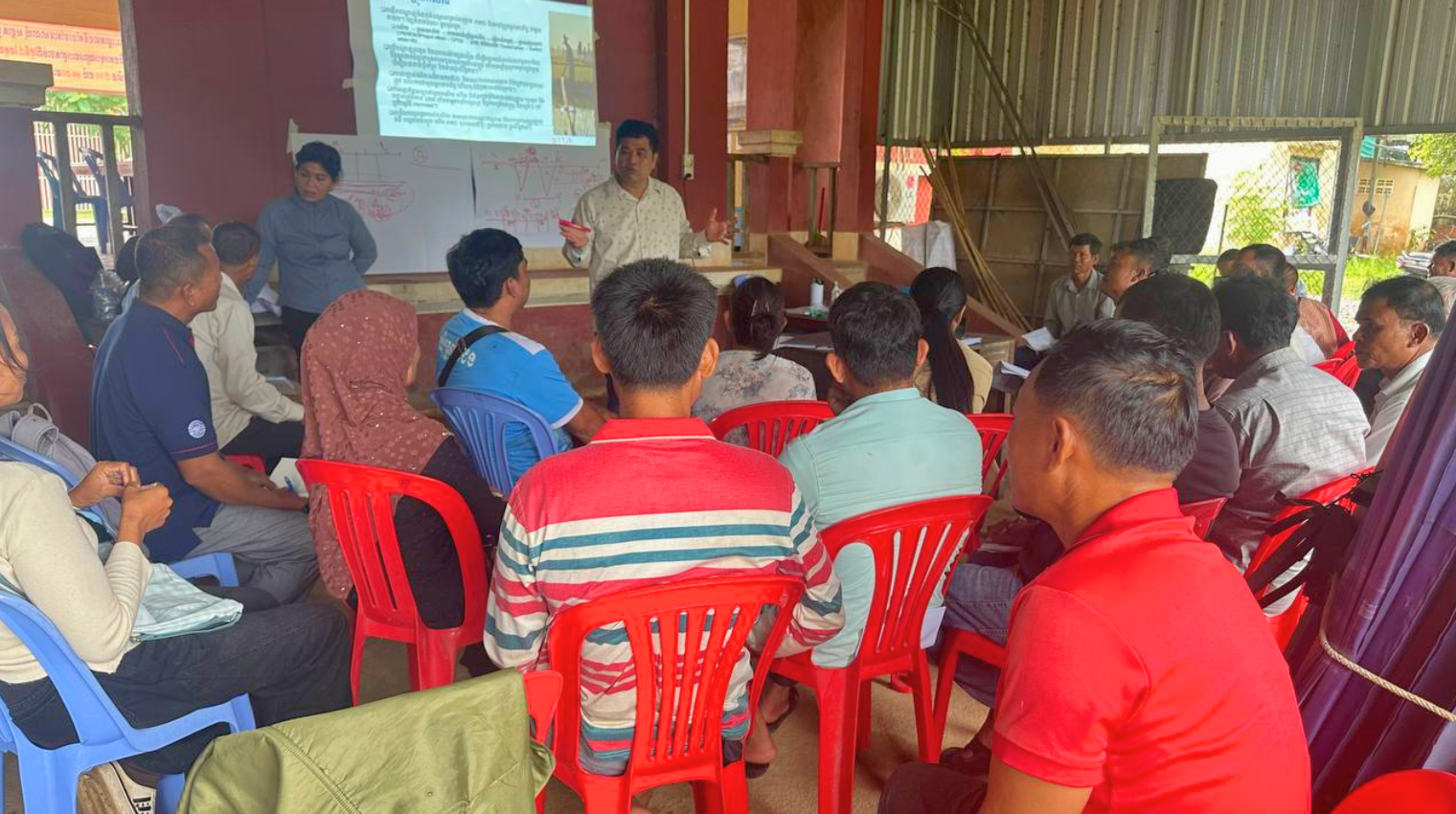
In Pursat, we are onboarding participating farmers and conducting a baseline survey of the area. Whenever we enter a new region, our local partner first builds ties with local NGOs, after which all parties convene to align on training and local context. Pursat is going through the same process. All 25 farmer leaders have completed AWD training and testing on Haimdall, our satellite and AI-based MRV platform, and farm registration and digital contracts are moving forward. The contracted area this season is 5,000 hectares, and sowing began in some areas by the end of October. We have advised the field teams to complete digital contracts before sowing. Even as heavy rain shifts some schedules, we are preparing to install Pani-tube, a perforated pipe that lets farmers read field water levels.
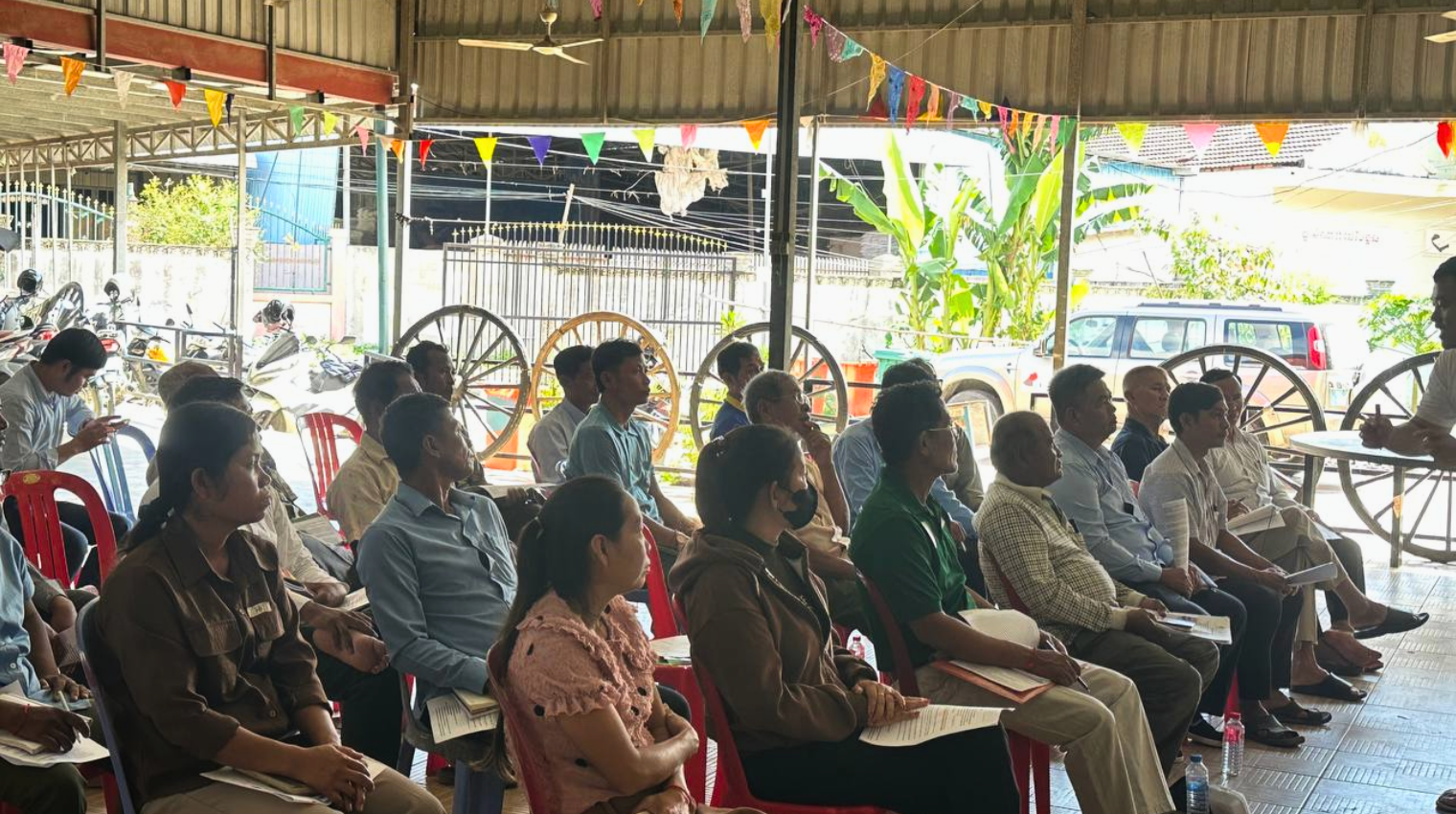
Kandal is following the same preparation process. After a first discussion with the provincial agriculture department in October 2025, we continued preparing, and the full project starts this November season. In October, farmer leaders completed AWD and Haimdall training, and following assessments, and 24 farmer leaders were confirmed after testing. We are now onboarding farmers and carrying out a baseline survey, while continuing to train alongside our local partner and regional NGOs and to learn about the area together. A regional meeting with provincial government and commune officials has also helped widen farmer participation. The target area is about 5,000 hectares, and sowing is planned to begin in November. Because most of the site is low-lying, sowing dates may vary by area depending on flooding, so we are holding regular check-in meetings with our local partner to keep schedules aligned. Once we have seen this season’s results, we plan to discuss how to expand.
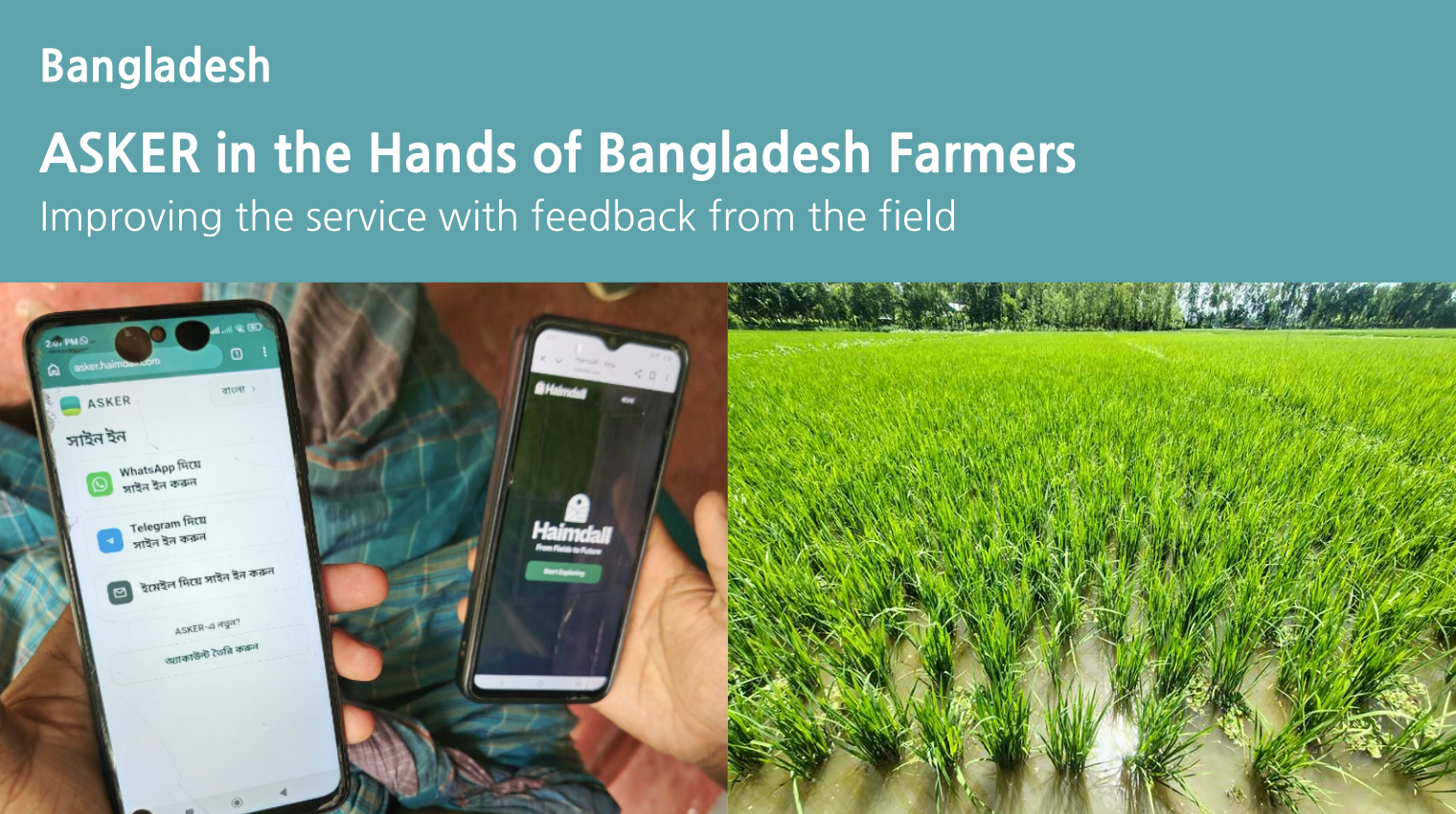
ASKER in the Hands of Bangladesh Farmers
Improving the service with feedback from the field
In Bangladesh, farmers are now using ASKER, which launched in September, and putting it to the test in real-world conditions. ASKER is a conversational AI agent that turns conversations with smallholder farmers into structured field data for digital MRV. ThanksCarbon has been operating rice methane projects across Cambodia, Vietnam, and Bangladesh, and we are now applying ASKER to make farmer onboarding, AWD training, evidence collection, and incentive payments scalable to many more farms. For hyperscalers, the large cloud and AI companies that increasingly look for high-quality climate solutions, ASKER offers value beyond a methane reduction and water-saving. It is designed to help smallholder farmers benefit from AI and carbon finance.
In actual use, we found that some of the ways farmers find it easiest to use ASKER differ from what we had expected, and we adjust the service each time we learn something new. What we learn in Bangladesh will carry over to our projects in Cambodia and Vietnam.
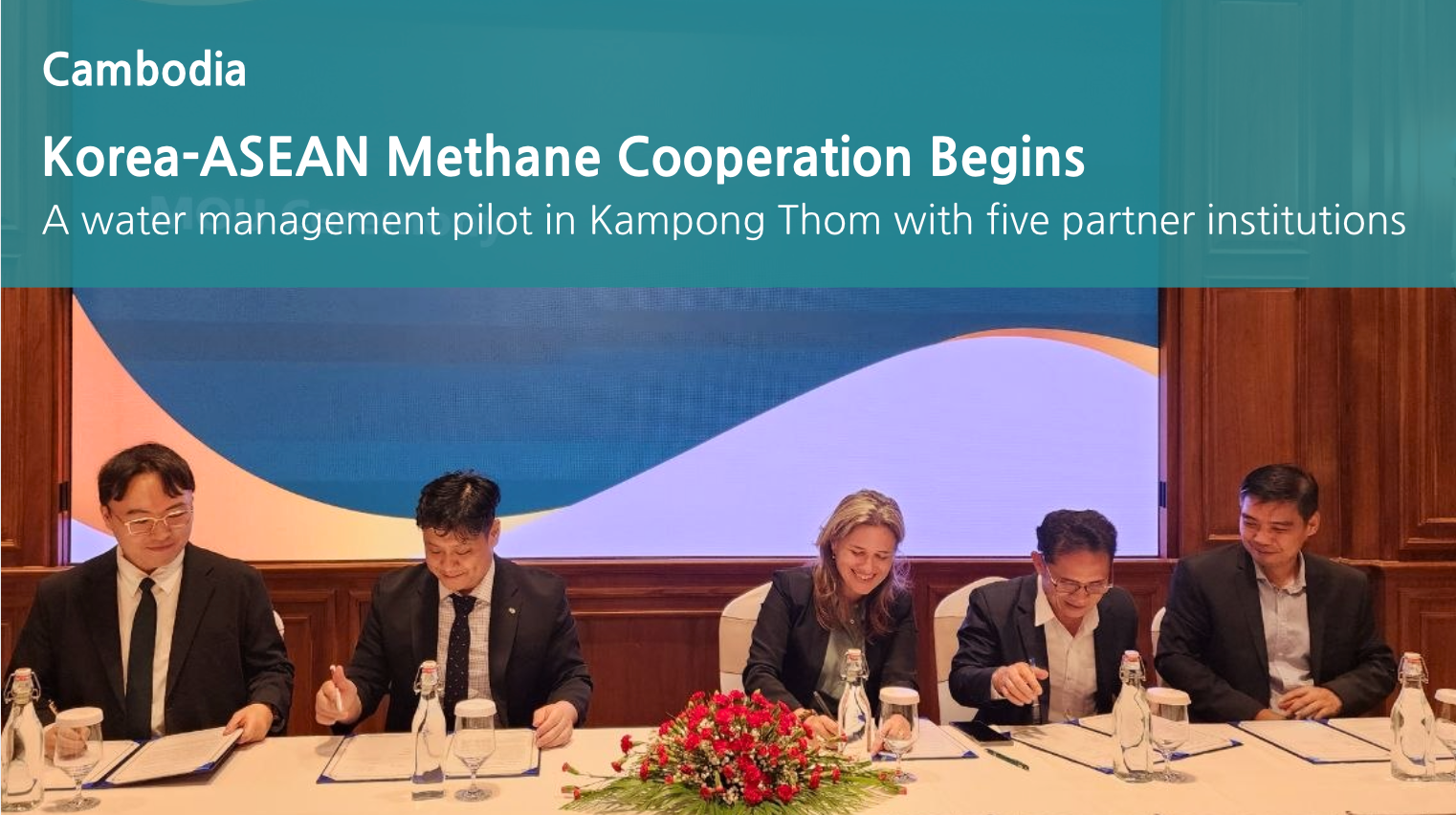
Korea-ASEAN Methane Cooperation Begins in Cambodia
A water management pilot in Kampong Thom with five partner institutions
On October 26 in Phnom Penh, Cambodia, partners signed a memorandum of understanding (MOU) and held a kickoff meeting for a methane-reduction paddy water management project. The project is part of AKCMM, which the Korean government supports through the ASEAN-Korea Cooperation Fund (AKCF) and the Global Green Growth Institute (GGGI) implements. The Korea Rural Community Corporation (KRC) commissioned the work, and ThanksCarbon serves as project management consultant (PMC). The site is paddy land in Kampong Thom, Cambodia, and the AWD-based water management pilot will run from September 2026 to May 2027.
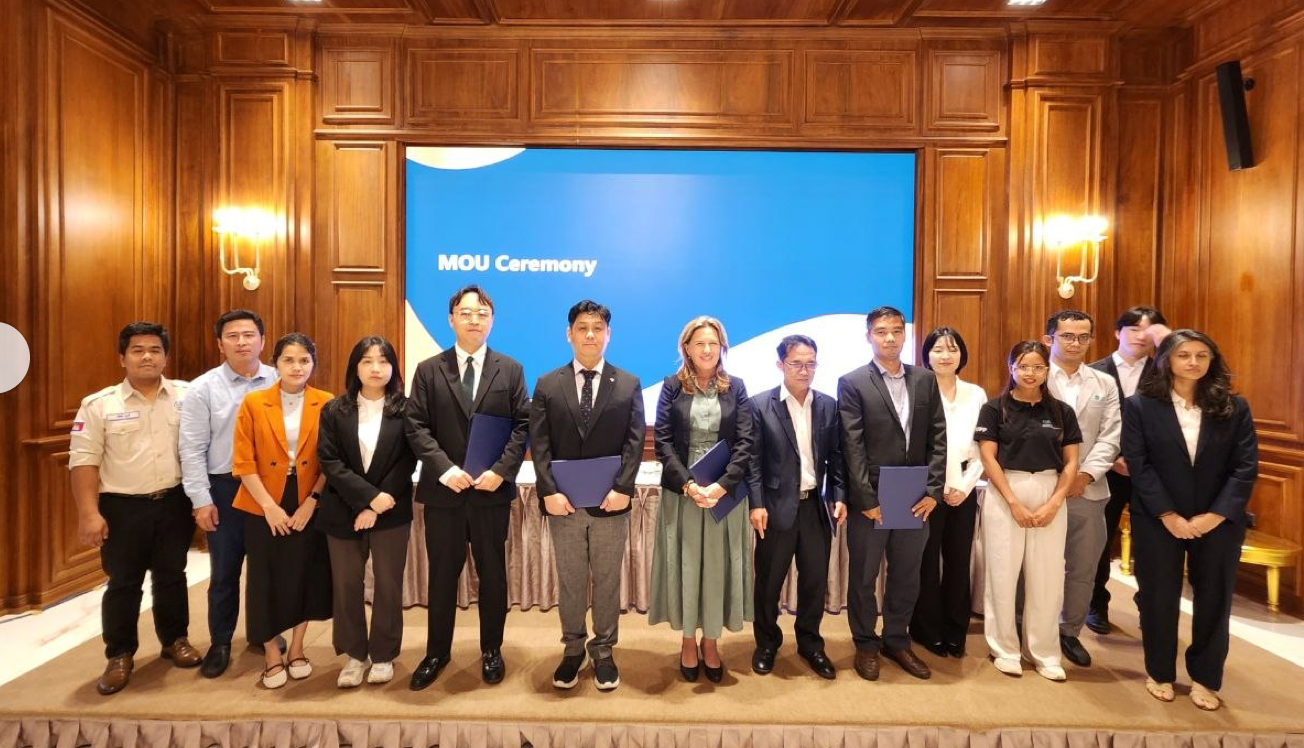
Participants include the General Directorate of Agriculture (GDA) under Cambodia’s Ministry of Agriculture, Forestry and Fisheries, GGGI, KRC, the Royal University of Phnom Penh (RUPP), and ThanksCarbon. Together they bring policy direction, funding and irrigation expertise, research, and field operations. ThanksCarbon coordinates the entire process from initial fieldwork to the final report to ensure seamless collaboration across all stakeholders. The pilot will test how well low-carbon water management fits local farms and lay the groundwork for scaling.
Across our sites in Cambodia, Vietnam, and Bangladesh, ThanksCarbon is applying AWD and digital MRV in real paddies and preparing for the next season. If your organization is considering a rice methane reduction program, we would be glad to hear from you. We can start by looking at site conditions and data structure together and discussing how we might work together.
ThanksCarbon Updates
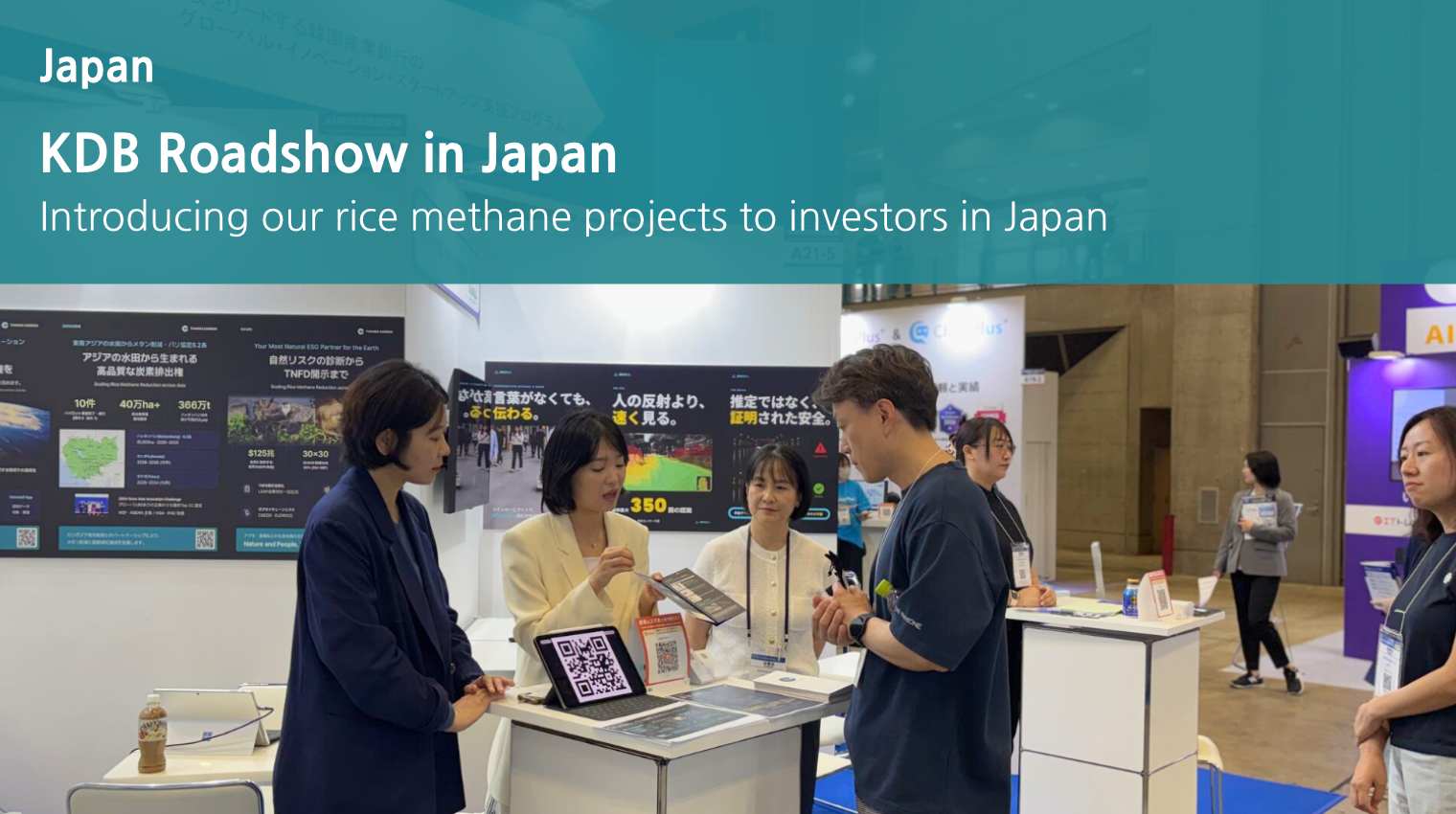
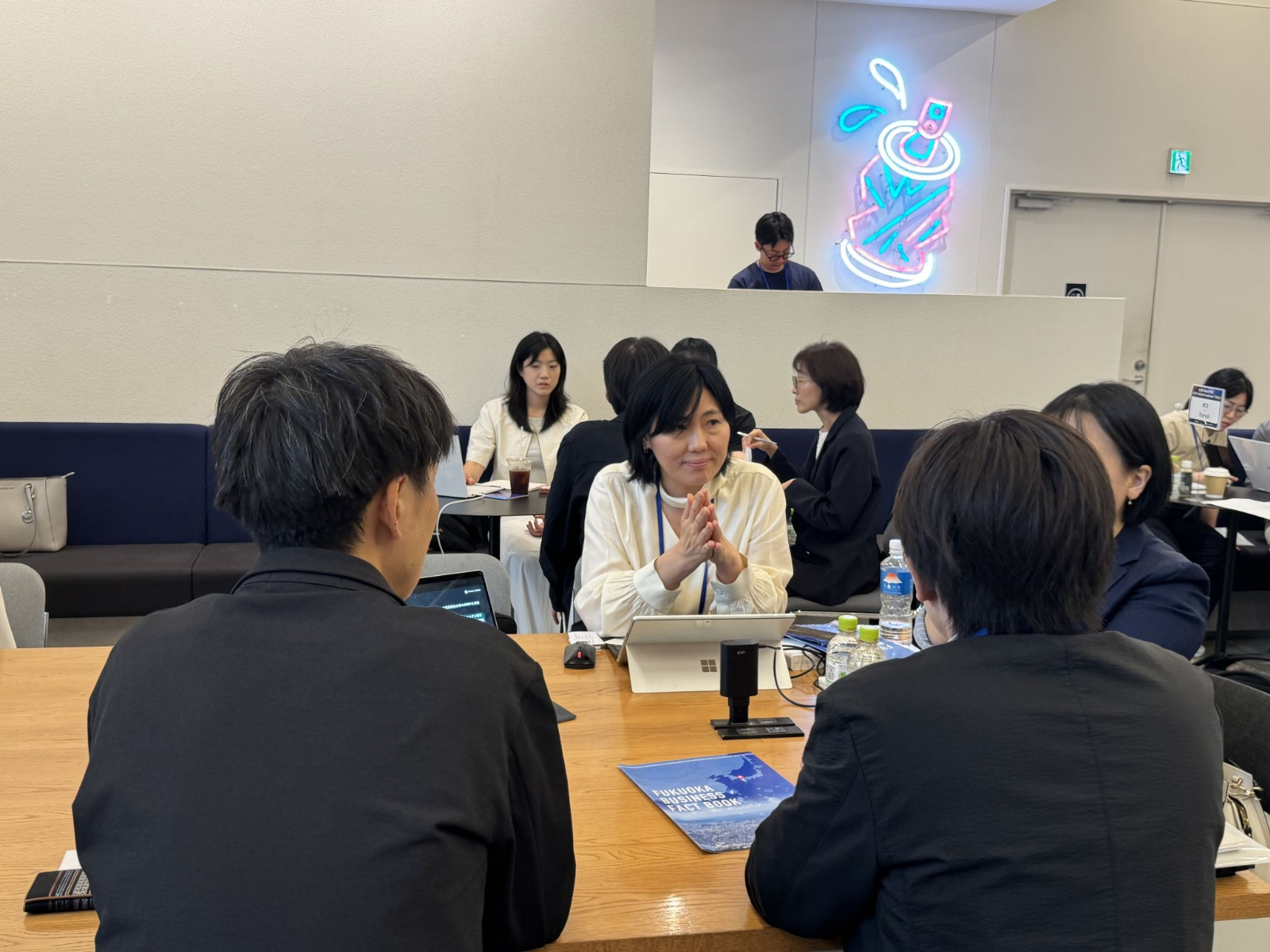
Introducing our rice methane projects to investors in Japan
KDB Roadshow in Japan
In October, ThanksCarbon joined the Korea Development Bank (KDB) Overseas Roadshow 2026 in Japan. After being selected for KDB NextONE this summer, we took part in a program KDB organized around Japan IT Week 2026 and held business meetings with Japanese investors. We presented our rice methane projects in Cambodia, Vietnam, and Bangladesh, and showed how Haimdall and ASKER turn field activity into data a buyer can verify. Japan has built bilateral carbon partnerships across Asia for over a decade through its Joint Crediting Mechanism (JCM), making it an ideal setting to discuss strategic partnerships. We also discussed concrete ways to work with the investors we met.
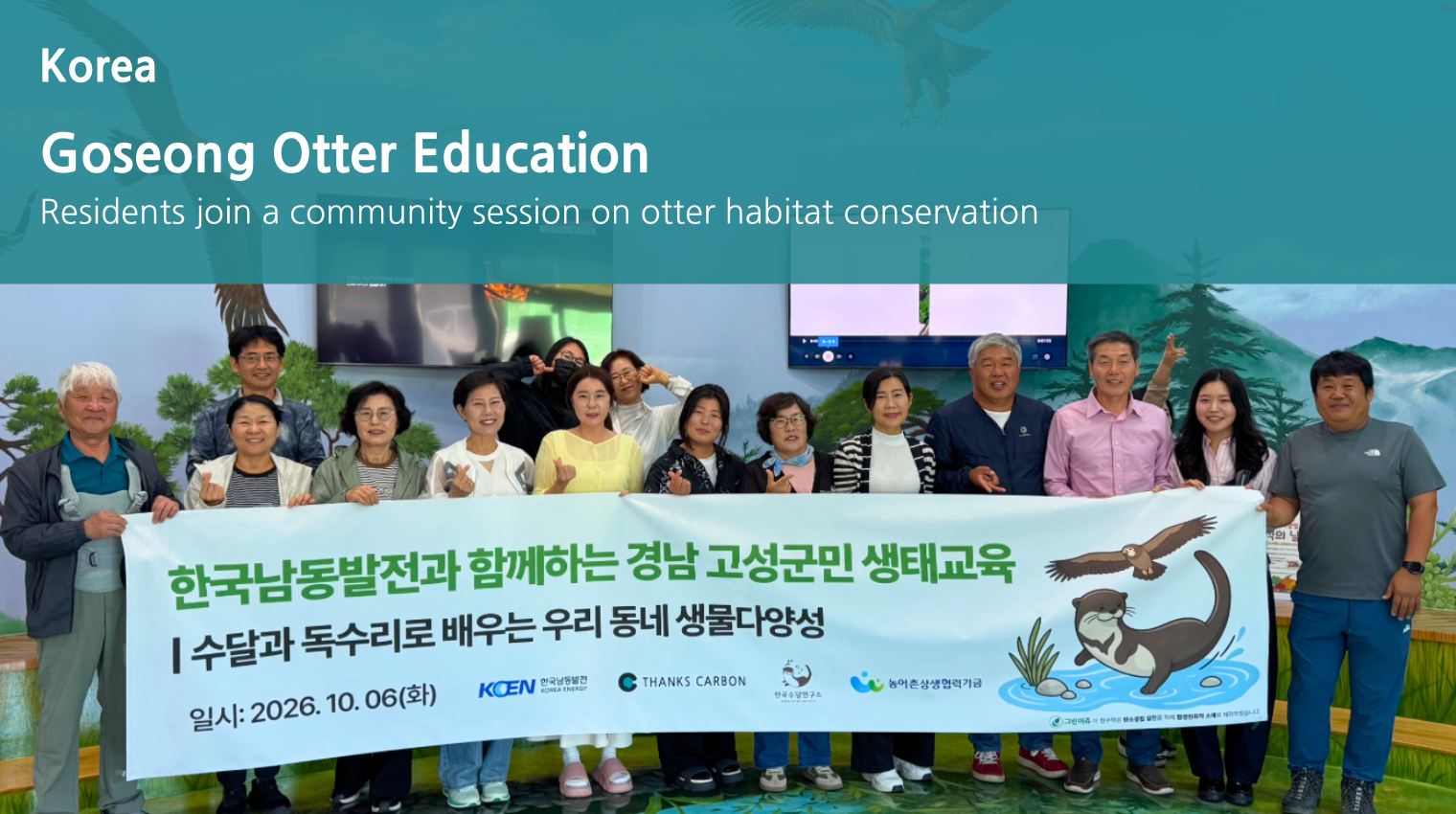
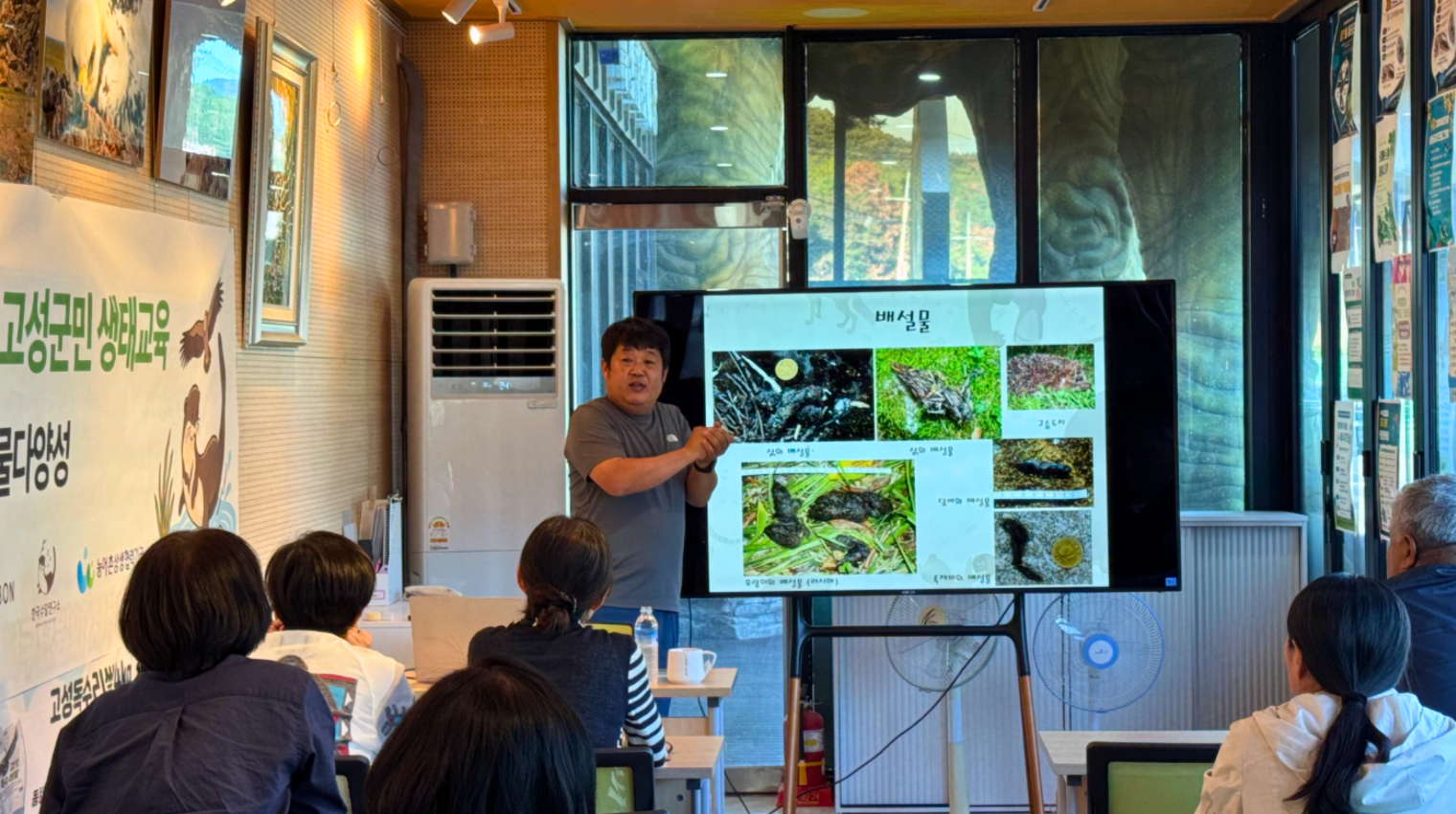
Residents join a community session on otter habitat conservation
Goseong Otter Education
On October 6, we ran an ecology education session for residents in Goseong, South Gyeongsang Province. It is part of the otter habitat conservation project that ThanksCarbon and Korea South-East Power (KOEN) have carried out together from December 2025 through November 2026. After an introduction to ThanksCarbon and the project, Dr. Shin Hwa-yong gave a lecture on Korea’s otters and mammals. Seventeen residents attended, several of whom had signed up on their own, and questions kept coming throughout. Two otter roadkill cases were recently reported in Sacheon, and one attendee who had seen a site in person shared photos, which brought home that habitat conservation is a local concern.
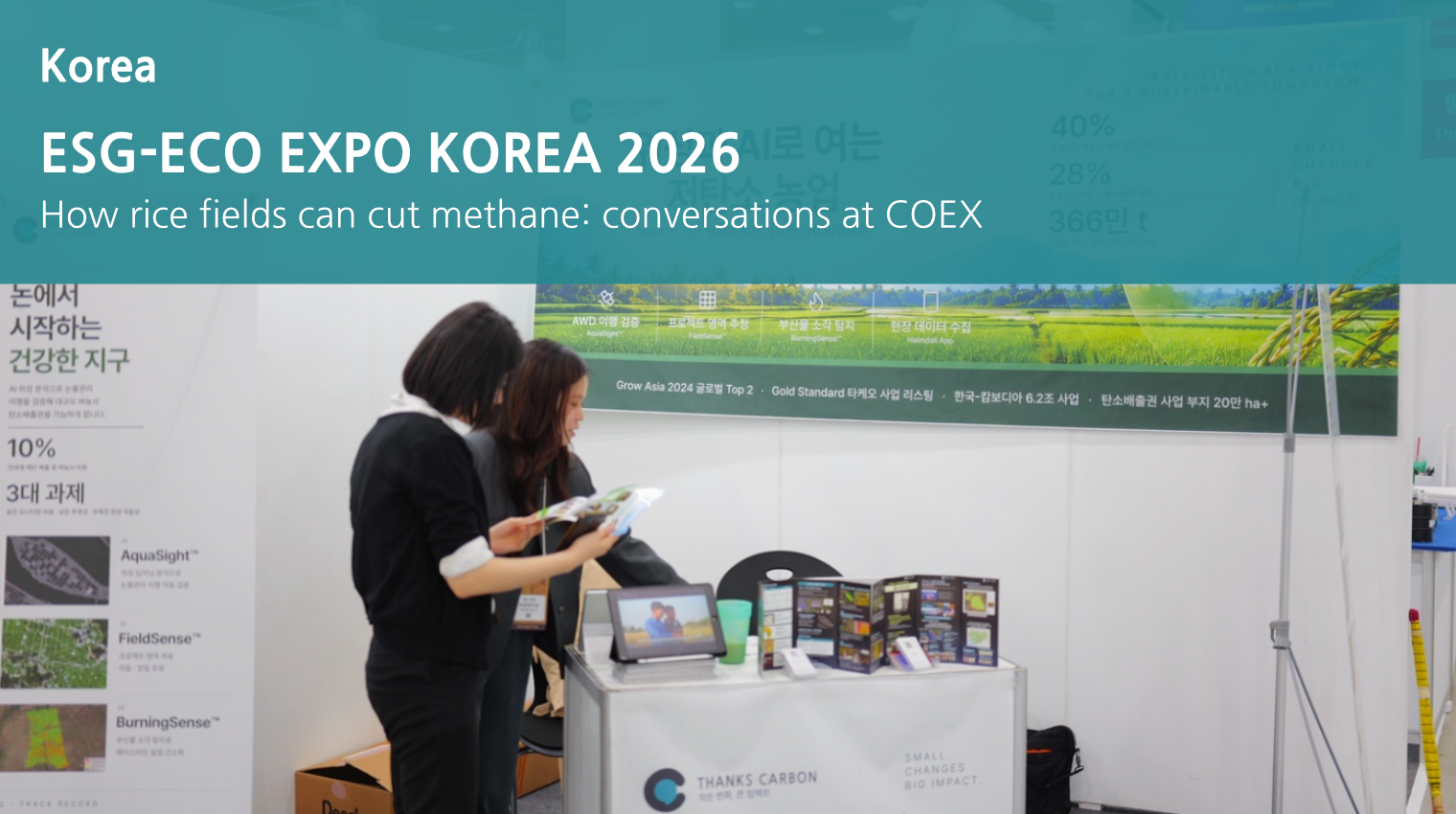
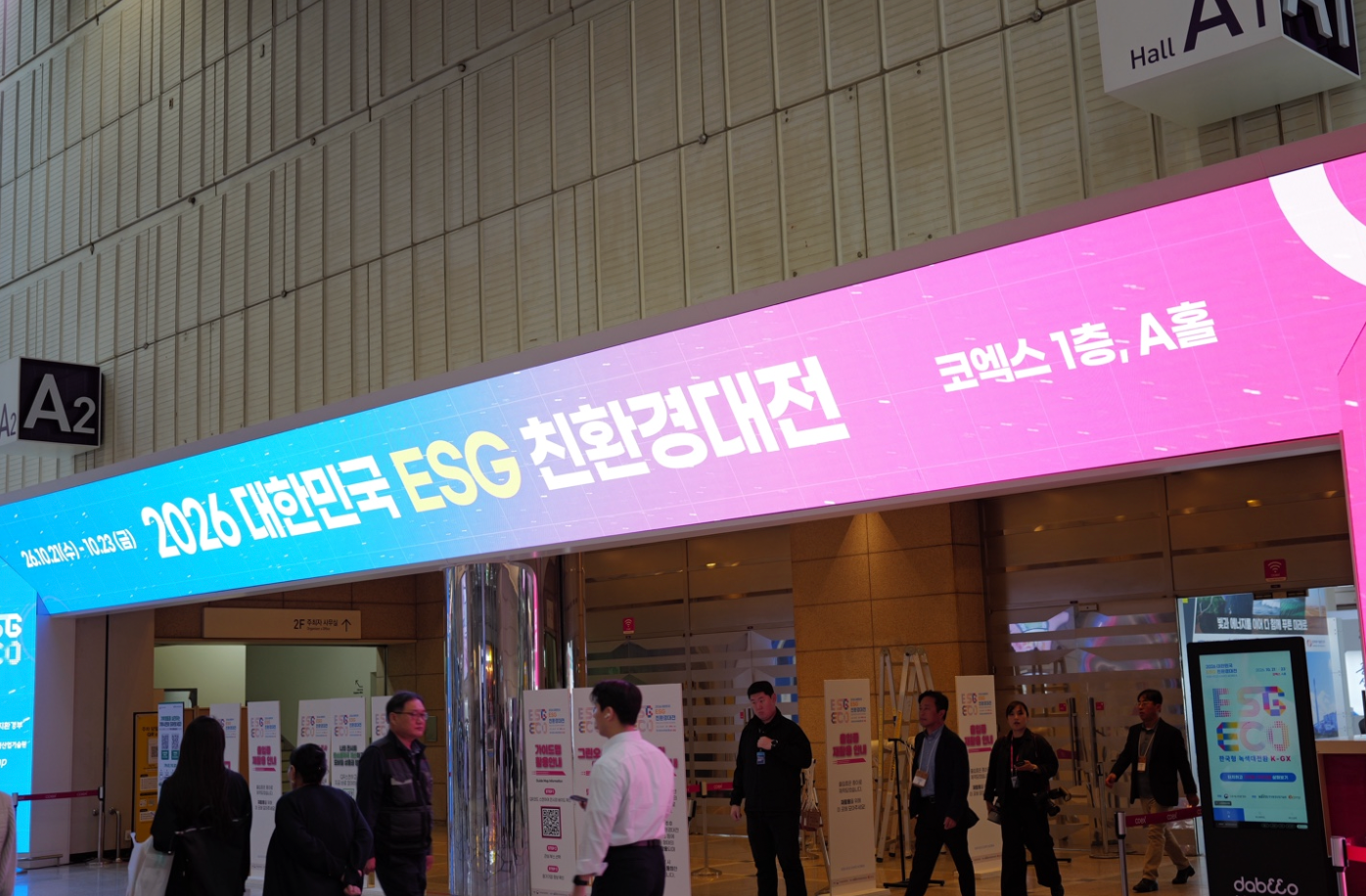
How rice fields can cut methane: conversations at COEX
ESG-ECO EXPO KOREA 2026
ThanksCarbon exhibited at the 2026 Korea ESG Eco-Friendly Expo, held at COEX in Seoul from October 21 to 23. Organized by the Ministry of Climate, Energy and Environment and hosted by the Korea Environmental Industry & Technology Institute (KEITI), this year’s expo centered on Korea’s green transformation (K-GX) with a focus on business-to-business (B2B) exchange, and 234 companies took part. Visitors to our booth included companies in energy, construction, retail, and finance, along with researchers and university staff. Interest was strongest in cutting methane through paddy water management, and we also received questions about Scope 3 emissions, low-carbon rice branding, and possible projects in Indonesia. We were also invited to give a talk to students.
Stay Connected
Are you ready to drive sustainable change with ThanksCarbon? Whether you're looking to scale agricultural impact or meet new biodiversity standards, we're here to collaborate.
Stay connected through our website or social channels to receive more updates and collaboration news. See you in our next edition!








의견을 남겨주세요