
License Hot Issue 제3호 · 2026년 11월 11일 수요일
SEP 금지명령은 결국 무엇으로 정해질까요? 특허의 유효성과 침해 여부에 더해, 당사자가 협상에서 어떻게 움직였는지도 이번에 살펴볼 세 소식의 쟁점이에요. UPC 밀라노 지방부는 침해를 인정하고도 금지명령을 기각했습니다. 브라질에서는 TCL에 HEVC 기능을 끄라는 가처분의 세부 내용이 드러났고, 한국 특허법원은 실시자의 행동을 판단 요소로 삼는 가이드라인 구상을 검토하고 있습니다. 이번 주는 금지명령 판단에 영향을 주는 협상 기록이 무엇인지 살펴볼게요.
이번 호에서 살펴볼 것
SEP·HEVC 통지 의무 못 채운 Ericsson, 금지명령 기각
SEP·가처분 브라질 가처분, 송달 후 15일 내 HEVC 차단
SEP 정책 한국 특허법원, SEP 소송 심리 순서를 검토한다
SEP·HEVC
통지 의무 못 채운 Ericsson, 금지명령 기각
UPC 밀라노 지방부가 특허 1건의 침해를 인정하고도 금지명령은 기각했습니다
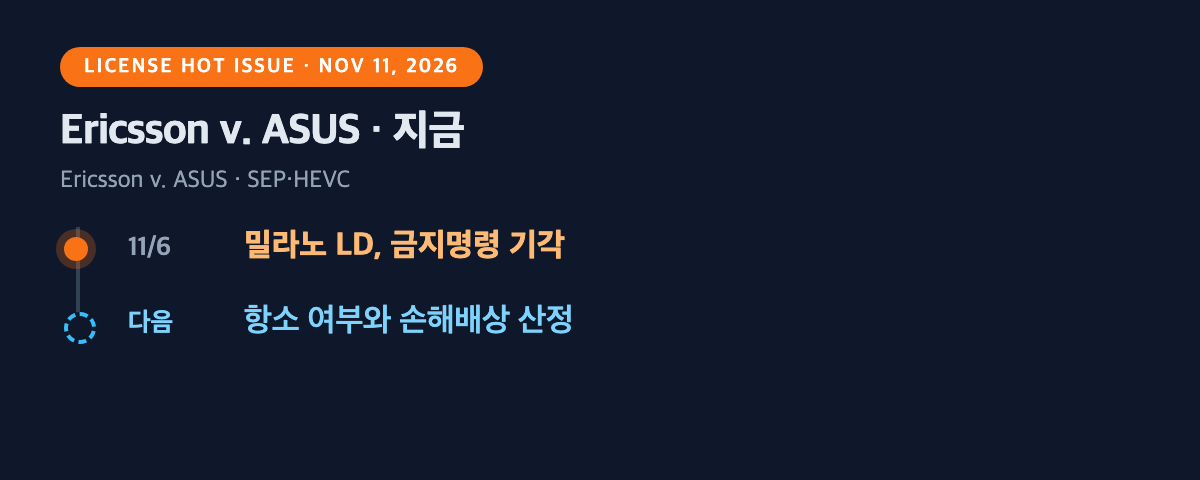
Ericsson v. ASUS · ip fray · 2026-11-06
특허가 유효하고 침해까지 인정됐는데 금지명령은 왜 나오지 않았을까요? UPC 밀라노 지방부(Milan LD)는 Ericsson이 ASUS를 상대로 낸 HEVC 표준특허 본안 2건을 판결하면서, Ericsson이 제소 전에 침해 통지 의무를 다하지 않았다며 금지명령 청구를 기각했습니다.
두 특허의 결론은 갈렸습니다. 재판부는 EP3076673을 신규사항 추가 또는 신규성 결여로 무효라고 판단했고, EP2727342는 유효하며 침해됐다고 판단했습니다. 그리고 침해 확인과 손해배상 청구권, 회계 보고는 인정했습니다.
재판부는 해당 특허를 표준필수특허로 선언해 달라는 청구도 받아들이지 않았습니다. ip fray는 이 판결을 UPC 최초의 FRAND 항변 성공 사례로 보도했습니다.
에디터의 해석. 이번 판결은 권리자가 지켜야 할 절차 의무가 SEP 금지명령의 결론을 실제로 바꿀 수 있다는 점을 UPC에서 보여 준 사례입니다. 일반적으로 유럽의 SEP 분쟁에서는 제소 전에 침해 사실을 알리고 협상을 제안하는 단계가 금지명령 판단에서 고려되므로, 이 단계에 흠결이 있으면 특허가 살아남아도 금지명령을 얻기 어려울 수 있습니다. 다만 손해배상 청구권과 회계 보고가 인정돼 ASUS의 금전 책임 가능성은 남았으므로, 이 판결을 실시자의 완승으로 읽기는 어렵습니다.
실무 체크. 권리자는 제소 전 침해 통지와 협상 제안 기록이 날짜별로 남아 있는지 점검하고, 실시자 쪽 사내 IP팀은 받은 통지와 회신 이력을 한 파일로 정리해 둡니다.
원문 「UPC's first-ever successful FRAND defense: Milan LD sides with ASUS against Ericsson」 보기 →
SEP·가처분
브라질 가처분, 송달 후 15일 내 HEVC 차단
TCL의 임시 라이선스 요청은 기각됐고, 불이행 시 하루 BRL 50,000의 제재금이 붙습니다
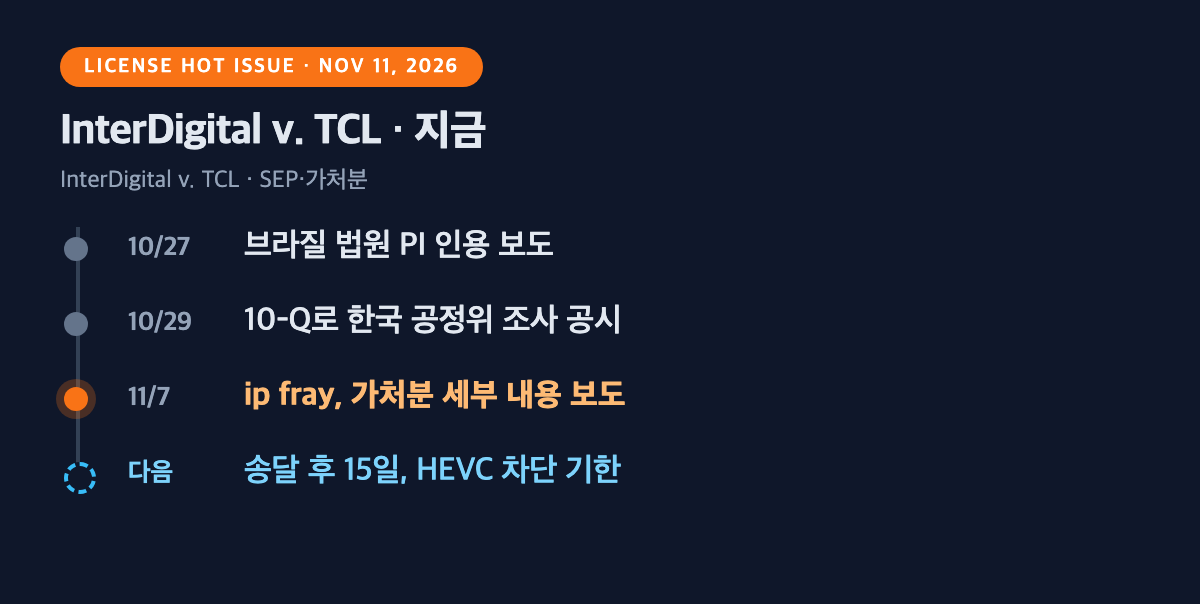
InterDigital v. TCL · ip fray · 2026-11-07
지난 호에서 전한 브라질 가처분은 TCL에 실제로 무엇을 요구할까요? 11월 7일 ip fray 보도로 세부 내용이 드러났습니다. 리우데자네이루 제3상사법원은 HEVC 표준특허의 유효성과 침해, InterDigital 제안의 FRAND 부합 여부에 대한 잠정 판단을 토대로 가처분을 인용했습니다. TCL은 결정 송달 후 15일 안에 브라질에서 제조·수입·판매 제안하는 해당 기기의 문제 된 HEVC 디코딩 기능을 꺼야 합니다.
이를 어기면 하루 BRL 50,000의 제재금이 부과되며, 우선 정해진 상한은 BRL 1 million입니다. 법원은 TCL이 요청한 브라질 한정 임시 라이선스와, InterDigital이 제3자와 맺은 라이선스 계약을 열람하게 해 달라는 TCL의 요청을 모두 기각했습니다.
TCL의 역제안은 InterDigital 제안액의 약 6.3%와 10% 수준이었습니다. InterDigital은 10월 27일 가처분 인용을 발표했고, 10월 29일에는 10-Q를 통해 한국 공정위 조사를 공시했습니다.
에디터의 해석. 브라질 법원은 임시 라이선스 요청을 받아들이지 않았고, 이로써 실시자가 잠정 지급 의사를 밝히는 것만으로는 가처분을 피하기 어려울 수 있다는 신호를 보냈습니다. 일반적으로 SEP 협상에서 역제안은 성실한 실시자 기록의 핵심이지만, 권리자 제안과 큰 차이가 나는 역제안은 산정 근거와 협상 경과에 따라 지연 전략으로 읽힐 수 있습니다. HEVC 디코딩 차단은 판매에 상당한 압박이 될 수 있지만, 이번 명령은 해당 기능을 끈 기기의 판매를 허용합니다. 15일 기한을 전후해 협상 구도가 움직일 가능성을 열어 둬야 합니다.
실무 체크. 실시자는 진행 중인 SEP 협상에서 자사 역제안이 권리자 제안과 얼마나 벌어져 있는지, 그 산정 근거를 문서로 설명할 수 있는지 점검합니다.
원문 「InterDigital secures preliminary injunction against TCL over HEVC patents in Brazil」 보기 →
SEP 정책
한국 특허법원, SEP 소송 심리 순서를 검토한다
유효성·침해와 FRAND의 심리 순서, 실시자 의사 판단 기준을 검토합니다
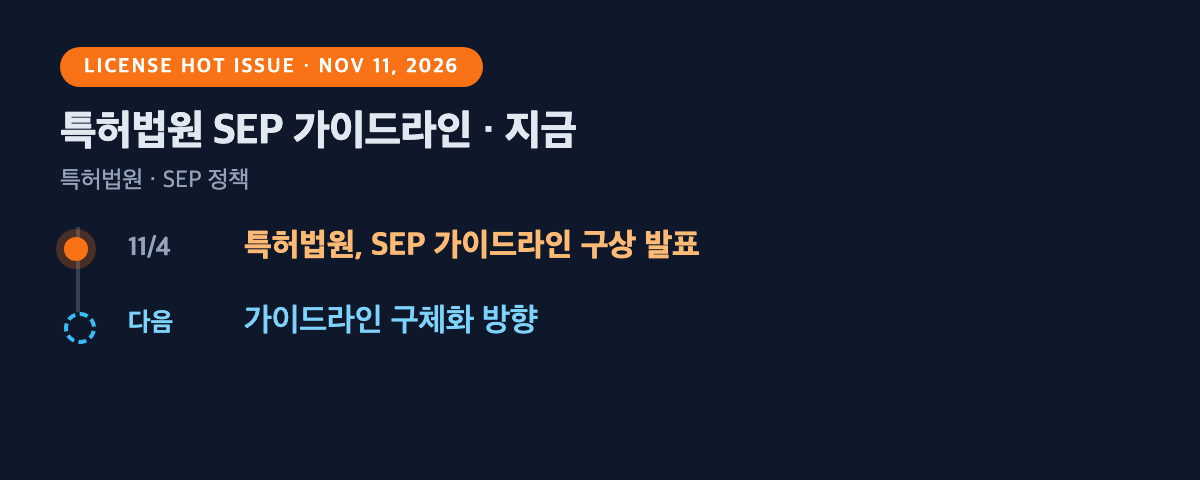
특허법원 · 법률신문 · 2026-11-06
한국 법원에서 SEP 소송을 하면 무엇부터 다투게 될까요? 특허법원이 표준필수특허(SEP) 소송 가이드라인을 마련하고 있습니다. 특허법원 김기수 고법판사는 11월 4~5일 서울 소피텔 앰배서더 호텔에서 열린 '2026 특허법원·지식재산처 국제 콘퍼런스'의 4일 첫 세션에서 가이드라인 구상을 발표했습니다.
법원 내 SEP 연구회는 특허의 유효성·침해 쟁점과 FRAND 쟁점을 어떤 순서로 심리할지 사전에 정하고, 실시자의 계약 의사를 판단할 때 담보 제공 같은 행동을 우선 고려하는 방안을 검토합니다. 콘퍼런스에는 영국·중국·독일(UPC 뮌헨)·일본 법관들도 참석해 각국의 분쟁 해결 방식을 소개했습니다.
에디터의 해석. 실시자의 의사를 말보다 담보 같은 행동으로 판단하겠다는 방향은, 국내 법원도 SEP 분쟁에서 협상 태도를 심리의 축으로 삼겠다는 신호입니다. 일반적으로 성실한 실시자인지는 금지명령 판단에 영향을 줄 수 있고, 담보 제공은 실시자가 지급 능력과 의사를 함께 보여 주는 수단으로 쓰입니다. 아직 구상 검토 단계이므로, 심리 순서가 어느 쪽으로 확정되느냐에 따라 권리자와 실시자 모두 국내 제소 전략을 다시 계산하게 될 수 있습니다.
실무 체크. 사내 IP팀은 국내에서 협상 중인 SEP 건에 대해 담보 제공을 제안할 수 있는 예산과 내부 승인 절차가 마련돼 있는지 확인해 둡니다.
원문 「특허법원, ‘표준특허’ 소송 가이드라인 마련 나선다」 보기 →
이번 주 소식의 공통점
세 소식은 SEP 금지명령을 무엇이 가르느냐는 같은 질문에 서로 다른 방향에서 답합니다. 밀라노에서는 권리자의 제소 전 통지 흠결이 금지명령을 막았고, 브라질에서는 실시자의 임시 라이선스 요청이 가처분을 막지 못했으며, 한국 특허법원은 담보 제공 같은 실시자의 행동을 우선 보겠다는 구상을 내놓았습니다. 특허의 유효성과 침해 여부에 더해 양쪽이 협상 과정에서 남긴 기록도 금지명령 판단에 영향을 줄 수 있음을 보여 줍니다.
금지명령 판단, 협상 기록도 결론을 바꿀 수 있다
더 궁금해지는 이야기
제소 전 통지를 받지 못한 실시자라면 금지명령 걱정을 덜어도 될까요?
밀라노 판결에서도 침해 확인과 손해배상 청구권, 회계 보고는 인정됐으므로 금전 책임까지 사라지지는 않습니다. 통상 통지 흠결은 권리자가 절차를 갖춰 다시 다툴 여지가 있는 사유이므로, 실시자도 통지를 받은 시점부터 회신과 역제안 기록을 쌓아 두는 편이 협상력을 지키는 길입니다.
담보를 제공하면 성실한 실시자로 인정받을 수 있나요?
한국 특허법원은 담보 제공 같은 행동을 우선 고려하는 방안을 검토하는 단계입니다. 일반적으로 담보는 지급 의사를 보여 주는 강한 신호로 쓰이지만 역제안 수준과 협상 경과가 함께 평가되는 것이 통상이므로, 담보 하나로 결론이 정해진다고 보기는 어렵습니다.
English Edition
What actually decides an SEP injunction? Alongside patent validity and infringement, the parties' negotiating conduct is an issue in the three stories we examine. The UPC Milan Local Division found infringement yet refused an injunction. In Brazil, details emerged of a preliminary injunction ordering TCL to disable HEVC, while Korea's Patent Court is considering a guidelines proposal that would take implementer conduct into account. This week, we look at negotiation records that can affect injunction decisions.
In this issue
SEP·HEVC Ericsson loses injunction over notice failure
SEP·PI Brazil: HEVC off 15 days after service
SEP policy Korea weighs the order of SEP proceedings
SEP·HEVC · Ericsson loses injunction over notice failure
The UPC Milan LD found one patent infringed but still refused an injunction
If the patent is valid and infringed, why was there no injunction? Ruling on two HEVC SEP merits actions brought by Ericsson against ASUS, the UPC Milan Local Division (Milan LD) dismissed the injunction request, finding that Ericsson had not met its obligation to notify ASUS of the infringement before filing suit.
The two patents fared differently. The court found EP3076673 invalid for added matter or lack of novelty, and found EP2727342 valid and infringed. It granted a declaration of infringement, an entitlement to damages and rendering of accounts.
The court also rejected a request to declare the patent standard-essential. ip fray reported the ruling as the UPC's first-ever successful FRAND defense.
Editor's take. This ruling shows at the UPC that a rights holder's procedural duties can actually change the outcome of an SEP injunction claim. In European SEP disputes, pre-suit infringement notices and offers to negotiate are generally considered in injunction decisions, so a defect at that stage may make an injunction difficult to obtain even when the patent survives. Because an entitlement to damages and rendering of accounts were granted, ASUS still faces potential financial liability, so the ruling is hard to read as an outright win for the implementer.
Practice check. Rights holders should check that their pre-suit infringement notices and negotiation offers are documented by date, and in-house IP teams on the implementer side should keep all notices received and replies sent in a single file.
SEP·PI · Brazil: HEVC off 15 days after service
TCL's interim license request was rejected; non-compliance carries a daily BRL 50,000 fine
What does the Brazilian injunction we covered last issue actually require of TCL? The details emerged in ip fray's report on November 7. The 3rd Business Court of Rio de Janeiro granted provisional relief based on preliminary findings concerning HEVC patent validity, infringement and the FRAND compliance of InterDigital's offer. TCL must disable the disputed HEVC decoding functionality in covered devices manufactured, imported or offered for sale in Brazil within 15 days of service of the decision.
Non-compliance carries a daily fine of BRL 50,000, initially capped at BRL 1 million. The court rejected both TCL's request for a Brazil-only interim license and TCL's request to inspect InterDigital's license agreements with third parties.
TCL's counteroffers were about 6.3% and 10% of InterDigital's offer. InterDigital announced the injunction on October 27, and on October 29 disclosed a Korea Fair Trade Commission investigation in its 10-Q.
Editor's take. By rejecting the interim license request, the Brazilian court signaled that offering interim payment alone may not be enough to avoid a preliminary injunction. Counteroffers are generally central to a willing licensee's record in SEP negotiations, but a counteroffer far below the rights holder's offer may be read as a delay tactic depending on its basis and the course of negotiations. Disabling HEVC decoding may put substantial pressure on sales, but this order permits sales of devices with the functionality disabled. Negotiating dynamics may shift around the 15-day deadline.
Practice check. Implementers should check how far their counteroffers in ongoing SEP negotiations are from the rights holder's offers, and whether they can explain the basis for those figures in writing.
SEP policy · Korea weighs the order of SEP proceedings
It is weighing the order of validity, infringement and FRAND, and how to judge willingness
If you litigate an SEP in Korea, what gets decided first? The Patent Court is developing guidelines for standard-essential patent (SEP) litigation. Patent Court Judge Kim Ki-soo presented the guidelines concept in the first session on November 4 at the 2026 Patent Court–Ministry of Intellectual Property International Conference, held November 4–5 at the Sofitel Ambassador Hotel in Seoul.
The court's SEP study group is considering setting the order of validity, infringement and FRAND issues in advance, and giving priority to conduct such as providing security when judging an implementer's willingness to take a license. Judges from the UK, China, Germany (UPC Munich) and Japan also attended and presented how their jurisdictions resolve disputes.
Editor's take. Judging willingness by conduct such as security rather than by words signals that Korean courts also intend to make negotiating behavior a central axis of SEP proceedings. Whether an implementer is willing can affect the injunction analysis, and providing security is a way for implementers to show both the ability and the intent to pay. Since the proposal is still under consideration, rights holders and implementers may need to recalculate their Korean litigation strategies depending on which order of proceedings is finally adopted.
Practice check. In-house IP teams should confirm that budget and internal approval procedures are in place to offer security in SEP negotiations under way in Korea.
Source: 특허법원, ‘표준특허’ 소송 가이드라인 마련 나선다 (법률신문) →
What connects them
The three stories answer the same question, what decides an SEP injunction, from different directions. In Milan, the rights holder's failure to meet its pre-suit notice obligation blocked an injunction; in Brazil, the implementer's interim license request failed to stop a preliminary injunction; and Korea's Patent Court has floated a plan to look first at implementer conduct such as providing security. These developments show that, alongside patent validity and infringement, the record each side leaves during negotiations can affect injunction decisions.
Negotiation records can also change injunction outcomes
Questions you might have
If an implementer never received a pre-suit notice, can it worry less about injunctions?
Even in the Milan ruling, a declaration of infringement, an entitlement to damages and rendering of accounts were granted, so financial liability does not go away. A notice defect is usually something the rights holder can cure before litigating again, so implementers protect their negotiating position best by building a record of replies and counteroffers from the moment they receive notice.
Does providing security earn recognition as a willing licensee?
Korea's Patent Court is considering giving priority to conduct such as providing security. Security is generally a strong signal of willingness to pay, but the level of counteroffers and the course of negotiations are usually assessed together, so security alone is unlikely to settle the outcome.
License Hot Issue는 공개된 국내외 보도와 법원·기관 발표에서 라이선스 계약·분쟁·로열티 관련 소식을 현직 IP 실무자가 AI로 수집·검증하고 직접 골라 정리합니다. 당사자의 주장은 주장으로 전하며, 개별 사안에 대한 법률 자문이 아니며 판단 전에는 반드시 원문을 확인하세요.
License Hot Issue curates public reports and court or agency releases on licensing deals, disputes and royalties, collected and fact-checked with AI and selected by a working IP practitioner. Party positions are reported as claims. This is not legal advice; always check the original source.
다뤄 줬으면 하는 분쟁이나 딜이 있다면 이 메일에 답장으로 알려 주세요. 다음 호를 고를 때 참고할게요.






의견을 남겨주세요