
Several jeepney routes across the Philippines joined the transport strike from March 26 to 27, with actions taking place in major urban centers and provincial areas. Alongside jeepney drivers, Grab, Angkas, and other Transport Network Vehicle Services (TNVS) drivers also participated in the protests, joined by commuters and other affected sectors. These mobilizations reflect not only the grievances of transport workers but also the broader discontent among the Filipino people over skyrocketing fuel prices, low incomes, and the rising cost of living.
While the war between the US-Israel, and Iran is geographically distant from the Philippines, its consequences reverberate strongly in a country that has long remained subservient to US Imperialism. The surge in global oil prices has once again exposed the Philippines’ deep structural vulnerability. The country relies almost entirely on imported petroleum, making it highly susceptible to global price fluctuations driven by conflicts, market speculation, and supply disruptions. With oil prices rising sharply, nearly tripling in recent weeks, the immediate burden is passed directly to ordinary Filipinos.
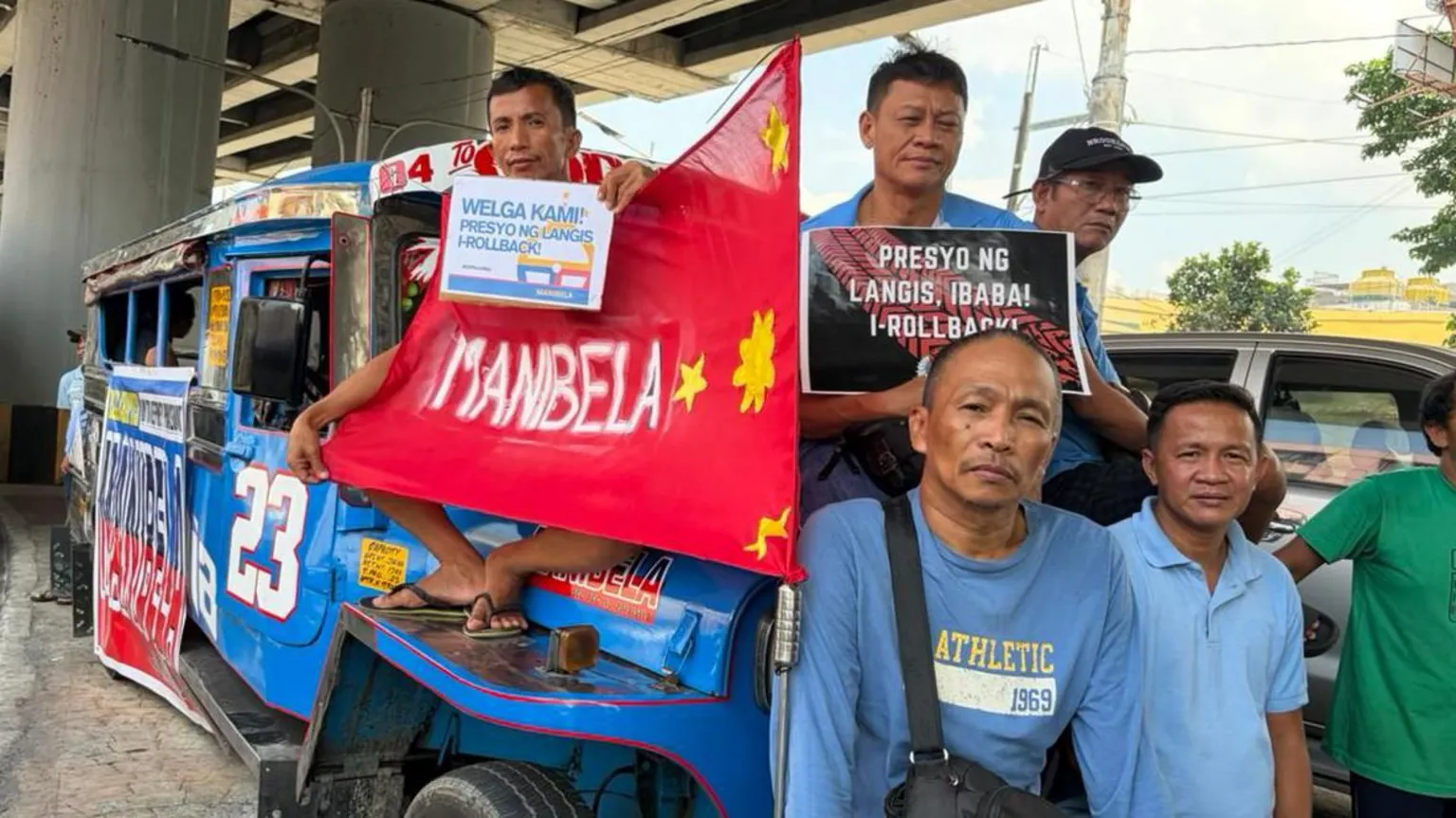
Petroleum products are central to nearly every aspect of daily life, including transportation, food production and distribution, energy generation, and manufacturing. As fuel costs rise, transport fares increase, food prices climb, energy costs surge, and inflation spreads across basic commodities. These cascading effects place immense strain on working families and low-income households, many of whom are left scrambling to cover necessities on low wages.
Transport workers are among the first and hardest hit. Jeepney drivers, already operating under precarious conditions and facing the looming threat of jeepney phaseout, continue to struggle to earn a livable income. After paying for fuel costs, boundary fees, and daily operating expenses, some drivers are left with only around 300 pesos a day (roughly 5 USD) to feed their families. Similarly, Grab drivers and other ride-hailing workers face mounting financial pressures. Many surrender as much as 6,000 pesos daily to vehicle operators or financiers, trapping them in cycles of debt as fuel prices soar and passenger demand fluctuates. Misclassified as “independent contractors,” these workers lack adequate labor protections, social safety nets, or government support, forcing them to shoulder the full burden of rising operational costs. The situation highlights not only the vulnerability of transport workers but also the broader precarity of informal and gig labor in the Philippines, where systemic neglect leaves them exposed to economic shocks.
The crisis extends beyond transport workers, affecting multiple sectors. In an archipelagic country, fisherfolk are particularly vulnerable to rising fuel costs, which make operating boats and maintaining fishing equipment increasingly expensive. Many are forced to reduce the frequency of fishing trips or halt operations altogether, threatening both their livelihoods and the local food supply. Farmers confront similar pressures, as the cost of irrigation, fertilizers, and transporting produce to market rises sharply, contributing to higher food prices nationwide. Low-income families bear the brunt of the inflation as wages remain stagnant while the cost of living continues to climb.
Public frustration has also intensified due to recent flood control scandals and corruption cases, further undermining confidence in government responses to the crisis. Many Filipinos are increasingly angered by the reality that taxes collected from value-added tax (VAT) and excise taxes on basic goods and services continue to burden them, while large corporations continue to benefit from generous tax holidays, incentives, and reduced liabilities. At a time when Filipinos are grappling with rising food prices, escalating transport costs, and insufficient incomes, these public revenues have not translated into meaningful relief or long-term support. The persistence of these corruption scandals only amplifies public discontent, as citizens witness little tangible benefit from the taxes they pay, reinforcing perceptions of systemic injustice and governance that favor corporate and elite interests over the welfare of the Filipino people.
Instead of addressing structural inequalities and strengthening public services, government responses have largely relied on temporary subsidies and market-based solutions. A one-time subsidy of 5,000 pesos provides only limited and short-term relief amid prolonged price increases. Such measures do little to address deeper structural issues, namely the Philippines’ dependence on imported oil, privatized energy systems, deregulated fuel pricing, and weak domestic industrial base.
The Oil Deregulation Law fundamentally reshaped the Philippine fuel sector by removing government control over the pricing of petroleum products and allowing oil companies to freely adjust retail rates in response to global market conditions. In practice, the law shifts the full burden of global price volatility to consumers. When geopolitical conflicts, international sanctions, or speculative trading drive up oil prices abroad, Filipinos immediately feel the impact through higher transport fares, rising food costs, and increased electricity bills. There are no mechanisms under the law to cushion consumers from sharp price spikes, while oil companies maintain significant pricing power to protect their profits.
Ultimately, the current crisis underscores the realities of a semi-colonial country. Wars driven by imperialist interests, fought thousands of miles away, translate directly into higher fuel prices, deeper poverty, mounting debt, and deteriorating living conditions for the Filipino people. The transport strikes and protests are not merely reactions to rising fuel costs; rather, they are expressions of mounting anger at a system that leaves the Philippine economy at the mercy of US imperialism.
As global tensions escalate, the impacts of imperialist wars will continue to be felt sharply by the people, not just in the Philippines but across the globe. This moment highlights the urgent need to confront structural dependence, strengthen domestic industries, pursue energy sovereignty, implement equitable taxation, and assert national independence as foundations for lasting peace, economic stability, and social welfare.
Addressing these recurring crises requires moving beyond policies that prioritize profit and elite interests toward an economic system centered on social needs, democratic control of key industries, and the equitable distribution of resources. Only through a people-oriented development framework where essential sectors such as energy, transportation, and food production are managed for public welfare rather than private profit can the Philippines build genuine resilience against imperialist wars, global economic shocks, and structural inequalities. Only by reclaiming control over its resources and prioritizing the collective good can the Philippines build a more just, sovereign, and sustainable future for its people.
/Paula
Program Coordinator, Asia Pacific Research Network. I hold a Bachelor’s degree in Political Science from the University of the Philippines – Manila. As part of APRN, I focus on analyzing wars of aggression, their social and human impacts, and strategies for building sustainable peace. I hope to inspire collective action towards a more just and peaceful Asia and the Pacific region.



의견을 남겨주세요