두 번째 과목이 끝났다. (지난 6월에...) 기말과제 성적은 '78'점. 전체적으로 잘 썼다는 평가를 받았다. 패스만 해도 괜찮다고 생각했는데, 웬걸 좋은 성적을 받고 나니 비로소 나에게 공부라는 것을 허락해도 될 것 같다. 백수로 하고 싶은 공부만 하고 사는 것은 대단한 용기가 필요하다. 특히 나이가 이미 ‘공부할 때‘를 지났거나, 경제적으로 안정치 않을 때 스스로에게 더욱 가혹해진다. 공부에 몰입하는 이 시간이, 투자가, 과연 어떤 결과로 돌아올지… 나는 모른다. 그냥 하고 싶은 거라서 한다. 하고 싶은 거니까, 누가 뭐래도 행복한 거라고 주문을 외면서. 죄책감을 최대한 눌러가면서...
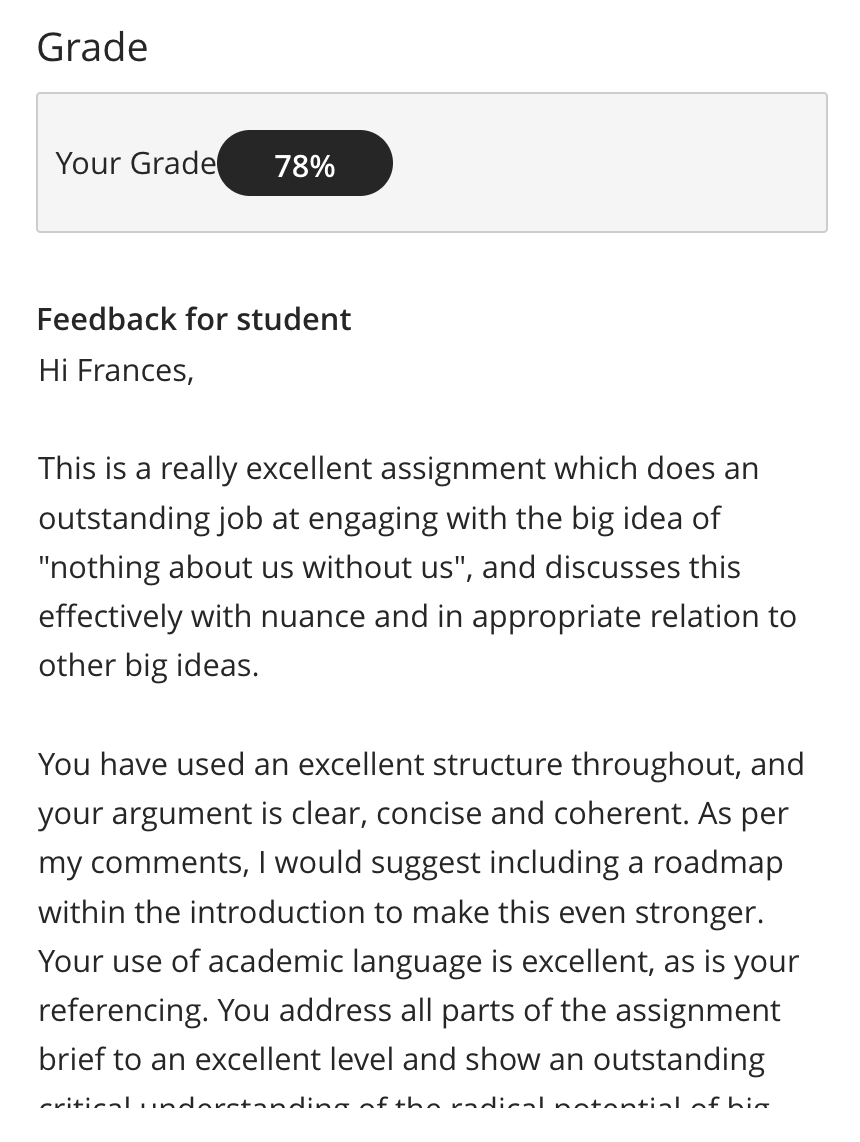
영국 대학원에서 78점은 상당히 높은 점수라 한다. - 유후!
이 수업의 이름은 "장애 이해하기(Understanding disability)"다. 장애를 만들어내는 사회학적 배경에 대해 공부한 뒤 사회에 균열을 내는 '빅 아이디어'를 찾아 3000자를 쓰는 게 과제였다. 가장 먼저 떠오른 아이디어는 'People first'였다. 피플퍼스트는 발달장애인이기 전에 사람으로 존중해달라는 의미다. 이 구호를 가지고 발달장애인 당사자가 자기 권리를 외치기 시작했고, 이를 중심으로 연대가 조직됐다. 개인의 경험을 정치로 전환시켜 오늘날 많은 변혁을 일으켰다. 하지만 피플퍼스트 구호가 있기 전, '나를 빼고 나에 대해 얘기하지 말라'는 보다 근본적인 빅 아이디어가 있었다. Nothing About Us Without Us. 단순하고 명료한 이 아이디어로 무사히 2990자를 작성했다.
Big Ideas 빅 아이디어란?
장애학은 '사회복지학'과 다르다. 장애를 지원할 대상이 아니라, '사회'의 영향으로 인해 권리를 박탈당하고 차별당하는 사회적 산물로 본다. 그러므로 사회학적 시선이 반영된다. 하지만 '사회학'과도 다르다. 사회를 해석하는 이론에 머무르지 않는다. 변화를 일으키지 않는, 장애차별을 없애는 데 도움이 되지 않는 이론과 연구는 장애학에서 무용하다. 다시 말해서, 학문 자체로 실천적 성격을 지니며 행동과 운동을 동반한다. 그러므로 장애학에서의 '빅 아이디어'는 장애를 이해하고 설명할 수 있는 언어를 제공할 뿐 아니라, 기존의 차별적 질서에 도전하는 정치적 구호가 되어, 사회 변화를 다방면으로 이끌어내야만 하는 것이다.
대표적인 사례가 올리버(Mike Oliver)의 사회모델(social model)이다. 사회모델은 장애가 개인의 손상(impairment)이 아니라 사회적 장벽과 배제로 인한 결과라고 설명한다. 지금이야 누구나 알고 있는 모델이지만, 당시 80년대에는 우생학과 의료모델이 강하게 자리잡고 있어서, 꽤나 큰 충격이었다고 한다. 이로 인해 장애를 사회적 결과로 바라보기 시작했고, 이 연구가 이루어진 리즈대학교에서 ‘장애학‘이 처음 탄생했다.
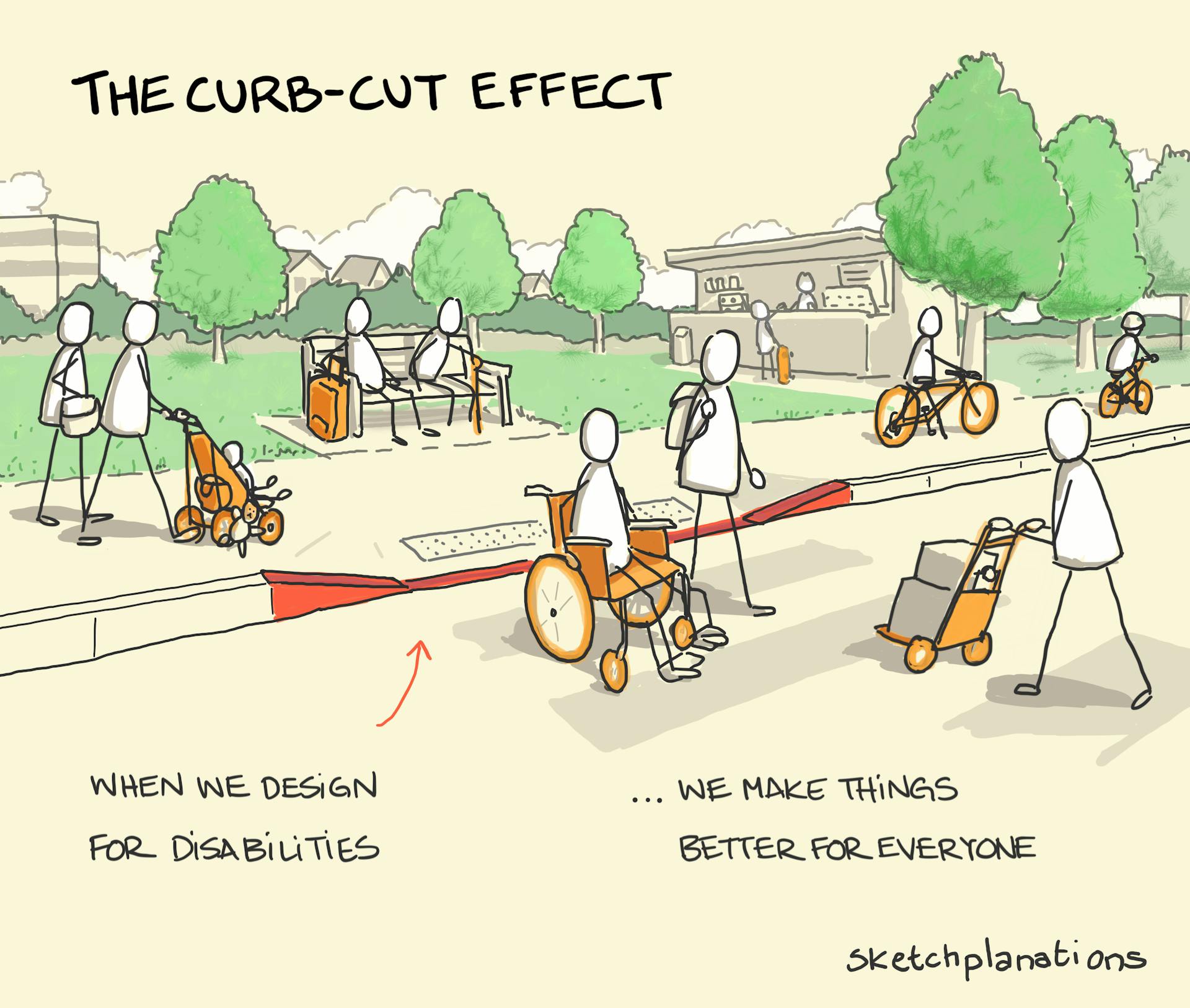
사실 우리 세상에 빅아이디어는 넘쳐난다. 뉴턴의 역학으로 설명되던 세계를 훨씬 복잡하고 불확실한 체계로 이해하도록 만든 양자역학, 신의 창조로 설명하던 인간과 자연에 대한 관점을 뒤흔든 다윈의 진화론, 정신장애를 바라보는 새로운 신경다양성 운동, 그리고 페미니즘 이론에 큰 영향을 미친 주디스 버틀러의 젠더 수행성(Gender Performativity) 개념까지. 역사적으로 수많은 빅 아이디어가 등장했고, 오늘날에도 끊임없이 나타나고 있다.
빅 아이디어는 사람들이 세상을 이해하는 방식을 바꿨다. 새로운 지식을 추가하는 데 그치지 않고, 세계를 해석하는 프레임을 제시해 사유의 전환을 이끌어냈다. 하지만 빅아이디어가 늘 긍정적인 결과만을 가져오는 것은 아니다. 어떤 아이디어는 왜곡되거나 악용되거나 예상치 못한 부작용을 낳기도 한다. 그래서 빅 아이디어는 변혁의 가능성 만큼 위험도 함께 품고 있다.
빅 아이디어의 크립 타임
전쟁과 독재, 팬데믹과 같은 재난은 사회를 빠르게 변화시킨다. AI와 같은 기술 혁신이나 대규모 예산이 투입되는 정책 또한 마찬가지다. 빅 아이디어 역시 한 번 세상에 등장하면 마치 발이 달린 것처럼 널리 퍼져나간다. 사람들의 머릿속으로, 지역사회로, 국가와 국가 사이를 넘나들며 복제되고 재해석된다. 누군가의 언어가 되고, 운동이 되고, 정책이 되면서 예측하기 어려운 방식으로 확산된다.
그러나 아이디어가 실제 삶에 뿌리를 내리는 속도는 그보다 훨씬 느리다. 예컨대 1980년대 발표된 사회모델로 인해 이후 법과 제도가 바뀌고, 건축 환경이 바뀌고, 장애를 이해하는 언어도 달라졌다. 그럼에도 2026년 오늘날까지도 많은 사람은 장애를 개인의 결함 때문에 국가가 돌봐야 하는 문제로 이해한다. 아이디어는 빠르게 퍼지지만, 사람들이 세상을 바라보는 방식과 일상을 바꾸는 데에는 오랜 시간이 필요하다.
여기서 나는 ‘빅 아이디어‘의 잠재력을 보았다. 희망이라고 해야하나. 세상을 바꾸는 것은 거대한 사건, 위대한 한 사람이 아니다. 세상을 이해하는 새로운 방식, 즉 '이론'과 '지식'이 사람들의 생각과 행동을 바꾸고, 결국 사회를 변화시킨다. 발달장애인은 오랫동안 의사소통이 어려운 존재로만 이해되어 왔다. 그래서 이론과 지식을 생산하는 일을 할 수 없을 것이라 단정짓고 배제되었다.
하지만 만약 발달장애인이 자기 자신에 대한 이론을 만든다면 어떨까. 그들이 자신의 경험을 바탕으로 새로운 개념을 만들고, 새로운 언어를 만들고, 지금까지 설명되지 않았던 세계를 설명하기 시작한다면 사회는 어떻게, 또 얼마나 변할 수 있을까.
지금까지 장애에 관한 많은 이론은 비장애인 연구자나 장애학자들에 의해 만들어졌다. 그 이론들은 장애인의 삶을 설명하고 제도를 바꾸는 데 중요한 역할을 했지만, 지적장애인이 더 이상 연구의 대상이나 경험을 제공하는 사람에 머무르지 않고, 직접 개념을 만들고 이론을 생산하는 사람이 된다면 어떨까. 그것이야말로 장애를 바라보는 방식 자체를 뒤흔드는 새로운 빅 아이디어가 될 수 있지 않을까.
나는 당사자가 자신의 경험을 이야기하는 사람을 넘어, 장애를 설명하는 사람이 되었으면 좋겠다. 그리고 그 과정에서 아무도 기대하지 않았던 곳에서 새로운 발견이 탄생할 수 있다고 믿는다. 어쩌면 다음 유레카는 대학 연구실이 아니라, 지금까지 지식을 생산할 수 없다고 여겨졌던 사람들의 목소리에서 시작될지도 모른다.
과제 한글 버전
레퍼런스 정보를 생략하고 최대한 쉽게 써봤다. Nothing about Us without Us 당사자 운동에 대해서 궁금한 사람들만 읽기를 추천한다.
1. ‘Nothing About Us Without Us‘의 역사적 배경
이 구호는 언제 어떻게 생겨났을까? Nothing About Us Without Us는 '우리 없이 우리에 관해 말하지 말라'는 뜻으로, 제임스 샬톤(James Charlton, 미국 작가이자 장애인 권리 운동가)이 남아공 장애인 운동가들로부터 처음 들었다고 문서에 기록했다. 하지만 그 이전에 중부, 동유럽의 라틴어 표현 Nihil de nobis, sine nobis(우리 없이 우리에 대해 아무것도 결정하지 말라)가 있었고, 멕시코 농민운동의 구호인 Nunca Más Sin Nosotros(우리 없이 우리에 대해 결정하지 말라, 똑같은 의미)도 존재했다. 다만 남아공에서 ‘장애인‘ 구호로 처음 쓰였을 뿐이다. 이후 NAUWU는 장애인 삶에 관한 정책 결정 과정에서 장애인이 구조적으로 배제되어 온 현실에 저항하는 정치적 구호로 발전했다. (한국어 편의상 NAUWU를 '당사자 자기옹호 운동'으로 쓰는 게 좋겠다.)
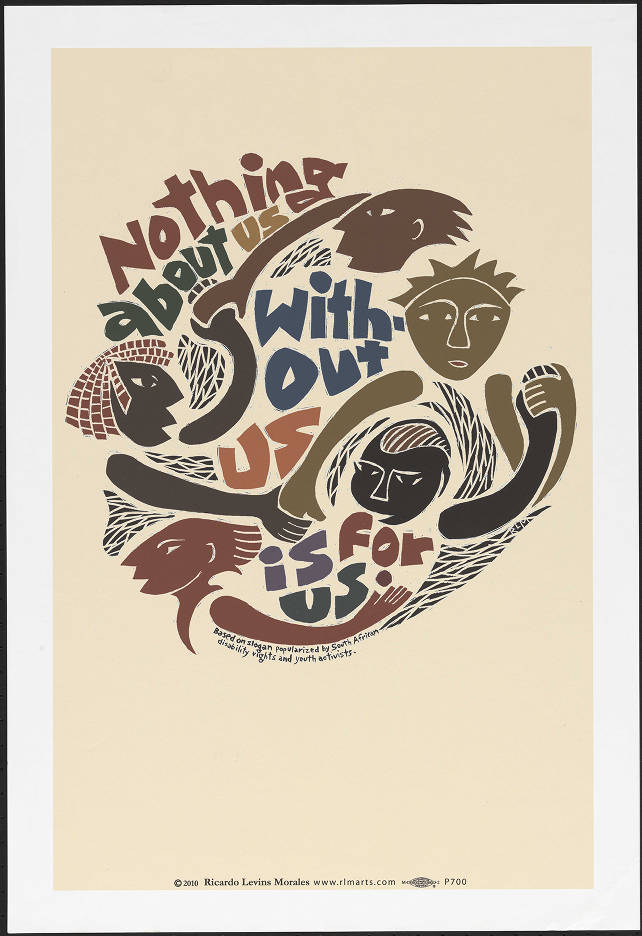
출처 : https://openarchives.umb.edu/digital/collection/p15774coll28/id/542/
당사자 자기옹호 운동이 생겨난 이유는 무엇일까. 한 마디로 장애인의 사회적 배제가 만연했기 때문이다. 당시 사회는 제도적, 인식론적, 문화적으로 장애인을 분리하고 차별하고 있었다. 먼저 ‘제도적 차원‘에서 장애인은 자신의 삶을 스스로 결정하는 주체라기보다 보호와 돌봄의 대상으로 간주됐다. 이로 인해 장애인의 삶 전반에 관한 중요한 정책 의사결정은 의료전문가, 정책결정자, 가족 등에 의해 이루어졌다. 두 번째로 ‘인식론적 차원‘에서는 장애에 관한 지식이 주로 전문가와 연구자에 의해 생산되었기 때문에 장애인 당사자는 연구 대상으로 존재하고, 자신의 삶에 관한 지식을 '인터뷰'와 같은 제한적 방법으로만 참여했다. 결과적으로 장애인의 삶을 일탈이나 낙인의 대상으로 설명하는 경향을 보였다. 마지막으로 ‘문화적 차원‘에서, 장애는 동정의 대상으로 묘사되고, 역경을 극복하는 영웅적 서사로 재현되며, 비주류로 주변화되었다.
이뿐만이 아니었다. 특히 지적장애인은 장애인 사회 안에서도 철저하게 배제되었다. 시설화, 분리교육, 후견인 등의 구조로 일명 보이지 않는 존재로 존재했다. 한국의 사례를 보면, 2013년까지 지적장애인은 '금치산자'로 분류되어 스스로 결정할 법적 능력을 인정받지 못했다. 이 제도는 현재 폐지되었지만, 장애인 보호 시설과 이름만 바뀐 공공후견인제도로 인해 장애인의 법적 권리와 의사결정 능력을 여전히 제한하고 있다. 안타깝게도 지적장애인을 배제시키는 연구는 현재 진행중이다. 이를테면, 철학은 인간과 동물의 경계를 설명하기 위해 장애인을 사례로 활용한다. 의학은 장애를 분류하고 측정해 인간을 더 촘촘하게 유형화시킨다. 나아가 장애인 배제를 정당화시키는 수단으로 역할한다. DSM-5라는 정신과 검사, 비네-시몽 지능 검사와 같은 평가도구가 대표적이다. 엄청난 규모의 연구로 개발되어 흡사 바이블처럼 여겨지지만, 제약회사와 경제적 이해관계가 얽혀 개발되었으므로 완전히 중립적인 분류체계가 될 수 없다는 비판도 있다.
현재나 과거나 지적장애인은 사회에서 늘 결정의 주체가 아니라 통제와 해석의 대상이 되었다. 다시 말해, 자신의 삶에 대해 말하고 결정할 수 있는 주체로 인정받기보다, 제도적, 인식론적 차원에서 타인(비장애인)에 의해 정의되고 규정되는 존재가 되었다. 그 결과, 어디에도 존재하지 않는 '존재론적 무효화(Hughes,2007)'를 경험하게 되었다.
2. 자기옹호의 필요성
왜 전문가나 가족이 아니라 지적장애인 당사자가 직접 말해야 할까? 자기옹호가 필요한 이유는 크게 세 가지로 나눠 설명할 수 있다. 첫째, 지적장애인의 경험은 다양하다. 지적장애인이라고 해서 모두 같은 방식으로 살거나, 경험하거나, 해석하지 않는다. 이들은 매우 다양한 경험과 욕구를 가진 집단이며, 어느 한 사람이나 집단이 전체 지적장애인을 대표할 수 없다. 따라서 지적장애인의 삶과 경험의 다양성을 반영하기 위해서는 당사자의 목소리가 필요하다.
둘째, 지적장애인만의 관점이 있다. 입장인식론(standpoint epistemology)에 따르면 우리는 자신이 살아온 경험을 통해 세상을 이해한다. 지적장애인 역시 지적장애를 가지고 살아온 경험을 통해 만들어진 관점과 지식을 가지고 있다. 그러므로 지적장애인만이 비장애 중심사회가 당연하게 여겨 온 한계를 드러낼 수 있으며, 지적장애에 대한 지식(이해)을 더욱 정확하게 만들 수 있다.
셋째, 타인의 관점은 완전할 수 없다. 부모, 교사, 조력자 등 지적장애인과 가까운 사람들조차도 그들의 삶을 온전히 경험할 수는 없다. Goodley(2014)는 지적장애인을 잘 안다고 생각하는 사람들조차 비장애 사회가 만들어 놓은 개념적 틀을 통해 그들의 삶을 해석한다고 지적했다. 그러므로 지적장애인의 직접적인 참여 없이 그들의 삶에 대한 이해는 불완전할 수밖에 없다.
따라서 당사자 자기옹호 운동은 단순히 지적장애인의 참여를 늘리기 위한 활동으로 그쳐서는 안 된다. 그동안 전문가나 가족이 대신 말해 왔던 방식에 문제를 제기하는 방향으로 가야 한다. 지적장애인도 자신의 삶에 대해 직접 말할 수 있고, 자신의 경험을 바탕으로 중요한 의견과 지식을 가질 수 있음을 외쳐야 한다.
3. 아이디어에서 실천으로
당사자 자기옹호 운동은 지금까지 전 세계 장애인권 운동에 영향을 미쳤다. 그 열매? 구실점? 끝점?에 유엔 장애인권리협약(UN CRPD)이 있다. 장애인의 의사결정 참여가 장애인권의 중요한 원칙으로 제도적으로 반영, 인정된 것이다.
UN CRPD는 장애인 전반에 적용되는 반면, 지적장애인 영역에서는 피플퍼스트(People First)에서 ‘당사자 자기옹호 운동‘이 잘 나타난다. 피플퍼스트는 지적장애인이 전문가나 가족에 의해 대변되어야 한다는 생각에 도전했다. 이들은 지적장애인도 자신의 생각과 경험, 희망을 스스로 말할 수 있으며, 그렇게 해야 한다고 주장했다. 즉, 더 나은 서비스를 요구하는 것을 넘어 “우리의 이야기는 우리가 직접 한다”는 원칙을 실천한 것이다.
한국에서도 2000년대 이후 부모단체와 자립생활센터를 중심으로 자기옹호 모임이 만들어지기 시작했다. 이후 서울피플퍼스트와 한국피플퍼스트가 설립되면서 조직적인 자기옹호 운동이 발전하였다. 회원들은 참정권, 지역사회 자립생활, 장애인 권리 등 다양한 문제에 대해 목소리를 내며 동등한 시민으로 살아갈 권리를 주장해 왔다.
최근에는 이러한 움직임이 정치 참여로도 이어지고 있다. 2026년 한국피플퍼스트 활동가들은 대통령 후보에게 쉬운 선거자료와 투표 지원 제도 마련을 요구하는 의견을 직접 전달했다. 이는 다른 사람이 대신 말해주는 것이 아니라 당사자가 직접 자신의 요구를 표현한 사례였다. 이러한 활동은 NAUWU가 단순한 구호가 아니라 실제 사회 변화를 이끄는 원칙임을 보여준다.
자기옹호 운동은 개인에게도 변화를 가져온다. 지적장애인은 자기옹호 활동을 통해 자신감을 얻고, 자신의 의견을 표현하는 방법을 배우며, 권리를 주장하는 능력을 키울 수 있다. 또한 다른 지적장애인들과 함께 활동하면서 사회적 관계를 넓히고 집단 안에서 자신의 역할을 찾아갈 수 있다.
이러한 변화는 단순히 한 운동의 성과를 넘어선다. NAUWU는 지적장애인을 서비스를 받는 수동적인 존재에서 자신의 삶에 대해 말하고 결정하는 시민으로 변화시키는 데 기여했다. 나아가 지적장애인이 자신의 경험을 바탕으로 지식을 생산하는 주체가 될 수 있다는 가능성도 열어 주었다. 그러나 이러한 변화가 완전히 이루어진 것은 아니다. 참여의 기회는 늘어났지만, 실제 권력과 영향력은 여전히 충분히 나누어지지 않고 있기 때문이다.
4. 자기옹호의 한계 : 이 빅 아이디어만으로는 부족한 것은?
NAUWU는 지적장애인의 참여와 권리를 확대하는 데 큰 역할을 했다. 그러나 이러한 변화가 완전히 이루어진 것은 아니다. 지적장애인의 목소리가 더 많이 들리게 되었지만, 여전히 여러 한계가 존재한다.
먼저 자기옹호 운동 내부의 한계가 있다. 첫째, 형식적인 참여의 문제다. 지적장애인이 회의나 의사결정 과정에 참여하더라도 실제 결정에 영향을 미치지 못하는 경우가 있다. 참여는 하지만 의견이 충분히 반영되지 않는 것이다.
둘째, 대표성의 문제다. 지적장애인은 의사소통 방식, 지원 필요 정도, 삶의 경험 등이 모두 다르다. 따라서 일부 자기옹호 활동가의 목소리가 모든 지적장애인을 대변한다고 보기 어렵다. 특히 의사표현이 어려운 중증 지적장애인의 목소리를 어떻게 반영할 것인가는 중요한 과제로 남아 있다.
셋째, 문화적 차이의 문제다. NAUWU와 자기옹호 운동은 개인의 선택과 자기결정을 중요하게 생각하는 서구 사회에서 발전했다. 반면 한국에서는 부모가 장애인 운동과 권리 향상에 중요한 역할을 해 왔다. 이러한 부모의 지원은 필요하지만, 부모의 의견이 곧 지적장애인의 의견으로 받아들여질 때에는 문제가 발생할 수 있다.
하지만 더 중요한 한계는 사회 전반에 존재하는 가치관이다. 사람들은 일반 시민을 '정상적이고 독립적인 사람'으로 생각한다. 이러한 기준 속에서 지적장애인은 자신의 의견을 말하기 전부터 충분히 능력이 없는 사람으로 평가받기 쉽다.
또한 능력주의적 사고는 사람의 가치를 인지능력에 따라 판단하게 만든다. 이 때문에 지적장애인의 의견은 그 내용 자체보다 "제대로 말할 수 있는가"라는 기준으로 평가되는 경우가 많다. 그 결과 당사자의 목소리는 전문가나 가족에 의해 다시 해석되거나 대신 전달되기도 한다.
생산성을 중요하게 여기는 사회 분위기도 문제다. 사람의 가치를 경제적 생산성과 사회적 기여로 판단하게 되면, 지적장애인을 위한 지원과 접근성 확대는 권리의 문제가 아니라 비용의 문제로 다뤄질 수 있다.
이러한 생각들은 서로 연결되어 있다. 그래서 단순히 참여 기회를 늘리는 것만으로는 충분하지 않다. 지적장애인을 스스로 말하고 결정할 수 있는 시민으로 인정하는 사회적 인식의 변화도 함께 이루어져야 한다.
결국 NAUWU는 아직 완성되지 않은 빅 아이디어라고 할 수 있다. 이 구호가 진정으로 실현되기 위해서는 지적장애인의 참여를 늘리는 것을 넘어, 누가 말할 수 있고 누구의 목소리가 중요하게 여겨지는지에 대한 사회의 생각 자체가 바뀌어야 한다.
과제 영문 버전
Title : Nothing About Us Without Us as a Big Idea: Self-Advocacy, Knowledge Production, and Intellectual Disability
Instroduction
In disability studies, a big idea refers to more than a theoretical argument or a policy proposal. It is a concept that fundamentally challenges dominant systems of knowledge and power surrounding disability. A big idea does not exist solely within academic discourse. Rather, it enables marginalized groups to name their lived experiences in new ways, build solidarity through a shared language, and generate social and institutional change through collective action. Although such ideas emerge within specific historical and social contexts, they transcend time and place, providing the foundation for diverse social movements and institutional reforms. It is in this sense that they are considered “big.”
‘Nothing about us without us (NAUWU)’ is one of the most representative examples of such a big idea in disability studies. Emerging as a collective declaration against the long-standing structural exclusion of disabled people from decisions concerning their own lives, the slogan demands that disabled people have a voice in decisions that affect them. More than a call for participation, it fundamentally transforms how disability is understood, from an individual medical deficiency to a social and political issue, and repositions people with disabilities as subjects of rights rather than objects of policy. For people with intellectual disabilities, the slogan carries even deeper significance. Historically, they have been regarded as lacking decision-making capacity and have been deprived of the right to determine their own lives under the guise of protection. For them, NAUWU is not merely a demand for participation but a declaration of personhood and agency.
Against this background, this paper argues that NAUWU should be understood as a radical epistemological and political intervention that challenges not only exclusion from decision-making but also the authority to produce knowledge about intellectual disability. Where appropriate, examples from the People First movement are used to illustrate how this big idea has been put into practice.
1. The Historical Background
NAUWU emerged as a political demand in response to the long-standing structural exclusion of disabled people from decisions concerning their own lives. According to Charlton (1998), the slogan originated among disability activists in South Africa and spread internationally, while resonating with movements such as the Mexican peasant slogan Nunca Más Sin Nosotros (‘Never Again Without Us’). Although its exact origin is difficult to determine, its global diffusion reflects the shared experience of systematic exclusion from decision-making across societies.
This exclusion operated simultaneously at institutional, epistemological, and cultural levels. At the institutional level, Oliver (1990) conceptualised disability not as individual impairment but as the outcome of socially constructed barriers, within which disabled people were positioned as passive recipients of care while decisions were made by professionals, policymakers, and family members. Exclusion was also embedded in knowledge production, as disability research often represented disabled people through categories such as deviance and stigma while limiting their role in producing knowledge about their own lives (Charlton, 1998). At the cultural level, disability was framed through narratives of pity or heroic overcoming, shaping how disabled people were socially perceived.
People with intellectual disabilities occupied an especially marginalised position within this broader structure. Institutional care, segregated education, and legal restrictions on decision-making capacity reinforced their exclusion while normalising substituted decision-making. In South Korea, for example, people with intellectual disabilities were historically classified as geumchisanja, a legal category that formally denied their capacity to manage their own affairs. Although abolished in 2013, this system restricted legal capacity for decades (Barnes & Mercer, 2010; Morris, 2005).
Academic knowledge played a critical role in sustaining this marginalisation. People with intellectual disabilities were frequently used as philosophical boundary cases to define personhood, while scientific practices treated them primarily as objects of classification and measurement (Carlson, 2010). The development of tools such as the Binet-Simon Scale further provided scientific legitimacy to processes of exclusion, enabling discriminatory policies and practices. These forms of knowledge did not remain abstract; they shaped institutional practices that governed and categorised disabled lives (Foucault, 1980).
In this context, people with intellectual disabilities were not only socially excluded but also subject to what Hughes (2007) describes as ontological invalidation, whereby their existence was framed as deficient, incomplete, or ‘not fully there’. Such processes positioned them not as full subjects but as objects of control and interpretation. As a result, people with intellectual disabilities have historically been defined by others in both institutional and epistemological terms, rather than recognised as subjects capable of speaking and deciding for themselves.
2. The Necessity of the Voices of People with Intellectual Disabilities
Self-advocacy among people with intellectual disabilities refers to the process by which individuals make their own decisions, participate in matters affecting their lives, exercise control over their everyday lives, and advocate for their own rights and interests (Williams and Shoultz, 1982, p. 159; Goodley, 1998). This raises a fundamental question: why must disabled people themselves, rather than professionals or family members, speak on their own behalf?
The historical reality that decisions concerning the lives of people with intellectual disabilities have often been made without their involvement also implies that such decisions have been based on knowledge produced from the perspectives of others rather than from the lived experiences of disabled people themselves. The self-advocacy movement challenges precisely this structure of knowledge production. From this perspective, speaking and making decisions for oneself is not merely an exercise of rights but an epistemological practice through which individuals generate knowledge grounded in their own lived experience (Fricker, 2007). The necessity of self-advocacy can therefore be understood from three interrelated perspectives.
First, people with intellectual disabilities constitute a highly heterogeneous group. As Wendell argues, disabled people neither share identical experiences nor interpret their experiences in the same way. Nevertheless, they have accumulated forms of knowledge that are distinct from dominant non-disabled perspectives, which have long been ignored and suppressed (Wendell, 1996; Goodley, 2014). The experiences of people with intellectual disabilities are therefore far from uniform, and only disabled people themselves can fully articulate this diversity.
Second, knowledge is always produced from particular social and embodied positions. Standpoint epistemology emphasises that what individuals are able to know is shaped by their social location and lived experience (Harding, 1991). From this perspective, people with intellectual disabilities are not merely individuals whose perspectives should be included within existing knowledge; rather, they occupy epistemic standpoints that can reveal assumptions and limitations within dominant understandings of intellectual disability. Knowledge produced without their participation therefore remains inevitably partial.
Third, even those who are closest to people with intellectual disabilities cannot fully know what it means to live with an intellectual disability. Parents, teachers, and support workers may observe and support their lives, but they do not inhabit those experiences themselves. It has been argued that even those who believe they know people with intellectual disabilities well continue to interpret their lives through conceptual frameworks constructed by non-disabled society and therefore lack direct experiential knowledge of living with an intellectual disability (Goodley, 2014). By contrast, non-disabled people possess extensive experiential knowledge of their own lives, accumulated through everyday practice. There is little reason to assume that indirect or observational knowledge is sufficient in the case of intellectual disability (Carlson, 2010). Without the direct participation of people with intellectual disabilities, knowledge about their lives inevitably remains incomplete.
Taken together, these perspectives demonstrate that self-advocacy is not simply a practical strategy for promoting participation. Rather, it represents a fundamental challenge to the existing epistemological order in which knowledge about people with intellectual disabilities has been produced predominantly by others. NAUWU therefore calls not only for inclusion in decision-making processes but also for the recognition of people with intellectual disabilities as legitimate knowers whose lived experiences constitute indispensable sources of knowledge.
3. From Idea to Practice: How Nothing About Us Without Us Transformed Self-Advocacy
A big idea becomes transformative not simply because it offers a new way of thinking, but because it reshapes institutions, practices, and social relationships. NAUWU illustrates this transformative potential. By redefining disabled people as political subjects rather than passive recipients of care, the slogan influenced disability rights movements worldwide and was subsequently institutionalised through the United Nations Convention on the Rights of Persons with Disabilities (CRPD) (Charlton, 1998; United Nations, 2006). The Convention established the participation of disabled people in decision-making as a fundamental principle of international disability rights, recognising them not as objects of protection but as subjects of rights. For people with intellectual disabilities, one of the clearest expressions of this transformation can be found in the People First movement.
People First, established in 1984 and later registered as a charity in 1996, has consistently defined its mission as promoting “the user-led voice of people with learning difficulties as equal and valued citizens” (People First, n.d.). Rather than simply demanding better services, People First challenged the assumption that people with intellectual disabilities should be spoken for by professionals or family members. The movement asserted that people with intellectual disabilities are, first and foremost, people whose experiences, opinions, and aspirations should be articulated in their own voices.
In South Korea, self-advocacy groups for people with intellectual disabilities began to emerge during the early 2000s through parent organisations and independent living centres. The establishment of Seoul People First in 2015 and Korea People First in 2016 marked an important step in the development of an organised self-advocacy movement (Kwak and Kim, 2004). Since then, members have participated in campaigns concerning voting rights, community living, disability rights, and historical injustices, consistently asserting their right to live as equal citizens within society.
A recent example illustrates how this big idea continues to shape political action. On 29 May 2026, activists from Korea People First waited outside a polling station in Seoul to meet then-presidential candidate Lee Jae-myung during early voting. They presented a letter calling for accessible election materials, pictorial voting aids, and voting support for people with intellectual disabilities. As they emphasised in their letter, decisions and demands expressed on behalf of people with intellectual disabilities do not necessarily reflect what they themselves want, highlighting the importance of self-representation (BeMinor, 2026). Rather than relying on others to speak for them, they directly articulated their claims to a national political leader. This act went beyond participation, representing the practical realisation of NAUWU as a claim to political voice and citizenship.
Participation in self-advocacy organisations also generates important changes at the individual level. Studies suggest that involvement in organisations such as People First enables people with intellectual disabilities to develop confidence, strengthen self-understanding, and acquire practical skills for expressing their opinions and asserting their rights (Miller & Keys, 1996). In addition, engagement with peers within these settings supports the development of interpersonal skills and enables individuals to explore and negotiate their roles within a group (Clarke, Camilleri and Goding, 2015). Beyond individual empowerment, these experiences increasingly contribute to institutional change through initiatives such as Easy Read materials, policy consultations, and participatory forms of research and service development.
The significance of these developments extends beyond the achievements of a single movement. They demonstrate how NAUWU functions as a big idea: by transforming people with intellectual disabilities from passive recipients of services into active participants in political life and, increasingly, into contributors to the production of knowledge itself. Nevertheless, this transformation remains incomplete. Although opportunities for participation have expanded, the distribution of power has changed far less dramatically. Understanding why requires looking beyond participation itself to the ideological conditions that continue to shape who is recognised as a legitimate political subject.
4. The Limits of Transformation: Beyond Participation to Ideology
The achievements of NAUWU are significant and undeniable, yet they remain incomplete. Understanding these limitations requires moving beyond participation to examine the ideological conditions that shape whose voices are recognised as legitimate.
Internal Limitations of the Self-Advocacy Movement
One set of limitations lies within the self-advocacy movement itself. First, tokenistic participation remains widespread, with participation often occurring without meaningful involvement in the processes through which decisions are made. Although formal consent may be obtained, individuals’ preferences often play only a limited role in shaping outcomes. Participation therefore risks becoming procedural rather than substantive.
Second, there is the problem of representation. People with intellectual disabilities are far from a homogeneous group, differing not only in their communication methods but also in their abilities to participate, support needs, and lived experiences (Wendell, 1996). This challenge is particularly evident for those with profound intellectual disabilities or limited verbal communication. As a result, it is difficult to assume that any single group of individuals can adequately represent the diversity of this population.
Third, self-advocacy unfolds within particular cultural and social contexts (Goodley, 2014). NAUWU developed largely within Western cultural contexts, particularly in the United Kingdom, where it is closely associated with traditions that emphasise individual autonomy and self-determination. In countries such as South Korea, however, disability advocacy has often been shaped by strong family involvement, particularly through parent-led organisations (Kwak and Kim, 2004). While such organisations have played an indispensable role in building disability movements and securing political recognition, tensions inevitably arise when the priorities of parents are assumed to reflect those of people with intellectual disabilities themselves. Balancing organisational support with genuine self-representation therefore remains an ongoing challenge.
Structural Limits: The Persistence of Dominant Ideologies
Even if these limitations within the movement were overcome, a more fundamental obstacle would remain. Participation itself is conditioned by broader ideological assumptions about who is capable of participating as a legitimate political subject. Three interconnected ideologies are particularly significant: norms of normality, ableism, and productivism.
Norms of normality establish implicit expectations regarding what counts as a rational, competent, and independent citizen (Davis, 1995). People with intellectual disabilities are frequently positioned outside these expectations before they have the opportunity to speak. Consequently, even when they participate in decision-making, their contributions are often regarded as less credible or less authoritative than those of non-disabled participants.
Ableism reinforces this exclusion by assigning greater value to individuals according to their perceived cognitive abilities (Campbell, 2009). Under ableist assumptions, the issue is not merely whether people with intellectual disabilities have opinions, but whether they are considered capable of having opinions worthy of equal consideration. Their perspectives are therefore often filtered through professionals, family members, or supporters, with greater attention paid to their communicative competence than to the substance of what they seek to express.
Productivism further marginalises people with intellectual disabilities by measuring human worth primarily in terms of economic productivity and social contribution, as reflected in Oliver’s (1990) critique of a production-oriented society. Within such a framework, claims for accessibility, support, or inclusion are frequently discussed as financial burdens rather than as matters of justice and citizenship. The language of rights is displaced by the language of costs.
These ideologies do not operate independently. Rather, they reinforce one another and provide the underlying conditions through which tokenistic participation, unequal representation, and paternalistic decision-making continue to persist. The limitations of NAUWU therefore cannot be understood simply as failures of policy implementation. They reflect deeper assumptions about who is recognised as a legitimate knower and political subject.
Importantly, these ideological conditions do not only shape external forms of exclusion but can also be internalised by people with intellectual disabilities themselves. Continuous exposure to norms of normality, ableist assumptions, and productivist values may lead individuals to question their own competence and legitimacy as decision-makers. This reflects what has been described as psycho-emotional disablism, whereby social oppression is reproduced at the level of individual experience and self-perception (Reeve, 2004).
For this reason, the transformative potential of NAUWU depends not only on improving opportunities for participation but also on challenging the ideological foundations upon which participation itself is organised. The unfinished character of this big idea should not be interpreted as evidence of failure. Instead, it reveals the depth of the transformation that remains necessary.
Conclusion
NAUWU emerged as a collective response to the historical exclusion of disabled people from decisions affecting their own lives. More than a call for participation, it repositioned disabled people as subjects of rights, action, and knowledge, transforming disability into a social and political question. It fundamentally challenged who has the authority to speak, decide, and produce knowledge about disability, which is why it remains a defining big idea in disability studies.
Within the context of intellectual disability, however, this promise remains only partially realised. Although opportunities for participation have expanded, the redistribution of power continues to be limited by deeply embedded assumptions of normality, ableism, and productivism. These ideologies shape whose voices are heard, believed, and recognised as legitimate. The challenge is therefore not simply to increase participation, but to transform the conditions under which participation becomes meaningful.
Taking this big idea seriously requires recognising people with intellectual disabilities as producers of knowledge, rather than merely participants within existing systems. From a Foucauldian perspective, power operates not only through decision-making but through the production of knowledge. This highlights that transforming participation necessarily involves reconfiguring who has the authority to define and produce knowledge about intellectual disability.
Ultimately, the significance of NAUWU lies in its capacity to challenge how authority and knowledge are structured within disability discourse. Its transformative potential depends not only on expanding participation but on reshaping the conditions under which knowledge is legitimised.
References
Barnes, C. and Mercer, G. (2010) Exploring Disability. 2nd edn. Cambridge: Polity Press.
BeMinor (2026) ‘발달장애인들, 참정권 요구하며 이재명 대통령 만나’. Available at: (Accessed: 29 June 2026).
Campbell, F.K. (2009) Contours of Ableism: The Production of Disability and Abledness. Basingstoke: Palgrave Macmillan.
Carlson, L. (2010) The Faces of Intellectual Disability: Philosophical Reflections. Bloomington: Indiana University Press.
Charlton, J.I. (1998) Nothing About Us Without Us: Disability Oppression and Empowerment. Berkeley, CA: University of California Press.
Clarke, J., Camilleri, K. and Goding, L. (2015) ‘What does it mean to be a self-advocate? The significance of friendship, support and community’, British Journal of Learning Disabilities, 43(4), pp. 275–282.
Davis, L.J. (1995) Enforcing Normalcy: Disability, Deafness, and the Body. London: Verso. Foucault, M. (1980) Power/Knowledge: Selected Interviews and Other Writings 1972–1977. New York: Pantheon Books.
Fricker, M. (2007) Epistemic Injustice: Power and the Ethics of Knowing. Oxford: Oxford University Press.
Goodley, D. (1998) Appraising self-advocacy in the lives of people with learning difficulties. PhD thesis, University of Sheffield.
Goodley, D. (2014) Dis/ability Studies: Theorising Disablism and Ableism. London: Routledge.
Harding, S. (1991) Whose Science? Whose Knowledge? Thinking from Women’s Lives. Buckingham: Open University Press.
Hughes, B. (2007) ‘Being disabled: towards a critical social ontology for disability studies’, Disability & Society, 22(7), pp. 673–684.
Kwak, Jeong Ran and Kim, Byung Ha (2004) ‘Nothing about us without us: the politics of the disability discourse’, Journal of Special Education: Theory and Practice, 5(3), pp. 249–263.
Miller, A.B. and Keys, C.B. (1996) ‘Awareness, action, and collaboration: How the self-advocacy movement is empowering people with developmental disabilities’, Mental Retardation, 34(5), pp. 312–319.
Morris, J. (2005) Citizenship and Disabled People: A Scoping Paper Prepared for the Disability Rights Commission. Available at: (Accessed: 16 September 2012).
Oliver, M. (1990) The Politics of Disablement. London: Macmillan. People First (n.d.) About us. Available at: (Accessed: 29 June 2026).
Reeve, D. (2004) ‘Psycho-emotional dimensions of disability and the social model’, in Barnes, C. and Mercer, G. (eds.) Implementing the Social Model of Disability: Theory and Research. Leeds: The Disability Press.
United Nations (2006) Convention on the Rights of Persons with Disabilities.
Wendell, S. (1996) The Rejected Body: Feminist Philosophical Reflections on Disability. New York: Routledge.
Williams, P. and Shoultz, B. (1982) We Can Speak for Ourselves: Self-Advocacy by People with Mental Retardation. Bloomington: Indiana University Press.






의견을 남겨주세요